Blog Archives

Earl Grey vs Black Tea

Man, I see these questions all the time on places like Quora. I used to get them in the tea shop all the time, too: What’s the difference between Earl Grey and black tea? How much caffeine is there in Earl Grey? What are the health benefits of Earl Grey compared to black tea?
Well, strap in and let’s see if I can cover it all in one article!
First, let’s get the basic facts on Earl Grey out of the way:
The original Earl Grey tea was black tea

Specifically, it was Earl Grey tea with bergamot oil added to it. (I know, that raises a new question. More on bergamot oil shortly…) Most, but not all, of the tea currently marketed as Earl Grey is still basically black tea with bergamot oil. That means the caffeine content is the same as black tea, the steep times are the same as black tea, and the color is the same as black tea. The aroma, however, is decidedly not black tea.
The origin story—who was this Earl Grey dude and why did he create this tea?—is one of the chapters in my book, Myths & Legends of Tea, volume 1. In short, Charles Grey II, Lord of Howick Hall, First Lord of the Admiralty, and soon to become the second Earl Grey, had really crappy water at Howick Hall. All of the limestone (just called “lime” by most at the time) in the water made the tea taste foul. Bergamot oil was the solution, as its strong aroma masked the bad stuff in the water.
Many people say Earl Grey smells “perfumey” because, well…
People have been using bergamot oil as an ingredient in perfumes and colognes for over 300 years now. Brands like Giorgio Armani, Christian Dior, Yves St. Laurent, Elizabeth Arden, Lancome, Calvin Klein, Oscar de la Renta, Donna Karan, Jimmy Choo, and many others put bergamot oil in various of their scents.
But what the heck is bergamot oil? Ready for the most unhelpful answer ever? It’s oil from a bergamot.
Okay, okay, I’ll explain. The bergamot, Citrus bergamia, is a citrus fruit native to southern Italy. It’s sometimes called a “bitter orange,” and to make your life just a little more complicated, it isn’t related at all to the bergamot herb, Thai bergamot, wild bergamot, or bergamot mint.

The bergamot oil is extracted from the rind of the fruit, and a little bit goes a long way! Typically, to make Earl Grey tea, the tea leaves are sprayed with a fine mist of bergamot oil and then packaged.
I keep referring to “most” Earl Grey teas
The Grey family never copyrighted the name Earl Grey for the tea, nor did they protect the formula legally. Although the original recipe was passed on to Twinings, anyone is free to make any variant they want and proudly brand it as Earl Grey.

There are Earl Grey teas out there using all manner of black teas as the base, not to mention all of the variants using green tea, white tea, herbal teas (“tisanes“), and other tea styles. I produced a number of these when I had my tea shop, including the oddly popular Mr. Excellent’s Post-Apocalyptic Earl Grey, which was made with lapsang souchong, a smoked black tea from China.
Most, if not all, tea companies that make Earl Grey teas do try to use different names if they don’t use the classic black tea base. You’ll see names like Earl Green, Duke Grey, Creme Earl Grey, Earl Greyer (one of my favorite names), and many more.
And then there’s Lady Grey

Neither the Grey family nor Twinings has any protection on Earl Grey. Twinings does, however, have a trademark on “Lady Grey.” Unless you have bigger badder lawyers than Twinings (and the budget to pay them), I strongly recommend coming up with a different name for your take on Lady Grey. My version, which was black tea, bergamot oil, and lavender flowers, was called Lady Greystoke, named for Tarzan’s wife, Jane, after they got married and she took his family name and the title that came with it.
The dreaded topic of health benefits
My regular readers know that I rarely discuss health benefits of tea unless there’s some really solid science behind it. There are so many claims with zero data to back them up, so many flawed studies, so many misinterpreted studies. It’s really difficult to sort things out.
I really really wanted to say up at the very top that the health benefits of Earl Grey are exactly the same as the health benefits of plain black tea. But I just can’t.
On one hand, we have the aromatherapy and essential oil folks, who claim that bergamot oil helps to heal wounds, reduce inflammation, cure acne, promote hair growth, reduce stress, fight food poisoning, lower cholesterol, fight liver disease, reduce pain, and more.
On the other hand, we have medical evidence that bergamot oil can be a skin irritant for some people, causing blisters, pain, difficulty breathing, nausea, and vomiting. Also, it is a known phototoxin. Exposure to UV light (such as sunlight or tanning beds) after an aromatherapy session with bergamot oil can cause severe burn-like reactions, and the International Fragrance Association restricts the amount of bergamot oil that can be used in leave-on skin care products. Healthline even states that bergamot oil can be poisonous and should never be swallowed, although they are talking about the pure oil, not the small concentrations found in Earl Grey tea.
And so in conclusion
What most people call Earl Grey tea is just black tea with bergamot oil, which doesn’t change the looks (reddish-black), caffeine (probably 40mg per cup or so), or calories (about 2 per cup). It does, however, affect the smell and flavor. The health benefits may be different, but the amount of bergamot oil in a cup of Earl Grey tea is so tiny (less than .25 grams in my recipes) that it’s probably insignificant.
So enjoy your Earl Grey, treat it as nutritionally equivalent to black tea, and if you want to read the whole story, please buy a copy of my Myths & Legends of Tea book. I’d sure appreciate it!

The Evolution of Taste

What was the first tea you tasted? If you’re American, it was probably a cheap teabag filled with black tea dust, probably steeped for a long time and possibly drowned in milk and sugar.
If you have a taste for adventure, you probably tried a few other things later on. Earl Grey, perhaps, or possibly a pot of nondescript green tea at the Chinese restaurant down the street. Then maybe — just maybe — you stopped into your Friendly Neighborhood Indie Tea Shop™ and had your mind blown by an amazing oolong or a mind-blowing pu-erh. Now you want to taste all the tea!
Congratulations, you would have been the perfect candidate to join the tea tasting club at my old shop (Phoenix Pearl Tea), but let’s leave that for another blog post.
Thankful to have left that cruddy old Lipton behind, you plow forth into the tea world. You taste exotic green teas like genmaicha (roasted rice tea), hōjicha (roasted green tea), and kukicha (twig tea). You savor delicate white teas like silver needle. You chase down both sides of the pu-erh spectrum, sampling rich complex sheng and deep earthy shu. You try the full range of oolongs, from buttery jade to crisp Wuyi. You might even be lucky enough to find a tea shop with a yellow tea. Wow.
But you’ve left the black teas behind, your impressions tainted from those teabags you drank back before you became enlightened.
Yesterday, I taught a tea class on the teas of China. In it, we tasted all of the major tea styles, and sampled our way through five prime tea-growing provinces (Anhui, Fujian, Jiangsu, Yunnan, and Zhejiang). There were oohs and ahs over the bai mudan white, the roasted tieguanyin (Iron Goddess of Mercy) oolong, and the longjing (dragonwell) green. But do you know what stopped everyone cold in their tracks? The black teas.
I pulled out my favorite Keemun mao feng. If you’ve never tried one of these, stop reading now, buy yourself a bag, and come back. Ready? Okay. Let’s continue.

It’s easy to fall in the trap of considering black tea the “cheap stuff” and all of the other varieties the “good stuff” (except for that pond scum the Chinese restaurant down the street thinks of as green tea, but we’ll just ignore those guys). Nothing could be farther from the truth.
Keemun mao feng has a lot going on. It’s rich and complex, lighter than you’d expect, and if you consider grocery-store-brand teabags representative of black tea, this stuff will open your eyes. The people in my class kept commenting on how many layers of flavor this tea has, on how it changes as you hold it on your tongue, and the subtle sweetness they picked up in this (completely unsweetened) cup of tea.
Note, by the way, the steeping instructions in my slide above. You may like yours steeped longer than the two minutes I recommend. That’s fine. I’m no tea Nazi. Drink it the way you like it.
Next, we tried a dian hong, also known as a Golden Yunnan. It flips you clear across the flavor spectrum, with that color in the glass saying “oolong” as the flavor says “black tea.”

If you’re at this point in your exploration of the tea world, congratulations! You’ve left the cheap black tea behind and opened yourself up to a whole world of other tea styles. Now it’s time to come back home to black teas. Try the two I talked about above. Explore the vast difference between India’s tea-growing regions by drinking a first-flush Darjeeling, a hearty Assam, and a rich “bitey” Nilgiri. Sample the Rift Valley teas from Kenya (the largest tea exporting country in the world). Island hop with some Java and Sumatra tea. Drink a liquid campfire with a steaming cup of lapsang souchong.
Once you’ve experienced the range of flavors, textures, terroirs, and aromas from top-notch loose-leaf black teas, you’re still not done. Now is the time to turn your newly-expanded palate loose on some blended teas, like high-end English Breakfast. Go back and taste some of the flavored black teas like Earl Grey. Play with some masala chai and some tea lattes (try a strong Java tea made with frothed vanilla soy milk!). Start experimenting with iced tea, brewing it strong and pouring it over ice.
You may decide that you’ve moved on from black tea and that’s great. Or you may just find that you’ve developed a whole new appreciation for that stuff that got you started on tea in the first place.
As I write this, I’m sipping on a 2017 1st flush Darjeeling from Glenburn estate. It’s very different from last year’s, when the picking was delayed by heavy late rains. You’d swear this was oolong tea. It’s extremely different from teas picked at that estate later in the year. I don’t know what (if anything) we’re going to end up with for a 2018 1st flush, as many of the estates in Darjeeling were left in horrible condition after this summer’s strikes, so if you have some Darjeeling tea you like, don’t waste it!

The Dream and the Dancer

I stepped away from the horse and let the saddle fall in the mud. The old Arab mare looked dejected, embarrassed. As well she should be. Anger still flashing in my steely eyes, I reached for my teddy bear cup on the post by the barn door. I needed the warm, soothing taste of a good first-flush Darjeeling. Despite the cold, a bead of sweat ran down my temple as I lifted the cup to my lips. Tepid. Of course. Just like the horse’s performance when we rounded up the bulls.
Oh, wait. Robert Godden asked for a non-fiction blog post. He and two other studly tea bloggers have a blog called “Beasts of Brewdom: The Men of Tea. Huzzah!” Yes, it appears that while biting the top off of a whisky bottle and wiping the excess testosterone from his eyes, Godden decided to use the word “huzzah” in the name of a tea blog for men. Strange creature, this Godden.
Then, to make things even manlier, he decreed that challenges would be issued to grizzled specimens of manhood such as myself, and that the title of the blog post must be the title of a romance novel from some British publisher called Mills & Boon. Somehow, I was lucky enough to draw the title, The Dream and the Dancer.
I lowered the cup and glanced to the house. Lo, what vision of loveliness to my virile eyes did appear? My wife, Kathryn, dancing in the living room as she did her dusting (don’t look at me like that — everyone’s wife dances while she dusts, right?). I took another sip of the lukewarm Darjeeling and set the cup down on the post. I hefted a pair of 12-pound double-bit axes to my shoulder and set out to the shed. I had three cords of wood to split before I could go inside to my wife and the delicate new Taiwanese oolong we had just purchased. The splitting would go faster if I used an axe in each hand.
Tea is oft considered a woman’s domain. We muscular paragons of manhood are expected to go more for coffee sludge that’s been boiling over a buffalo chip campfire for the last 12 hours. Or perhaps a pint of Jack Daniels downed in a single long draught. But tea should not be the demesne of the ladies. Was the Emperor Shennong (who reputedly discovered tea five millennia ago) a woman? Charles, the 2nd Earl Grey, for whom is named perhaps the best-known tea in the western world? Sen no Rikyu, who developed the Japanese tea ceremony? Of course not! They were men!
I have a dream.
I dream that men will someday realize that there’s nothing feminine about a hot steaming cup of smoky lapsang souchong!
I dream of women saying, “Look at that sexy studmuffin over there drinking pu-erh tea. He must be a staunch fellow, indeed!”
I dream of sweaty rugby players saying, “Put away that girly java and get me a proper cup of sencha.”
The chores done for the day, I headed back to the house. I stretched my aching muscles as I strode up the front walk, and looked at the window to see if I could catch another glimpse of my wife dancing through the living room. That’s when the mountain lion appeared. He stepped out from behind the tractor, muscles rippling under his thick pelt, and stopped in the middle of the walk, his yellow eyes flashing at me. I continued walking toward him, our eyes locked. We both tensed as the distance between us closed. “I want tea and you’re in my way,” I growled at him. The lion looked down and slunk away, recognizing that I was in no mood to deal with him. I stretched my sore shoulders and continued to the house, where Kathryn met me at the door. With a smile, she held out a hot, fresh cup of jade oolong. I held it to my nose, closed my eyes, and inhaled deeply. “You might want to shower before dinner,” she said softly.
Yes, we are men. We can use our rippling muscles to stack ten tons of hay, and then relax with a delicate cup of tea. We can sip an Earl Grey with our friends while debating whether that noise coming from the Camaro is a tappet problem, or just a loose fan belt. We can drink half a glass of iced tea, and then pour the rest over our heads to cool down after setting a new obstacle course record. We can share a pot of tea with a friend after beating each other bloody in a boxing ring.
Tea has been the drink of manly men for over 100 generations. So, gentlemen, the question isn’t whether tea is manly enough for you; the question is whether you are manly enough for tea.
(Caution: Just in case the title of this video doesn’t give it away, it does contain some foul language)

Tall Montanan is Tall?
I was perusing a post from a fellow tea blogger about World Tea Expo 2013 … well, perhaps I shouldn’t call it a “post.” It’s more of an essay. Or perhaps a minor tome. If you bound it in creepy leather and added a few paragraphs about demons, you could even call it a small grimoire. But I digress…
Ahem. Anyway. Geoffrey F. Norman (a.k.a. “the Lazy Literatus“) wrote about his experiences at the expo and featured a little snippet about me in which he mentioned one of my blends: Mr. Excellent’s Post-Apocalyptic Earl Grey tea. I mention this for four reasons:
1) He posted this picture of us with the caption, “Tall Montanan is Tall.”
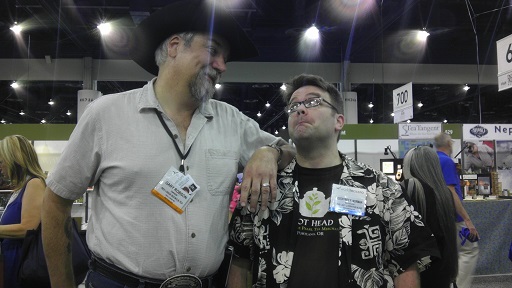
Photo courtesy of Geoffrey F. Norman.
Copyright Geoffrey F. Norman 2013.
2) It’s a good blog post. If you’re interested in tea and/or World Tea Expo, I recommend giving it a look.
3) It reminded me that I promised to send him a sample of Mr. Excellent’s Post-Apocalyptic Earl Grey and forgot in all the hubbub. Sorry, Geoffrey. I’ll get that on its way ASAP.
4) And, last but not least, he’s a perfect example of not blogging on a schedule!

Announcing Myths & Legends of Tea
Most writers don’t like to talk about their work in process. I guess I’m not most writers, because I like to talk about pretty much everything. I do usually hold back, though, until I’m really sure the book is going somewhere. At this point, I’m far enough along that I’m ready to let the cat out of the bag.
To read more about Myths & Legends of Tea, download a sample chapter, or buy a copy (paperback, Kindle, or Apple iBook), please visit the main book page!

As anyone who has visited my tea bar knows, I am as much in love with the stories of different tea styles as I am with the tea itself. Thus far, I have mostly told the tales as they were told to me, or as I found them in the course of reading about tea. Many of these wondrous stories are far too short. The poor farmer who cleaned up a temple and was given Tieguanyin oolong as his reward by the goddess. The mandarin who added bergamot oil to an English earl’s tea to compensate for the calcium in the water and created one of the western world’s most popular teas. The tea master who performed one last tea ceremony after he was ordered by his daimyo to commit seppuku.
In Myths & Legends of Tea, my goal is to create the Grimm’s Fairy Tales of tea.
I am taking each of these tales and retelling it in my own style, most of them somewhere between 2,000 and 3,000 words long. Each is accompanied by a profile of the tea featured in the story. Some of the stories are entirely legend, their origins lost in the mists of time. Some are based heavily on fact. Some will be familiar to any tea aficionado. Some are purely the product of my own imagination. In all of them, I am focusing on building a sense of the time, the setting, and the characters, and bringing the stories of tea to life.
I know what you’re thinking. At least I hope I know what you’re thinking. “When will I be able to buy this wondrous book?” (If that’s not what you’re thinking, please don’t tell me). If all goes according to plan, sometime in the autumn of 2013. I’ll keep you all up to date!
Tea. Earl Grey. Hot: Stop 2 on the World Tea Tasting Tour

Update: The story of the origin of Earl Grey tea is one of the chapters in my book, Myths & Legends of Tea. Check it out!
England may not grow many tea plants, but the United Kingdom has had a massive impact on the development and popularization of tea since the 1660s. Our second stop on the Red Lodge Books & Tea World Tea Tasting Tour explored the world of Earl Grey tea, from the Right Honourable Charles Grey (for whom Earl Grey tea is named) to Star Trek TNG’s Captain Jean-Luc Picard. Earl Grey isn’t a single tea, but a broad range of styles. We carry nine different Earl Greys, of which over half are our own house blends, made right here in Red Lodge. The teas we tasted were:
- Organic Ancient Tree Earl Grey
- Lady Greystoke
- Jasmine Earl Green
- Coyotes of the Purple Sage
- Fifty Shades of Earl Grey
- Mr. Excellent’s Post-Apocalyptic Earl Grey

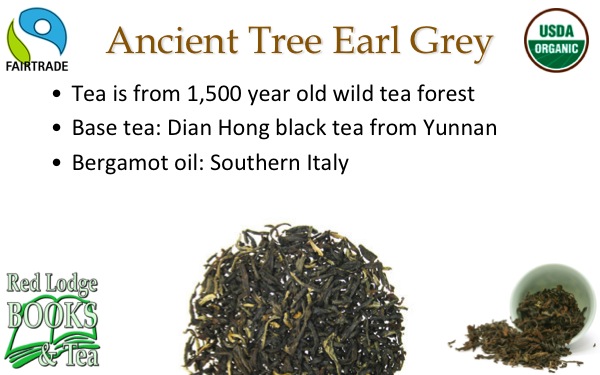


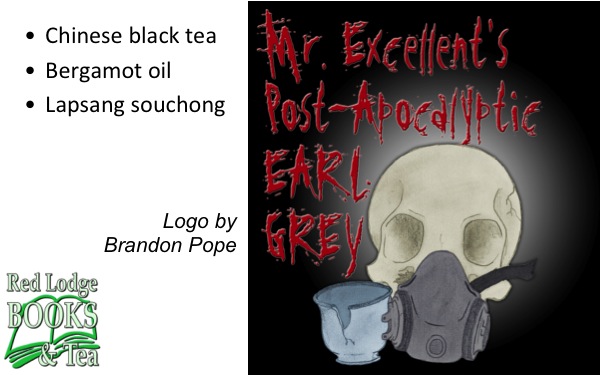
We started out with a discussion of the history of Earl Grey tea. The common myth is that the tea blend was presented to Charles, the 2nd Earl Grey by a Chinese mandarin after Charles (or one of his men) saved the life of the mandarin’s son on a trip to China. In reality, Charles never set foot in China, and the history has a more mundane beginning. The Earl lived at Howick Hall, which had a high lime (calcium) content in its water. This gave his tea an off-flavor and he (or possibly Lady Grey, depending on who’s telling the story) consulted a tea expert for advice. This tea expert — possibly a Chinese mandarin, we don’t know — came up with the idea of adding the oil of the bergamot orange (Citrus bergamia) to the tea. This is what was served in Howick Hall, and the formula was eventually presented to Twinings by the Earl and it became one of their regular offerings. Twinings changed the formula a couple of years ago, but that’s another story. Before we leave the subject of bergamot, by the way, the word is Italian, not French, so the “T” at the end is pronounced. I have heard a lot of tea people talk about “bergamoh,” but it is actually pronounced just the way it is spelled. Tea purists who scoff at Earl Grey often use the word “perfumey” to describe it. There’s a reason for that. By some estimates, as much as half of women’s perfumes contain bergamot oil, and about a third of men’s fragrances. The first Earl Grey that we tasted is Ancient Tree Earl Grey from Rishi — a wonderful blend that does quite well in our tea bar. This amazing tea won “Best Earl Grey Tea” at the 2008 World Tea Championship. Next, we moved on to a house blend called Lady Greystoke. This is my take on lavender/vanilla Earl Grey, a blend which many tea shops would call Lady Grey, despite the trademark violation. Lady Grey tea is named for Mary Elizabeth Grey, the wife of Lord Charles, 2nd Earl Grey. Our Lady Greystoke is named for Jane Porter, who married Tarzan to become Lady Jane Greystoke (the full story is in an earlier blog post). For people that enjoy the bergamot, but want a milder tea, many shops offer an Earl Green or Earl White, and perhaps a caffeine-free Earl Red made from rooibos (yes, we have all three of those). For a different twist, we offered up a Jasmine Earl Green. Lightly perfumed with both with jasmine blossom and bergamot oil, it’s the most delicate of the teas we tasted. Next, we come to a popular blend of ours that really captures the character of the American West: a sage-based Earl Grey we call Coyotes of the Purple Sage. I know, it sounds rather strange, but the flavor mix really works. The literary allusion in this one comes from Zane Grey’s book, Riders of the Purple Sage. Yes, it’s a Zane Grey Earl Grey! For the story of the logo and blend, see my earlier blog post about it. The next tea also has a book theme — you can tell we have a combination tea bar and bookstore — but I’m not going to call this one a “literary” allusion, as nobody would refer to the Fifty Shades of Grey books as “literature.” I came up with the blend just for fun, with lots of punny references to the book, ranging from tea’s color (black and blue) to the rich flavor and overpowering bergamot. It actually ended up being quite tasty, and we’ve been selling quite a bit of it. We wrapped up with a signature house blend that’s completely different — a lapsang souchong-based Earl Grey that we call Mr. Excellent’s Post-Apocalyptic Earl Grey. The full story of that tea has already been told here, so I won’t repeat it. If you live in the area and were unable to attend this session, I sure hope to see you at one of our future stops on our World Tea Tasting Tour. Follow the link for the full schedule, and follow us on Facebook for regular updates (the event invitations on Facebook have the most information). Let us close with a short video explaining the proper way to order a cup of Earl Grey tea:

Fun Blends: Fifty Shades of Earl Grey

At the height of popularity of the Fifty Shades of Grey books, we still owned a combo bookstore and tea bar. I was working on some Earl Grey recipes, and thought it would be fun to do a Fifty Shades parody since the books were still selling well. It was just for fun, and I didn’t think it would earn a permanent spot on our tea menu, but this odd blend became one of our top sellers.
DISCLAIMER: There is no connection whatsoever between this tea and the Fifty Shades of Grey books. This is not a licensed product, and it has not been endorsed or authorized. It is strictly a parody.
The tea is based on a Kenyan black tea with a bit of Ceylon and purple tea mixed in. Then, of course, it gets the bergamot oil that characterizes an Earl Grey—a lot of bergamot. On top of that is a melange of cinnamon, orange, lemongrass, cornflower petals, and other goodies. Some of the ingredients were added for flavor, and some for looks. I wanted a black & blue tea, and I wanted something with a dominating flavor. What can I say? I just couldn’t resist the wordplay.
Coincidentally, it’s certainly one of the prettiest teas we have. People couldn’t resist the tea shot through with color, especially the cornflower petals, which added nothing whatsoever to the taste.

The Logo
After a variety of local artists had been having the fun of producing logos for our house blends, I thought it was about time to do another one myself. Since drawing isn’t my strong suit, I decided to pick a blend where I could work from a stock photo to start, and Fifty Shades of Earl Grey would be a good one to start with.

For the background picture, I wanted to capture the feel of the book cover artwork without using any of their imagery. I found a stock photo I liked, clipped out a portion of the pot with the steam, extended the dark background, and then adjusted the tone to get that bluish-grey color we ended up with. For the text, I chose a typeface with the look & feel of an old typewriter font, but proportionately spaced, and then I kerned it to suit.
The tagline at the bottom? Well, once again, I just couldn’t resist.

Fun Blends: Coyotes of the Purple Sage

With new tea blends, sometimes we come up with the tea first and struggle to think of the perfect name. Sometimes we come up with a cool tea name and then spend weeks tweaking the formula until we find just the right taste. And then the logo works its way into the equation.
Sometimes, however, everything comes together in a flash, and that’s what happened with this tea.
We were looking for ideas for a fundraiser, using a tea that had a real American West flavor to it. Being a tea bar/bookstore combo, a literary allusion makes things even better. As we were throwing out ideas, someone said “Zane Grey.” The next obvious leap was “a Zane Grey Earl Grey.” The next obvious leap was to Zane Grey’s best-known book, Riders of the Purple Sage.
The ingredients for the tea came together pretty quickly as well. Black tea and bergamot oil are the base for most Earl Greys. Sage was pretty much a mandatory ingredient. A bit of lemon verbena and lemon thyme added more citrus notes and the thyme goes well with the sage (I will resist breaking into song here), and a subtle touch of peppermint finished off the blend.
The Logo
The fundraiser is for the Yellowstone Wildlife Sanctuary here in Red Lodge, and two of the well-known noisy critters right by the entrance are a pair of coyotes named Bonnie and Clyde. We wrapped everything up by tying in the Wildlife Sanctuary and naming the tea Coyotes of the Purple Sage.
My logo is an homage to the cover of the first copy of Riders of the Purple Sage that I read, shown in the banner at the top of this article.

The Lady Greystoke logo

Does it seem like I’ve got a theme going on this blog lately? I’ve had quite a few posts about the fun we’ve been having with logos for our house blend teas. Some great artist friends have done logos for us, including Al Jones (Hammer & Cremesickle Red Tea and Robson’s Honey Mint), Brandon Pope (Mr. Excellent’s Post-Apocalyptic Earl Grey), and Suzanna Bailey (MaterniTEA). Now, I’d like to introduce the latest in the series: Doug Bailey (Suzanna’s husband) made us a logo for our Lady Greystoke tea (the story behind the blend is here).
As with the other artists, I didn’t give Doug any direction at all beyond explaining the origin of the name and the ingredients in the blend. He picked up on the “wild yet civilized” aspect of Jane Greystoke, and being Doug (his nickname is “the Beerbarian”), he added a saber-toothed tiger. I don’t remember any saber-toothed tigers in the Tarzan books, but that’s probably just because Edgar Rice Burroughs didn’t think of it.
Doug is a pencil kind of guy, so he gave me the logo as a pencil sketch and I colorized it. I’ve always done my colorizing by scanning the image, loading it into Photoshop, making the background transparent, and then painting behind the image. This has the disadvantage of taking out light shading and fine detail from the original sketch, and Doug did a lot of shading in this one.
This time around, I added the color by creating new layers for each element (16 layers in this case) and setting the layer to a linear burn. That way, I don’t have to modify the original layer at all, and any shading—no matter how subtle—shows through the color.
As an aside, I’ve always preferred to drink my Earl Grey teas hot. I got to thinking about iced Earl Grey today when a customer ordered an iced Lady Greystoke at the Tea Bar, so I had to give it a try. The addition of the lavender, rooibos, and vanilla really seems to make this a smooth iced tea. I may be drinking more of it iced.
Lady Greystoke
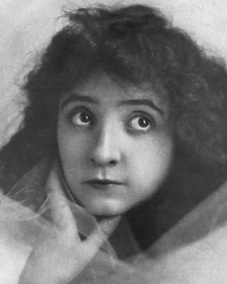
Enid Markey, the first actress to bring Jane Porter to life in film. Jane married Tarzan in the book, "The Return of Tarzan," becoming Lady Jane Greystoke.
As I mentioned a couple of days ago, we decided to rename our Lady Grey tea. I put the word out to friends on all of the social media, and a former fellow moderator at the Straight Dope Message Boards who goes by the moniker of “Czarcasm” came up with the winning suggestion: Lady Greystoke.
Since the tea bar is a part of Red Lodge Books, we liked the literary connection behind Lady Greystoke: In Edgar Rice Burroughs’ Tarzan books, Jane Porter was the love interest. Tarzan himself was John Clayton, Earl Greystoke, so when he married Jane in the second book of the series (The Return of Tarzan), she became Lady Greystoke.
We had many other great suggestions — and quite a few silly ones — but none caught our attention quite like this one. We just may use several of those other names for other blends in the future, so we appreciate everyone who took the time to make suggestions.
The most common suggestion, interestingly, was to call the tea Jane Grey. Lady Jane Grey, also known as The Nine Days’ Queen, was the great-granddaughter of Henry VII. She ruled as de facto Queen of England for nine days in 1553, and was later executed for high treason. Since Lady Greystoke was also a Jane, we liked this connection, too.
In celebration, I shall be enjoying a mug of Lady Greystoke tea tomorrow morning at the tea bar. Everyone’s invited to come in and join me!
 Tea With Gary