Category Archives: Blends
Lady Greystoke
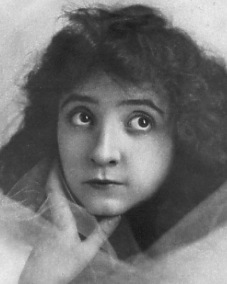
Enid Markey, the first actress to bring Jane Porter to life in film. Jane married Tarzan in the book, "The Return of Tarzan," becoming Lady Jane Greystoke.
As I mentioned a couple of days ago, we decided to rename our Lady Grey tea. I put the word out to friends on all of the social media, and a former fellow moderator at the Straight Dope Message Boards who goes by the moniker of “Czarcasm” came up with the winning suggestion: Lady Greystoke.
Since the tea bar is a part of Red Lodge Books, we liked the literary connection behind Lady Greystoke: In Edgar Rice Burroughs’ Tarzan books, Jane Porter was the love interest. Tarzan himself was John Clayton, Earl Greystoke, so when he married Jane in the second book of the series (The Return of Tarzan), she became Lady Greystoke.
We had many other great suggestions — and quite a few silly ones — but none caught our attention quite like this one. We just may use several of those other names for other blends in the future, so we appreciate everyone who took the time to make suggestions.
The most common suggestion, interestingly, was to call the tea Jane Grey. Lady Jane Grey, also known as The Nine Days’ Queen, was the great-granddaughter of Henry VII. She ruled as de facto Queen of England for nine days in 1553, and was later executed for high treason. Since Lady Greystoke was also a Jane, we liked this connection, too.
In celebration, I shall be enjoying a mug of Lady Greystoke tea tomorrow morning at the tea bar. Everyone’s invited to come in and join me!
Lady Grey
 Today was tea blending day at the tea bar, as I mixed up new batches of our house blends. As I was working on our Lady Grey, I got to thinking about how incredibly different Lady Grey teas are from one company to the next, and decided to do a bit of reading on the subject.
It didn’t take long to find a comment that “Lady Grey” is a registered trademark of R. Twining and Company in the U.S. and U.K. (here’s a link to the trademark search on Trademarkia that shows it renewed in March of 2006). This hasn’t stopped quite a few companies from producing their own variations, like Jasmine Pearl (theirs has orange zest and lemon myrtle, but no bergamot!), SereneTeaz (an Earl Grey with lavender), American Tea Room (they don’t have a full ingredient list, but it includes cornflower petals), and Tea Embassy (another Earl Grey with lavender).
Should I follow their lead and continue calling my blend Lady Grey? Nah. I have better things to do with my time and money than fight legal battles. I’ll do the right thing and follow the example of Marks & Spencer (they call theirs Empress Grey) and Trader Joe’s (Duchess Grey).
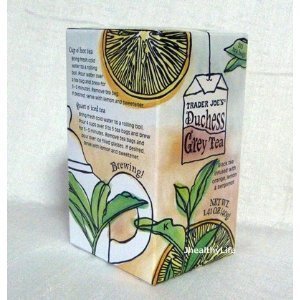
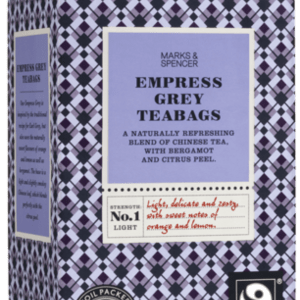
Twinings originally named their Lady Grey tea for Mary Elizabeth Grey. Their Earl Grey tea (which they changed last year) was named for her husband, Charles, who was the second Earl Grey. Twinings uses less bergamot in their Lady Grey than they do in Earl Grey, but they add other citrus and some cornflower.
I’ve never understood the rationale of “clone blends.” My “Lady Grey” isn’t the same as anyone else’s. If it was, I’d just buy theirs. I want something different. Mine is an organic blend, using Chinese black tea, oil of bergamot, wild Tibetan lavender, a little bit of vanilla, and a touch of rooibos.
What to call it? The one consistent thing about all of our other Earl Grey teas is the word “Earl.” Earl Green (green tea + bergamot), Earl Red (rooibos + bergamot), and all of the blends that use the full “Earl Grey” moniker, like Mr. Excellent’s Post-Apocalyptic Earl Grey and Cream Earl Grey. The name “Lady Grey” keeps the “Grey” instead of the “Earl,” but is still connected.
So I have done what I often do in such situations: turn the question over to my friends, colleagues, and acquaintances. I’ve asked Facebook and the Twitterverse for suggestions, and I’m starting a thread on my favorite message board (the Straight Dope). When we decide on a new name, you’ll read about it here first!
Another new logo: Honey Mint Tea
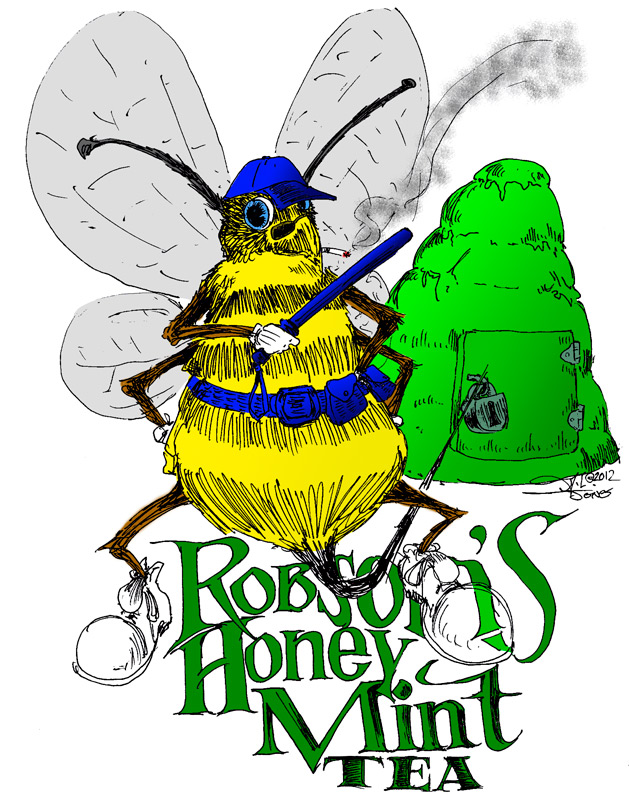 Back in October, my friend Al drew a logo for our Hammer & Cremesickle Red Tea blend. Today, he put his artistic talent back to work and came up with another logo for the Tea Bar. This time, it was for my caffeine-free “Honey Mint” blend.
I developed this blend a few months ago when some customers had expressed an interest in a caffeine-free version of our Moroccan Mint tea. Not being a fan of decaffeinated teas, I went for a naturally caffeine-free base instead. I wanted it to be a little bit sweet, so I used honeybush as the base tea, and blended that with organic peppermint from Washington state. A little bit of licorice root for the aftertaste finishes off this sleepytime mint tea blend.
Al has a rather strange sense of humor (that’s why we get along, of course), and I gave him no guidelines at all on the logo. He set to work developing a logo based on a pun.
When I called the blend “Honey Mint,” I was referring to honeybush and peppermint. Al went after another meaning of mint, as in the United States mint. He drew a bee guarding a mint (a locked up hive full of peppermint and honey). Pretty tough-looking bee, too, with his cigarette, truncheon, and shades. The original drawing (see below) was just done with a pen and some printer paper. I scanned it in and colorized it using Photoshop. Hopefully, my colors fit Al’s original concept. I always feel strange about colorizing other people’s artwork — I’m afraid I’ll screw it up.
Another artist friend is currently working on a logo for Mr. Excellent’s Post-Apocalyptic Earl Grey, and we hope to find people to do my other house blends (Lady Grey and MaterniTea). As always, watch here for news.

Al’s original artwork for “Robson’s Honey Mint Tea.”
Hammer & Cremesickle Red
 Isn’t it fun how names develop for tea blends? The naming process is almost as much fun as the blending process itself.
For weeks, I had been trying to come up with a tea that invoked the taste of the creamsicles I used to enjoy so much as a kid (Who am I kidding? I still enjoy them!). Frozen orange over a vanilla bar. Yum! My initial attempts were based on black teas, and the flavor of the tea kept overwhelming the flavor of the orange and vanilla.
Finally, I hit on something that seemed to work. A blend of rooibos and honeybush as a base, which adds a rich, creamy texture. Orange and natural vanilla for the cremesicle flavor, and just a touch of carob to round everything out. I tried it both hot and iced and decided I liked it.
Some friends, Al and Ranetta, popped by the tea bar, and I asked if they’d like to sample my newest concoction. Being willing guinea pigs, they acquiesced. They tasted, we talked, and they liked it. Ranetta asked if she could buy a few ounces. As I started to write out the label, my hand stopped, poised to write, as I realized I hadn’t named the new blend yet.
I decided to write “orange creamsicle,” but Al was talking and distracting me (It’s all Al’s fault. Really it is). I misspelled the word. Unbelievable, isn’t it? But I threw an extra K in there. I noticed the error and commented on it.
“How did you spell it?” Al asked.
“Sickle with a K,” I replied. “As in ‘hammer and sickle’.”
It struck us both at about the same time that this is a red tea (the rooibos plant is also called the African redbush), so that could end up as a very fitting name. Al asked for a sheet of paper and set to work sketching a logo. I scanned, tweaked, and colorized his masterpiece (sorry, Al) and included it at the top of this blog post.
(Please imagine, in the following paragraph, that I’m speaking with the same accent as Mickey Rourke used when playing Whiplash in the second Iron Man movie. If you can’t do that, I’ll settle for Boris Badenov from the Rocky & Bullwinkle show.)
You must buy Hammer & Creamsickle Red now, comrade. Will take you back to childhood summers at family dacha on Volga river. Decadent treat from American capitalists. We have our own capitalism now; our own pravda. We have no money, but tea is cheap. Try now.
[UPDATE Feb 2012: We used this tea in the frosting for our Orange Spice Carrot Cake Muffins. It worked beautifully!]
[UPDATE Apr 2012: Al has drawn us another logo, this time for Robson’s Honey Mint Tea. He does great work.]
[UPDATE May 2012: Hammer & Cremesickle Red Tea is now available on our new Tea Bar website. I’ve updated the links in this article accordingly.]
Mr. Excellent’s Post-Apocalyptic Earl Grey Tea
After my blog post a couple of weeks ago about Twinings changing their Earl Grey formulation, I went to my favorite online forum (the Straight Dope Message Boards) and started a poll to see what people thought about it. I never thought at the time that it would lead to a whole new spin on Earl Grey tea.

During the discussion, a fellow who uses the online moniker “Mr. Excellent” commented that:
“But yah, Twinings is acceptable, but I prefer to get my tea from a local tea shop. And lapsang souchong is more my thing, anyway. (Though adding bergamot could be neat …) “
The idea of a smoky lapsang souchong with bergamot just seemed wonderful to me, and I commented that I was going to give a shot at creating one. Mr. Excellent responded with:
“I’m looking forward to hearing how the Post-Apocalyptic Earl Gray works out! (Named thus because, with the smokiness of the lapsang, it should be like Earl Gray that survived some firey holocaust and came out awesome.) “
Over the course of the day, I played with recipes, and drank a lot of tea. By mid-afternoon, I was getting fairly close to what I wanted, and described it thus:
“The various strong flavors in this tea hit you at different times. As you bring the cup up to your mouth, the bergamot is the first thing to hit the nose, cutting through the smokiness of the lapsang souchong. When you take the first sip, the bergamot all but disappears, leaving the pine smoke flavor, which fades into the base tea (an organic black Yunnan) as it swirls through your mouth. After you swallow, the bergamot returns, blending with the smoke to create a lingering aftertaste.”
My goal was to create a blend that would make you feel like you were sitting among the smoldering remains of civilization, enjoying a nice cup of tea before hefting your shotgun and going back to fighting off the zombies. After another week or so of experimentation, I think I hit it. “Mr. Excellent’s Post-Apocalyptic Earl Grey” has officially gone on the menu at our tea bar, and as soon as I have the new tea website finished you will be able to buy it online.
Thank you, Mr. Excellent, for the idea and the name. I hope you enjoy the tea!

[UPDATE May 2015: My book, “Myths & Legends of Tea, volume 1” is out, and there’s a chapter devoted to the (fictional) backstory of Mr. Excellent’s Post-Apocalyptic Earl Grey. It’s set in Australia, 20 years from now…
Twinings changes their Earl Grey. Stop the presses. Or don’t.
 The tea world is all a-twitter because British tea giant Twinings has changed the formulation of their Earl Grey tea after over a century and a half. This is being likened to the “New Coke” fiasco. It’s difficult to address a subject like this without puns, so let me get this out of the way and call it a tempest in a teapot.
When it comes to Earl Grey tea, we are swimming in a sea of alternatives. Every tea company has their own twist on the blend, and the only things they have in common are black tea and bergamot. In fact, even the black tea part is optional these days. You can get Earl Grey made from Chinese tea, Indian tea, Ceylon tea, or Kenya tea. You can even get white Earl Grey, green Earl Grey, red Earl Grey (which is made with rooibos rather than tea), or Mr. Excellent’s Post-Apocalyptic Earl Grey. The amount of bergamot can vary from just a hint to enough to knock your socks off. You can get your Earl Grey with lavender or dozens of other additives.
I am most amused by the Earl Grey variants that they call “citrus” Earl Grey. Hey, guys, all Earl Grey is citrus. That’s what bergamot is. It’s a variety of orange.

The bergamot orange.
We’ve done some experimentation in our tea bar. Since Earl Grey tea is hugely popular — one of my personal favorites, in fact — we started out with four Earl Greys: an Ancient Tree Earl Grey, Empire’s Earl Grey Supreme, a rooibos Earl Grey for the caffeine-free crowd, and our own lavender Earl Grey blend we call The Countess (here’s why we don’t call it Lady Grey). Yes, we know that’s not what’s in Twinings’ Lady Grey. We don’t care.
We knew those last two were going to be specialty drinks. The purists wouldn’t be interested in either one. The first two would be a horse race for popularity.
Rishi’s offering is my personal favorite. It’s a very straightforward Earl Grey made from organic fair-trade Yunnan Dian Hong. The Earl Grey Supreme from Empire Tea includes quite a bit more bergamot and some other citrus as well. The horse race became a runaway. Rishi’s Ancient Tree Earl Grey is the most popular tea at the tea bar (judging by ounces sold), outselling the high-bergamot Supreme by a four-to-one margin. If I were the type to draw conclusions based on a single data point, I’d say that adding more bergamot to Earl Grey isn’t a good thing.
That, however, is exactly what Twinings just did (and a touch of lemon, too).
This isn’t really going to affect me. They may have been first out of the gate with Earl Grey, but theirs has never been my favorite formulation. I think it will be a good thing for the tea business, though, as it will drive the old-line Twinings Earl Grey purists to get out and experiment a bit. We’ll see where it goes.
Update: 7 September 2011
That didn’t take long. Andrew Brown at the Telegraph blogged (actually before my post came out, so I suppose my research was inadequate) that Twinings has released “Earl Grey: The Classic Edition” to satisfy discontented fans. It’s an interesting post. The thing I find most interesting is the biography line at the top, which says, “Andrew M Brown is a writer with an interest in mental health and the influence of addiction on culture.” Good qualifications for someone writing about tea, eh?
 Tea With Gary