Author Archives: Gary D. Robson

Yerba mate

Let’s get this out of the way first: is it spelled yerba mate or maté? Normally, when words from other languages are adopted into English, their accent marks go away. In this case, it’s the other way around. In both Spanish and Portuguese, the word is spelled mate and pronounced MAH-tay. No accent mark is used, because it would shift the emphasis to the 2nd syllable. The word maté in Spanish means “killed.”
In the United States, people unfamiliar with the drink see “yerba mate” written on a jar in a tea shop and pronounce mate to rhyme with late. So it has become accepted in English to add the accent above the e just to help us pronounce the word right. Linguists call this a hypercorrection.
Yerba, on the other hand, is spelled consistently in English, Spanish, and Portuguese, but the pronunciation varies depending on where you are. As you move across South America, it shifts from YER-ba to JHER-ba.
Directly translated, a mate is a gourd, and yerba is an herb, so yerba mate (Ilex paraguariensis) is literally the herb you drink from a gourd. I don’t really care which way you spell (or pronounce) the word as long as you give this delicious drink a try!
Yerba mate is a species of holly that contains caffeine (not, as previously thought, some related molecule called mateine). It grows in Brazil, Argentina, and Paraguay, and is the caffeinated beverage of choice for many people who live in those countries.
In the U.S., mate is usually made like tea, with the leaves steeped in boiling water for a few minutes and then removed. This, however, isn’t the way Argentinian gauchos (cowboys) been drinking mate in South America for centuries.

The process uses four elements: dried yerba mate leaves, hot water, a gourd (mate), and a bombilla (straw). Bombilla is another word that varies in pronunciation in different parts of South America, ranging from BOM-bee-ya to BOM-beezh-a.
Drinking mate was a social time for the gauchos and still is throughout much of South America. You generally won’t find yerba mate served this way in a U.S. tea shop, because it’s darned near impossible to clean a natural gourd to health department standards.
- First, the host (known as the cebador), fills the gourd about 1/2 to 2/3 full of leaf. Yeah, that’s a lot of leaf, but we’ll get a lot of cups out of it!
- Next, the cebador shakes or taps the gourd at an angle to get the fine particles to settle to the bottom and the stems and large pieces to rise to the top, making a natural filter bed. Before pressing the bombilla against the leaves, dampening them with cool water helps to keep the filter bed in place.
- Finally, the cebador adds the warm water. The water is warm (around 60-70°C or 140-160°F) rather than boiling, because boiling water may cause the gourd to crack—and your lips simply won’t forgive you for drinking boiling water through a metal straw!
In most of the world’s ceremonies, the host goes last, always serving the guests first. The mate ceremony doesn’t work that way. That first gourd full of yerba mate is most likely to get little leaf particles in the bombilla, and can be bitter. So the cebador takes one for the team and drinks the first gourdful.

After polishing off the first round, the cebador adds more warm water and passes the gourd to the guest to his or her left. The guest empties the gourd completely (you share the gourd, not the drink!), being careful not to jiggle around the bombilla and upset the filter bed, and passes the gourd back to the cebador.
The process repeats, moving clockwise around the participants, with everyone getting a full gourd of yerba mate. A gourd full of leaves should last for at least 15 servings before it loses its flavor and becomes flat.

Innovation in tea

Quora can be an interesting place. Questions tend to fall into a few broad categories:
- Thoughtful questions that inspire experts in the subject to post answers. These are educational and often fun (“Why do closed captions still look like they did in the 1990s?”).
- Questions that could have been answered by a quick Google search or a visit to Wikipedia. Often, the same question (or slight varieties) are posted over and over and over… (“Does green tea have caffeine?”).
- Questions that start with a bizarre or incorrect assumption (“Why does visiting a library or bookstore have an instant laxative effect?”).
This post is inspired by a question in that third category.
A Quora user posted the question, “Why don’t you get innovative tea shops like you do with coffee shops?” I wrote a short response to it, and then decided that it would make the basis for a good Tea with Gary article, so here we are!
I’m not a coffee fan, so I’ve spent very little time in coffee shops. On the other hand, I owned a tea bar bar for 15 years and I’ve written extensively about tea (including my book, Myths & Legends of Tea).
I challenge the assumption behind this question.
There are some incredibly inventive, innovative, and creative tea shops out there. In fact, because the overwhelming majority of tea shops are single-location “mom & pop” shops rather than corporate chains, they have a great deal more personality than the chain shops that represent the majority of coffee shops in the U.S.
Tea shops vary in quite a few ways, and each one leaves room for innovation.
Aesthetic/decor
Traditionally, tea shops either follow an Asian or Victorian aesthetic. It’s easy to find a tea shop serving Earl Grey in fine porcelain cups with scones and clotted cream, and every tea connoisseur knows at least one Chinese tea shop serving tea samples gongfu style or a Japanese tea shop where you can get a real authentic matcha whisked to perfection in a beautiful handmade chawan (matcha bowl) with some wagashi.
In visiting other tea shops and talking with tea shop owners & employees, I’ve found a whole lot of variety beyond those standards, though, including the “tea tavern” aesthetic of my shop, and tea shops that are steampunk, modern, art deco, fusion, and about any other style you can imagine.
Tea selection
Coffee shops tend to have a handful of basic varieties that they serve on a day-to-day basis, and a ton of additions you can make (steamed milk, sugar, sweet syrups, flavorings, whipped cream…). The one down the street from me has dozens of coffee varieties that they roast and blend on premises, but most of those aren’t available every day by the cup.
Tea shops, on the other hand, tend to have a lot more varieties, and all of them are available all the time. There’s no one single variety that you’re guaranteed to find in every tea shop, either (yes, there are a lot of tea shops that don’t have Earl Grey tea). Tea shops use a variety of criteria to choose their teas:
- Medicinal properties: There’s a tea shop in the big town down the street that’s run by an herbalist. She has a selection of good flavorful tea, but that’s not her focus. She has every variety of herb you’ve ever heard of (and many you haven’t), and an encyclopedic knowledge of their reputed effects on the human body.
- Flavor: A lot of shops focus exclusively on flavor, ignoring health benefits, sourcing, and quality of the underlying tea (which is overwhelmed by all of the added ingredients).

(I’m the one on the left)
- Quality pure tea: My friend Kevin Gascoyne owns the Camellia Sinensis Tea House in Canada (he’s the one I got the Laotian pu-erh from). They are deeply focused on super high-quality estate-grown teas. He can tell you exactly where every tea on his shelves came from—sometimes right down to which section of the estate the plants grew in, when it was picked, and sometimes even the name of the person who picked it or processed it. You can get some absolutely extraordinary tea from him!
- Creativity: I confess. We do this. One of us will wonder, “what if you made masala chai with pu-erh instead of black tea?” or “would a smoked Earl Grey work?” Next thing you know, we have another new & different blend on the shelf.
- The latest trends: Oh, yes. The tea biz is just like any other business. When boba tea became popular in the U.S., boba shops popped up everywhere (some don’t even put tea in their “boba tea”!). Ditto kombucha. When mainstream media started plugging the incredible benefits of matcha, tea shops dedicated exclusively to matcha appeared in the big cities.
Most shops are a fusion of these (we all touch on the trends from time to time), but one of these will be the focus.
Preparation style
Almost every shop can make you a cup of straight black tea. Some will make it with teabags (yuck), some with teapots, some with funky infusers. Some use monstrous electronically-controlled brewing systems.

Even the options for that hot cup of tea vary. I’ve been in two Teavana shops, and neither one offered milk or cream to pour in your English Breakfast tea (we offer 2%, whole, half & half, cashew, almond, and soy). Some shops will make a great tea latte, like a traditional masala chai or London Fog. Some pre-sweeten the teas, while others offer a dizzying array of sweetener options. Some offer syrup flavors, others focus on just straight tea.
Traditional serving methods from other countries show up, too. If you pick the right shop, you may be able to drink yerba mate from a gourd, matcha from a bowl, or strong black tea with salted yak butter from a samovar.
And there are always new methods cropping up. For example, we’re experimenting now with carbonated iced teas, fresh-brewed in front of the customer.
So I say to the original poster on Quora, if you haven’t seen an innovative tea shop, you’re looking in all the wrong places.
As I write this, I’m enjoying the third infusion of a well-aged single-serving “mini-brick” of shu pu-erh and paying the price for my inattention (see “Why I use a tea timer“). I usually give the first steeping an extra minute or so to let the leaves soak up water and separate, and then cut back on steep times for the next few infusions. Typically, I’d give the third infusion two minutes. My daughter would do one minute and my wife would do three. I wasn’t paying attention and steeped it four minutes. It’s quite a bit stronger than I’d prefer, but it’s certainly still drinkable.

The Evolution of Taste

What was the first tea you tasted? If you’re American, it was probably a cheap teabag filled with black tea dust, probably steeped for a long time and possibly drowned in milk and sugar.
If you have a taste for adventure, you probably tried a few other things later on. Earl Grey, perhaps, or possibly a pot of nondescript green tea at the Chinese restaurant down the street. Then maybe — just maybe — you stopped into your Friendly Neighborhood Indie Tea Shop™ and had your mind blown by an amazing oolong or a mind-blowing pu-erh. Now you want to taste all the tea!
Congratulations, you would have been the perfect candidate to join the tea tasting club at my old shop (Phoenix Pearl Tea), but let’s leave that for another blog post.
Thankful to have left that cruddy old Lipton behind, you plow forth into the tea world. You taste exotic green teas like genmaicha (roasted rice tea), hōjicha (roasted green tea), and kukicha (twig tea). You savor delicate white teas like silver needle. You chase down both sides of the pu-erh spectrum, sampling rich complex sheng and deep earthy shu. You try the full range of oolongs, from buttery jade to crisp Wuyi. You might even be lucky enough to find a tea shop with a yellow tea. Wow.
But you’ve left the black teas behind, your impressions tainted from those teabags you drank back before you became enlightened.
Yesterday, I taught a tea class on the teas of China. In it, we tasted all of the major tea styles, and sampled our way through five prime tea-growing provinces (Anhui, Fujian, Jiangsu, Yunnan, and Zhejiang). There were oohs and ahs over the bai mudan white, the roasted tieguanyin (Iron Goddess of Mercy) oolong, and the longjing (dragonwell) green. But do you know what stopped everyone cold in their tracks? The black teas.
I pulled out my favorite Keemun mao feng. If you’ve never tried one of these, stop reading now, buy yourself a bag, and come back. Ready? Okay. Let’s continue.

It’s easy to fall in the trap of considering black tea the “cheap stuff” and all of the other varieties the “good stuff” (except for that pond scum the Chinese restaurant down the street thinks of as green tea, but we’ll just ignore those guys). Nothing could be farther from the truth.
Keemun mao feng has a lot going on. It’s rich and complex, lighter than you’d expect, and if you consider grocery-store-brand teabags representative of black tea, this stuff will open your eyes. The people in my class kept commenting on how many layers of flavor this tea has, on how it changes as you hold it on your tongue, and the subtle sweetness they picked up in this (completely unsweetened) cup of tea.
Note, by the way, the steeping instructions in my slide above. You may like yours steeped longer than the two minutes I recommend. That’s fine. I’m no tea Nazi. Drink it the way you like it.
Next, we tried a dian hong, also known as a Golden Yunnan. It flips you clear across the flavor spectrum, with that color in the glass saying “oolong” as the flavor says “black tea.”

If you’re at this point in your exploration of the tea world, congratulations! You’ve left the cheap black tea behind and opened yourself up to a whole world of other tea styles. Now it’s time to come back home to black teas. Try the two I talked about above. Explore the vast difference between India’s tea-growing regions by drinking a first-flush Darjeeling, a hearty Assam, and a rich “bitey” Nilgiri. Sample the Rift Valley teas from Kenya (the largest tea exporting country in the world). Island hop with some Java and Sumatra tea. Drink a liquid campfire with a steaming cup of lapsang souchong.
Once you’ve experienced the range of flavors, textures, terroirs, and aromas from top-notch loose-leaf black teas, you’re still not done. Now is the time to turn your newly-expanded palate loose on some blended teas, like high-end English Breakfast. Go back and taste some of the flavored black teas like Earl Grey. Play with some masala chai and some tea lattes (try a strong Java tea made with frothed vanilla soy milk!). Start experimenting with iced tea, brewing it strong and pouring it over ice.
You may decide that you’ve moved on from black tea and that’s great. Or you may just find that you’ve developed a whole new appreciation for that stuff that got you started on tea in the first place.
As I write this, I’m sipping on a 2017 1st flush Darjeeling from Glenburn estate. It’s very different from last year’s, when the picking was delayed by heavy late rains. You’d swear this was oolong tea. It’s extremely different from teas picked at that estate later in the year. I don’t know what (if anything) we’re going to end up with for a 2018 1st flush, as many of the estates in Darjeeling were left in horrible condition after this summer’s strikes, so if you have some Darjeeling tea you like, don’t waste it!

Start Spreading the News

I’m not leaving today, but I am heading for New York New York next month! I’m looking forward to drinking tea, telling tea stories, and signing tea books at a café in NYC called The Monkey Cup, where my friend and fellow tea blogger Linda Gaylard did a book signing last year.
The trip is actually a book tour for my latest children’s book, Who Pooped in Central Park?, but I’m taking a couple of hours off on Sunday June 26 to relax with some friends and some tea and tell some of the stories from Myths & Legends of Tea, including one from the upcoming volume 2. If you’re on Facebook, please join the event page for the signing. If you have questions, I can answer them there.
I love drinking tea. I love telling stories. I love hanging out with other tea lovers. Drinking tea while telling tea stories to tea lovers is my idea of heaven! I hope to see you there.
Thanks to Jo Johnson of Scandalous Tea for setting up the visit!

Tea Stories with Gary Robson
Sunday, June 26, 4:30 pm to 6:30 pm
The Monkey Cup
1730 Amsterdam Ave, NY, NY
As I write this, I’m savoring a cup of Jinxuan Jade Oolong. This mild oolong has a smooth, buttery taste that I just can’t get enough of. If you don’t want to drink it, make a cup anyway, just to watch the “agony of the leaf,” as the tightly-rolled balls of tea open up in the hot water into full pairs and trios of leaves still attached to a bit of stem. I made mine with water just under the boiling point and steeped it for three minutes. Yum!

I’ve created a new Tea Cupping Journal!

Developing a good palate for tea really requires keeping notes. Remembering what teas you do and don’t like needs notes, too, for most of us. And I’ve been searching for a tea journal that I really liked for a while. There are some pretty good ones out there, but I’m an individualist. I had to do my own thing. And my own thing is called A Tea Journey: Your Personal Tea Cupping Journal.
(Caution: blatant self-promotion ahead)
This guided journal is designed to guide you through the next 100 teas you taste. Keeping notes about each cup of tea encourages you to drink your tea actively, paying attention to taste, aroma, appearance, and how it feels in your mouth. When you journal about it, tea becomes an experience to savor and linger over instead of just another drink.
Tea is a subjective experience. Between these covers, nobody’s opinion matters but your own. Don’t worry about what other people think of a particular tea; just record your own impressions.
Each tea page is numbered, so you can see at a glance just how many teas you have tasted and written about. Some tea journals (especially the cupping journals intended for experts and aficionados) use terminology that may not be clear to a beginner. At the front of the journal, I included descriptions of the common tea styles and some related tisanes (rooibos, honeybush, yerba mate, and so forth). Also, on the page facing tea number one, I included short descriptions of what to write in each section.

Comparative cupping is a great way to develop your palate. Get two similar teas and try them side by side, recording your impressions on facing pages of the journal.
Obviously, the best possible Christmas present for a tea lover would be one of these journals and a big box of tea — and maybe a copy of Myths & Legends of Tea.
Enjoy, and thank you for putting up with my utterly shameless self-promotion this week!

While writing this blog post, I was enjoying a cup of Houjicha, a roasted Japanese tea about as different from traditional Matcha, Sencha, or Gyokuro as you could possibly get. The roasting adds a nutty flavor and a toasty aroma that go beautifully with a cold, windy Montana day.

Is Your Tea Gluten Free?

The answer to this question should be easy. All tea comes from the Camellia sinensis plant. It is not grain. It contains no gluten.
For those casually following the gluten-free lifestyle, that answer should be enough. But for those with celiac disease, a bit more detail may be required:
A lot of things are called tea that aren’t tea
As the first paragraph said, real tea comes from Camellia sinensis. But many (most?) people refer to anything that involves steeping leaves or flowers in hot water as tea: yerba mate, rooibos, chamomile, honeybush, and so forth. Technically, they are tisanes or infusions, but they are often sold as tea.
So if you’re buying actual black tea, green tea, oolong, pu-erh, or white tea, all is well. If you’re buying “herbal tea,” you’d better take a closer look at that label.
But wait…
Flavored teas have all kinds of additives
You may be getting a nice black tea that’s totally 100% gluten-free, but many flavored blends are sweetened. One of the things they may be sweetened with is malted barley, which does contain gluten. There’s not going to be very much of it, but it may be enough to cause problems for celiac patients.
So if you’re buying unflavored straight black tea, green tea, oolong, pu-erh, or white tea, all is well. If you’re buying flavored teas, you’d better take a closer look at that label.
But wait…
Gluten in teabags? Really?
A number of tea companies use sealants for their teabags that contain gluten. There’s no gluten in the tea itself, but once you dip that bag in boiling water and the glue starts to melt, you’re picking up a tiny bit of gluten. By “tiny bit,” we’re talking a few parts per million in the brewed tea here, which is a tiny fraction of what it takes to cause reactions in someone with celiac disease. But if you’re actually looking for ZERO gluten content, we’re not quite there yet.
So if you’re buying loose-leaf unflavored straight black tea, green tea, oolong, pu-erh, or white tea, all is well. If you’re buying teabags, you’d better take a closer look at that label.
But wait…
Cross-contamination
Now we’re getting into incredibly small amounts, but some tea companies use the same facility for manufacturing tea as they use for manufacturing products that contain gluten. There is a possibility of airborne cross-contamination from those products.
At this point, we might as well be talking about any other food product on the planet. Can we guarantee that there wasn’t a wheat field next to the farm where your tomatoes were grown? A big mug of tea might use 7 grams of tea leaf. Cross-contamination at 1 ppm means 7 micrograms of gluten. That’s about one millionth of the gluten you’d get from a couple of slices of bread or a pint of beer.
According to this article, “research has suggested that a daily gluten intake of less than 10 milligrams (mg) is unlikely to cause significant damage to the intestines in most people with celiac disease.” The gluten you’d pick up from teabag glue or cross-contamination is less than a thousandth of that amount.
That same article says that, “In most parts of the world, regulations say that to be labeled gluten-free, a product can contain up to 20 parts per million (ppm) of gluten.” That means a slice of gluten free bread could still contain 100 times the gluten of a cross-contaminated cup of tea!
I am not a nutritionist, medical practitioner, or scientist, but I think those numbers make it pretty clear that if someone with celiac disease wants to drink a few cups of tea every day, it’s going to be just fine.
As I write this, I’m sipping on a cup of Jinxuan Jade Oolong, a rich buttery semi-oxidized tea that has replaced Iron Goddess of Mercy as my regular morning cup. I steep it 3:00 in boiling water, and then get three more cups out of it, adding a half-minute of steep time to each successive infusion. Although it is of the “milk oolong” style, it contains neither milk nor gluten.

How to be an awesome indie tea shop customer

As I was browsing the web looking for inspiration and education (a futile effort, much of the time), I came across an interesting blog post entitled, “How Not to Be a Bad Starbucks Customer: 10 Things You Should Do.” It’s an intriguing short post that — at least in my mind — goes a long way toward clarifying the difference between the coffee world and the tea world. We can start with the easy part: it doesn’t say “coffee” in the title; it says “Starbucks.” Granted, the blog is titled, StarbucksMelody: Unofficial Starbucks News & Culture, so I guess it’s only natural to have it Starbucks-centric.
But this is the point: the U.S. doesn’t have a “coffee culture” per se, but there is a “Starbucks culture,” which comes from their undeniable domination of all things coffee. In large part, Starbucks culture is our coffee culture. And people are nervous about it. So nervous that they read blog posts about how not to be a bad Starbucks customer. They don’t want to embarrass themselves.
We need to make sure this never happens in the tea world.
Our job, as tea shop owners, barTEAstas (if I may coin a particularly ugly word), tea writers, tea growers, tea importers, and general denizens of the tea world, is to welcome, encourage, and educate newcomers. It is not to shame them, make fun of their lack of knowledge, or cause them to worry because they don’t know where to stand or don’t know our terminology. Unfortunately, the terminology issue has already reared its ugly head, and a big chunk of the blame falls on … Starbucks. As an example, there’s a wonderful tea drink called “masala chai.” In Punjabi, “masala” refers to a spice blend, and “chai” means tea. An obvious English translation would have been “masala tea,” but Starbucks went for “chai tea” instead, a rather boneheaded phrase that basically means “tea tea.”
But I digress (as I am wont to do) …
“Our job … is to welcome, encourage, and educate newcomers. It is not to shame them, make fun of their lack of knowledge, or cause them to worry because they don’t know where to stand or don’t know our terminology.”
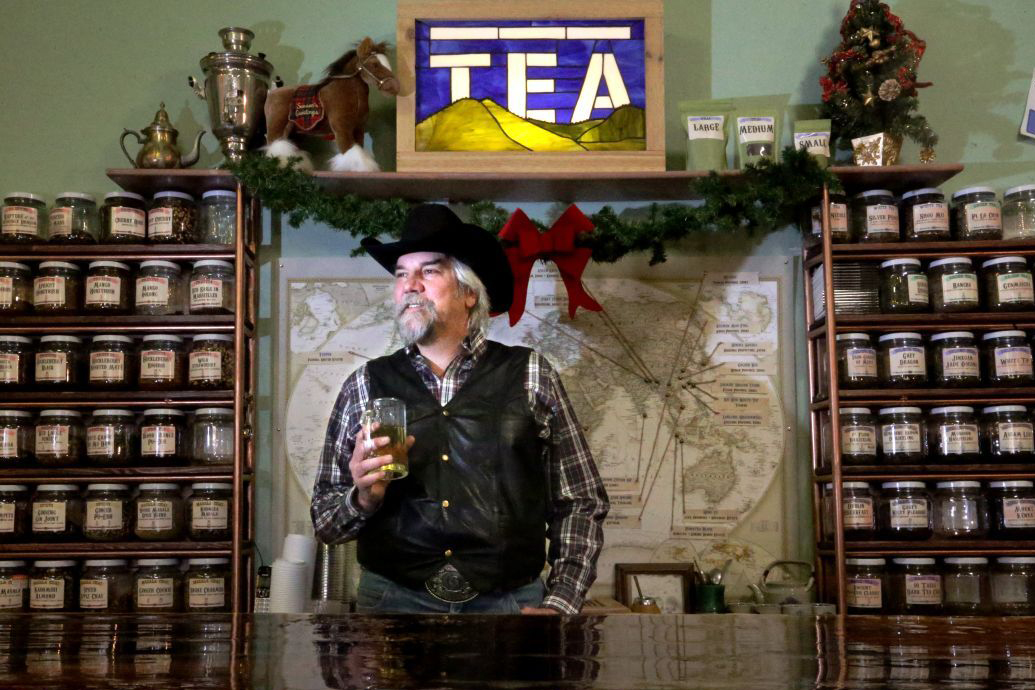
This is me behind the counter, sampling my own wares.
When you walk into an independently-owned tea shop, you are not expected to know that shop’s terminology, customs, or culture. You don’t need to feel anxious about whether you’re going to commit some horrific tea faux pas. You just need to do one thing to be the customer we all love.
What you have to do to be an awesome customer
- Enter the tea shop with an open mind and tell us what you do and don’t like.
We’ll take it from there!
Referring back to the blog post that inspired my blog post, let me re-frame what StarbucksMelody had to say from a tea perspective.
Things you don’t have to worry about
The tea experience is supposed to be calm and relaxing. You shouldn’t be stressed out about whether you’re properly prepared to walk in and order a cup of tea. And you really shouldn’t worry about these things:
- Knowing our sizes, or weird words for our sizes.
We don’t expect you to walk in the door knowing our sizes. We’ll tell you. Or maybe we’ll have cups on the counter labeled small, medium, and large — or 8oz, 12oz, 16oz. Don’t be afraid to ask. - Knowing what kind of tea we have
Coffee shops usually have a couple kinds of coffee out. They can do many things to it (add steamed milk, add flavor shots, pour it over ice, sweeten it…), but there’s generally just coffee and decaf coffee in that decanter behind the counter.
Tea shops usually have dozens (or even hundreds) of different types of tea. Even our regulars don’t know them all, as most tea shops regularly add or drop teas. If you tell us, “I’m looking for a strong hot black tea” or “I’m looking for a fruity green tea,” we can help you find one. That’s our job, and we love doing it. - Knowing how a particular tea is prepared
You don’t have to know the proper water temperature for white tea, the appropriate steeping time for Earl Grey, how to whisk a matcha, or how to rinse a pu-erh. That’s what you’re paying us for. We do know these things. - Using the right terminology
You don’t have to know a bunch of super-secret, just-for-the-cool-kids terminology to order tea. If you ask for that floral green tea that’s rolled into balls and left in your cup while you’re drinking, we know what you mean. Often, the terminology changes from shop to shop. The tea shop back home might call that style Jasmine Pearls, and my shop might call it Jasmine Dragon Tears, and they probably come from different producers. Either way, if you can describe it, we can probably figure it out. - Ordering something strange
It’s very common for people to come into my tea bar looking for something I don’t have. With any luck, I can do it anyway. You want a super-strong ginger Earl Grey latte with soy milk? I will pick the appropriate Earl Grey, add some ginger root, make it super strong for you, and froth up some soy milk. No problem. If you like it, I’ll make you a big bag of the blend and write instructions on the bag for how to prepare it. That’s what brings customers back for more. - How long your drink has been sitting out
This isn’t a coffee shop. Your tea hasn’t been sitting in a pot behind the counter for an hour. It’s being made fresh right there in front of you. - Asking questions
It’s okay to ask questions. We encourage you to ask questions. Most of the people working in indie tea shops absolutely love tea and love talking about it. If you want to know which of our teas are organic, how much caffeine they have, or what the Ethical Tea Partnership is, or where our milk oolong comes from, go ahead and ask.
The tea experience is supposed to be calm and relaxing.
It all boils down to this: Tea shops are not a place for stress. Don’t come in worrying about how to be a good customer (although we do appreciate it if you finish your phone call before you walk up to the counter), just come in looking for some good tea and let us help you get it.

World Tea Expo 2015 – Day 1

Yesterday started out with the return of the bloggers to Tea Expo (it’s kind of like the return of the swallows to Capistrano, except noisier).

I was very pleased to find that The Tea Spot and Teas, Etc. were in the lobby to keep us all adequately caffeinated. I enjoyed cups of their tea before, during, and after the seminars. Interestingly, both companies had chocolate pu-erh blends, and both recommended steeping them for 4-5 minutes. That’s an awfully long time for a shu pu-erh. I went for 3 minutes, and quite liked both of them (sorry, purists).
My first seminar of the day was an absolutely fantastic start to Tea Expo: Jane Pettigrew and Bruce Richardson talked about “A Social History of Tea in the UK and USA.”

They walked us through the history of tea in the western hemisphere from the 1600s to modern times, covering everything from Catherine of Braganza to A&P (originally the Atlantic & Pacific Tea Company). A few of my favorite factoids from their seminar:
- “Monkey-picked oolong” isn’t picked by monkeys. That would be cost-prohibitive. It is just a term for the highest-grade oolong in the house.
- The “Queen’s closet” wasn’t a place to store clothes. It’s where she brewed tea and shared it with family & friends.
- “High Tea” isn’t the fancy thing many Americans think it is. It’s a casual family meal. The elegant tea you’re thinking of is “Afternoon Tea.”
- I’ve mentioned this one before, but there were no tea bricks dumped in Boston Harbor in in 1773. The Boston Tea Party tea was all loose-leaf — and quite a bit of it was green tea.

Every year I take another picture of this matcha stone at AOI. It just intrigues me. Last year I described it and even posted video of it, but I just can’t stay away from it.
One of the things I look for at Tea Expo every year is new and different tea. I do love the teas from the big tea-producing countries like China, India, and Kenya, but it’s fun to explore some of the varieties you don’t run into every day, from countries that aren’t represented in every single tea shop. We had a very pleasant tasting of Indonesian teas at three adjacent booths and found some great surprises.

The afternoon session “Amplifying Your Business Voice Through Tea Bloggers” was informative, even for tea bloggers. All of us look at things differently and run our blogs differently. I update this blog every Friday (most of the time, unless I’m late) with bursts of activity during events like World Tea Expo. Nicole Martin has been updating hers every weekday for the last six years. One of the blogs nominated for a World Tea Award this year hasn’t been updated since early 2014.

Some tea blogs are all about reviewing individual teas. Some are about teaware. Some are about stories. Mine is whatever happens to be either exciting me or annoying me at the moment. The big message from this session was, if you wish to work with tea bloggers, do your research first. Read the blogs. If you are selling flavored chamomile blends, don’t pick a tea blogger that’s a single-origin Camellia sinensis specialist. Geoff Norman told us that he didn’t know the difference between Yixing and Wedgewood, so don’t waste your time and money sending him a teapot to review!
Something else I’ll be writing about in more detail later is “Coffee leaf tea.”
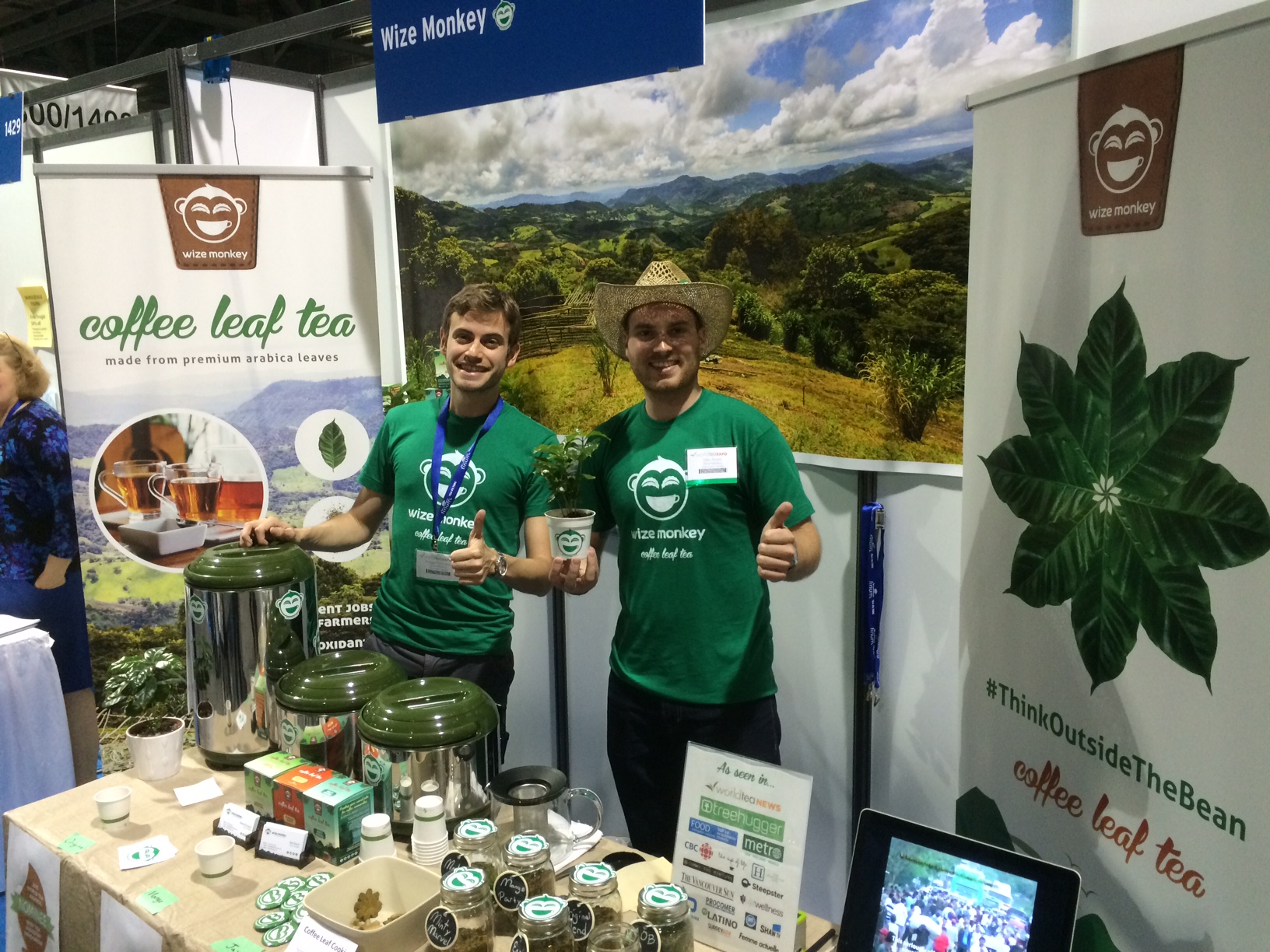
The name may be a bit confusing, as this product contains no coffee beans and no tea. It’s a tisane (“herbal tea”) made from the leaves of coffee plants. I can’t stand coffee, but I found the flavor of this drink quite pleasant. The company’s focus is on extending the season (picking leaves when you can’t pick beans) and creating more jobs, but there will be more on that in a future post.
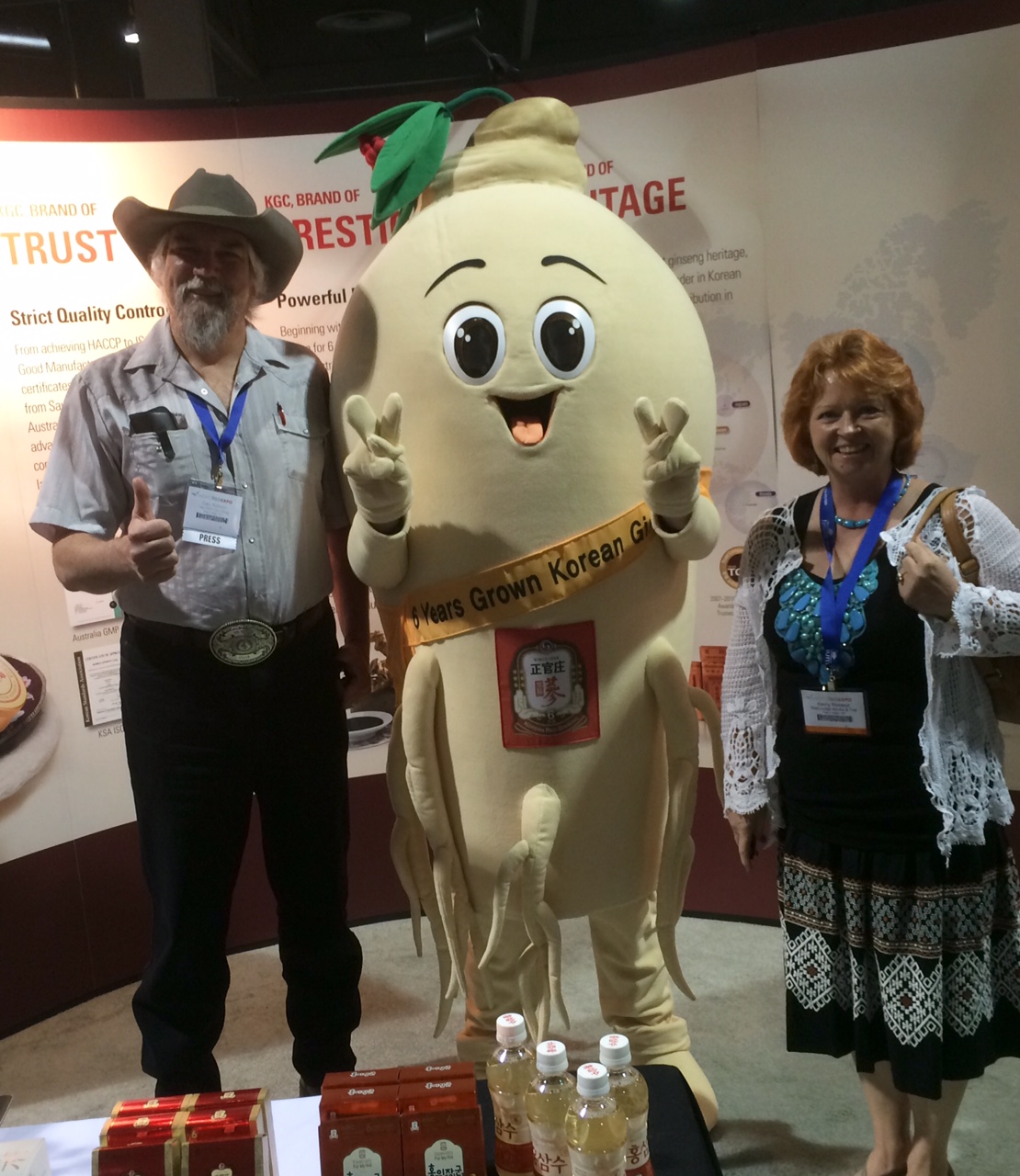
We all have our taste preferences, and mine tend to run towards pure (unflavored) tea. I’m not a big fan of ginger, either, but my wife, Kathy, and I couldn’t resist having our picture taken with this gigantic (and slightly creepy) Korean red ginseng root:
And, just as a close, my birthday is coming up and this automated pyramid satchel tea bagging machine is only $70,000. It would be an easy way to take some of my whole-leaf teas on the road with me. Hint, hint…


The Iron Goddess of Mercy – Part 1
This is one of the stories from my book, Myths & Legends of Tea Volume 1. I will post the conclusion tomorrow [Update: here it is]. In the book, each story is followed by notes about the tea and how to prepare it. I hope you enjoy the stories!

To read more about Myths & Legends of Tea, download a sample chapter, or buy a copy (paperback, Kindle, or Apple iBook), please visit the main book page!
The Iron Goddess of Mercy
China, 1761
It was the reign of the Qianlong Emperor, the sixth emperor of the Qing Dynasty in China, but our story concerns no emperors, warlords, or nobles. It is just a tale of a humble farmer by the name of Wei.
Wei lived in Anxi Country in the Chinese province of Fujian. People there were struggling with hard times. Fujian, they say, is eight parts mountain, one part water, and one part farmland. Wei’s tiny village was no exception. He and his neighbors grew what they could. A bit of wheat, a bit of rice, and a few sweet potatoes were enough for most of them to get by.
Their favorite crop was tea. They worked hard to produce good tea, using the complex oolong production style. Their process wasn’t bad but the result was usually mediocre, as it came from poor stock.
“Oh, well,” they used to say. “You can’t get silk from an earthworm.”
Each week, Wei would go to market in the city. Each week, he passed an old temple that had fallen into disrepair. The pathway was overgrown, the gates had fallen, and it appeared that nobody had worshipped there in a very long time. It was such a part of the scenery that Wei walked by it without even seeing it.
Like the rest of his village, Wei was a Buddhist. It’s difficult to describe how Buddhism works to Westerners like us, as the Buddha himself isn’t considered a god but an enlightened being. What we often refer to as gods and goddesses in Buddhism, actual Buddhists would call bodhisattvas. The temple Wei passed each week was built for the Bodhisattva Guanyin, whom you or I might call the Goddess of Mercy.
One particular day – a day that would become a major turning point for Wei, Wei’s village, and lovers of tea everywhere – Wei stopped on the road to rest. Not that stopping on the road was an unusual occurrence. The trip was long and Wei was not as young as he used to be. On this very notable day, however, he stopped right at the pathway to the temple of Guanyin.
After Wei set down his heavy load, he pushed back his hat and wiped the sweat from his forehead. What used to be the temple’s garden was surrounded by a small rock wall, more decorative than functional. It would do no good at keeping out deer or rodents, and in its current tumbledown state, even a rabbit could hop right through in several places.
Once, the flowers and cherry trees of the garden had been carefully-tended, but that was long ago. The undergrowth almost completely obscured the path, bushes had grown tall and scraggly, and the unpruned cherry trees blocked the sun to the flowers. At least, he thought, the wall provides a place to sit and the trees give me shade.
He looked down the pathway, wiped his sleeve across his forehead again, and thought about the temple.
Guanyin is the Goddess of Mercy, he thought. Okay, perhaps he called her a bodhisattva rather than a goddess, but he was, after all, Chinese, and neither goddess nor bodhisattva is a Chinese word, so I shall use the more familiar word in my telling of Wei’s story.
It is not seemly that we should treat Guanyin’s temple with such disrespect, he continued to himself. We should show … well … mercy.
He picked up his wares and continued to market, but his moment of epiphany (or dare I say, enlightenment?) stuck with him throughout the day. The following week, he brought some old gardening tools with him and stashed them beside the pathway on his way to market. He hurried through the selling of what little he had to sell and the buying of what little he could afford to buy, and then he headed home.
When Wei reached the temple, he retrieved his tools and began clearing the path. Carefully, he pruned back the bushes that encroached on the pathway. Thoughtfully, he trimmed the tree branches that overhung the walk. Delicately, he pulled the weeds from the path itself. Soon, the sky began to redden as the sun fell in the west, and he secured his tools behind the rock wall and went home, a bit disappointed that he had cleared only the beginning of the path.
Over the following weeks, Wei repeated the process. Sometimes he would clear the plants. Sometimes he would fix the flat rocks and fill in gaps to smooth the path. Sometimes he would leave the path alone for an evening and work on the wall. He made a special trip with a friend from the village to fix the gate.
This continued until the path was clear all the way to the temple entrance. Pleased with his progress, he lit a candle and stepped into the temple itself.
The sorry state of the exterior was nothing compared to the disrepair of the inside. Webs occupied the corners of the room, and spiders occupied the webs. Dust was everywhere. The offering bowl was reduced to ragged shards, and vines crept in the windows. A mouse skittered across the floor, and a snake watched hungrily from behind the altar. But Wei noticed none of it. All of his attention was drawn to the statue of Guanyin.
There she sat! The center of the temple was dominated by the statue of a beautiful maiden meditating. In her lap she held a fish basket. Although the statue was dirty and old, it was unbroken and the fine details of her necklace and her Tang Dynasty clothing were clear. Wei thought he could see sadness on that lovely face, and it nearly broke his heart.
He stood staring at Guanyin for many minutes, finally breaking his reverie to look about the room. To one side was a painting of Guanyin with a child on each side and a white parrot above. A beetle crawled across the frame. Even the painting looked sad, he thought.
Wei was touched by the experience and vowed that he would get rid of that melancholy look. He continued coming back each week on his way home from market. On one visit, he brought a stick long enough to take down the spider webs. Of course, he carefully took the spiders outside without harming them. Guanyin is, after all, the Goddess of Mercy.
The next week, he brought a broom and swept out the temple. The next, he delicately dusted the statue itself. He found the nest the mice had built and moved it outside. The snake, he scooted out the door with the broom. This had to be repeated several times as snakes can be stubborn once they’ve chosen a home.
The next time he stopped at the temple, he looked at the shattered bowl in front of Guanyin’s statue. He carefully gathered the pieces of the broken offering bowl in the sleeve of his robe and took them home. He set the pieces on his table and studied them. Wei was a simple farmer. He didn’t have the skills to repair the bowl. But perhaps he knew someone who did.
Wei once again gathered up the bowl fragments and carried them to the home of his good friend Wang, the potter. Wang invited Wei into his home and went immediately to the teapot. After all, when a friend visits, it is important to serve them tea.
As the water heated, Wei began to tell Wang about the temple. Wang listened as he carefully measured out the leaves. At first, the tale did not interest him much, for China is filled with old temples and roadside altars. Some are well-kept. Some are not.
As large bubbles began to form and rise through the water (the Chinese people call this stage “fish eyes”), Wang put the tea on to steep. When Wei started to tell him about the offering bowl Wang’s ears perked up.
“I do not know how to fix the bowl,” Wei told him, “and I do not have the money to buy one.”
“Let me look,” Wang said, and Wei spread out the pieces before him. Wang became so engrossed in studying the broken bowl that he almost forgot to pour the tea. He was so distracted that he hardly noticed the muddy flavor and the bitterness of their tea. When you can rarely afford to buy good tea, you soon become accustomed to poor tea.
“Can you repair this,” Wei asked anxiously, “or perhaps make another one like it?”
“Where will you get the money to pay for it?” Wang responded. “I am very busy and must make many bowls to sell so that I can feed my family. And Guanyin’s temple is your project, not mine.”
“You are my friend, Wang. When you were sick last summer, who brought tea and rice for you and your wife? When the monsoon rains came early two seasons ago, who helped you to make a ditch to drain your wheat field and irrigate your rice properly?”
“You are right, Wei. I am sorry. Friends help their friends. I shall make you a proper bowl. I cannot do it today, and maybe not for a couple of weeks, but I will make a bowl that you will be proud to give to Guanyin.”
And so things went. Wei replaced the offering bowl with the one that Wang made him. He pruned the trees. He found an inexpensive incense burner and set it in a nook on the wall. He took a pitcher of water and washed the statue. He kept the pathway clear. He even planted some flowers. And every week he lit incense and meditated before he left.
Tune in tomorrow for the conclusion to Wei’s story!
Oolong-related articles on Tea With Gary
-

The Iron Goddess of Mercy – Part 1
The Iron Goddess of Mercy Part 1 — China, 1761 — It was the reign of the Qianlong Emperor, the sixth emperor of the Qing Dynasty in China, but our story concerns no emperors, warlords, or nobles. It is just a tale of a humble farmer by the name of…
-

The Iron Goddess of Mercy – Part 2
The Iron Goddess of Mercy Part 2 — China, 1761 — It was the reign of the Qianlong Emperor, the sixth emperor of the Qing Dynasty in China, but our story concerns no emperors, warlords, or nobles. It is just a tale of a humble farmer by the name of…
-

Canon cameras and oolong tea
Why should you drink oolong tea when you’re taking pictures with a Canon camera? Let me explain…
-
The Oolongs of Taiwan: Stop 6 on the World Tea Tasting Tour
Taiwan may not have originated oolong tea, but it is definitely at the forefront of oolongs today. At this stop on the tea tour, attendees learned about what oolong tea actually is, and tasted a variety of Taiwanese oolongs, including Bao Zhong, White Tip Bai Hao, and of course Tieguanyin,…
-
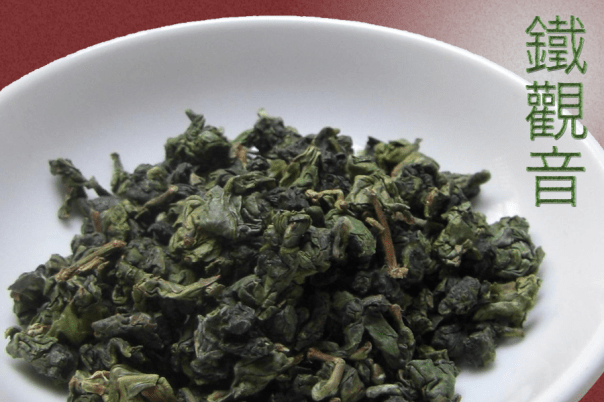
Free mystery tea (Tieguanyin)!
A friend stopped by the tea bar the other day and brought a bag of tea from China that a friend had given her. She didn’t know what it was, and she’d had it for five years, so she asked if I’d like to have it.

The Iron Goddess of Mercy – Part 2
This is the continuation of yesterday’s post, which is one of the stories from my book, Myths & Legends of Tea Volume 1. In the book, each story is followed by notes about the tea and how to prepare it. I hope you enjoy the stories!
In our story so far, a farmer named Wei has discovered an abandoned temple to Guanyin, the Goddess of Mercy, and worked tirelessly to restore it to its former beauty.

To read more about Myths & Legends of Tea, download a sample chapter, or buy a copy (paperback, Kindle, or Apple iBook), please visit the main book page!
The Iron Goddess of Mercy
China, 1761
One day, Wei walked into the temple and realized he had done everything he could do. All of the little things were repaired. Everything was clean. The incense was burning and someone – he did not know who – had placed an offering in the bowl. He looked at the statue of Guanyin and thought he detected a trace of a smile. Just a tiny bit. Just at the corner of her mouth. But he didn’t see the sadness he had seen before.
There may actually have been a hint of smile on the statue’s face, or Wei may have been imagining it. It really didn’t matter, though. It brought a real smile to Wei’s face. There’s a special kind of happiness we get from doing things for others, things that bring us no personal benefit. That is what Wei felt as he walked home that afternoon.
That night, as Wei slept, he had a vivid dream. Not like our normal dreams, where things have soft edges and little detail and we forget them as soon as we wake. This dream was crystal clear, and felt like he was actually experiencing it.
Wei stood on the shore of an ocean where a mighty storm was raging. He was on a rock looking down at the powerful waves crashing against the shore. The wind whipped the spray into his face and threatened to knock him from his precarious perch. Although it was daytime, the dark clouds above hid the sun from him, making everything look like it was drawn in charcoal.
He seemed to actually feel the sea water on his skin, hear the howl of the wind and the roar of the surf, smell the salt in the air. Never had he experienced a dream with such clarity, and it made him nervous.
He fell to one knee and braced himself against the wind so that it wouldn’t sweep him into the surf booming against the sharp outcroppings below him. As he knelt there, the clouds parted far out over the water and he saw a beam of sunshine fight its way through. Where it hit the water, the head of an enormous sea dragon breached the surface of the sea, and the furious storm-whipped waves began to calm around its mighty neck. As more of the dragon crested, Wei saw someone standing on its back, wearing flowing white robes.
As the dragon approached, the calm water and the beam of light came with it. Soon, Wei could make out the woman riding upon the dragon. It was Guanyin, carrying a willow branch in her right hand and a jar of clear water in her left. Although water coursed from the back of the sea dragon, Guanyin’s hair and robes were dry. On her face was an expression so serene, so calm, that Wei did not fear the monstrous beast that towered high over the shore. Guanyin stood effortlessly, her dry feet showing no signs of slipping on the wet scales of the dragon’s back.
When the dragon approached his rock, Wei was encompassed by the beam of light. The crashing of the waves ceased and the world around him suddenly felt like it was painted in delicate watercolor. Tranquility settled over him, and he rose to his feet to find himself looking into the eyes of Guanyin. He fell back to his knees and bowed his head.
“Rise,” she told him. He stood awkwardly, intimidated by her presence and the head of the dragon looming over him, water dripping from the barbels alongside the fearsome mouth.
She studied him for a long moment before she spoke. He kept his head down, but could not stop himself from looking at her.
“You are a good man, Wei,” she said. “You have worked long and hard to restore my temple, and you have shown me great respect. What would you ask from me as a reward?”
He responded without stopping to think. “I did what I did because it needed to be done. I did not fix your temple because I sought reward. I fixed it because it was the right thing to do.”
“I know that,” the goddess responded. For the first time, Wei saw a smile on her face, and it brought such joy to his heart that he almost interrupted her. Luckily, he held back, for it is not wise to interrupt the gods. But what reward could compare with bringing a smile to the face of the Goddess of Mercy? No man could ask for more.
“Had you done this for a reward,” she continued, “I would not be inclined to give you one. But your motives are pure and enlightened. Kindness deserves kindness, and for that reason, I shall reward you.
“You did not select a gift, so I have selected one for you. You shall find it behind the temple, shadowed by the large bear-shaped rock. It holds the key to your future and your village’s future, so treat it with care and respect.”
He bowed his head again as the dragon pulled back from the rock upon which he stood. The clouds dissipated from the sky, and the sea became smooth as glass. A single yellow butterfly danced before him as the dragon swam away, gradually disappearing under the water.
Wei stood on the rock, overcome with joy. Slowly, the vision faded and he settled into a deep dreamless sleep.
When Wei awoke in the morning, he lay quietly in his bed, serene and rested. Then the dream came back to him. He leapt out of bed and rushed through his morning routine. He felt no hunger, and took only a moment to eat a half-bowl of rice, barely tasting it as he ate.
He rushed to the temple. How different it looked! The stone wall looked sturdy and solid. Flowers were beginning to bloom in the rays of sunlight that streamed through the neatly-pruned cherry trees, which were showing signs of blooming themselves. The entrance to the temple was inviting, clean, tidy.
Without even pausing to enter the temple and light incense, Wei stepped from the path and circled around behind. He hadn’t ventured here before. It was still wild. A rivulet of water burbled happily down the steep slope, and only a small area was flat and level. In that small area stood the bear-shaped rock that Guanyin had referred to, taller than Wei himself.
He looked eagerly in the rock’s shadow, not knowing what to expect, and saw nothing but dirt, rocks, and a pathetic little sprig of a plant.
I see nothing, he thought. My treasure must be buried.
But as Wei kneeled to start digging, something about the sapling caught his eye. The deep green of the leaves and their slightly jagged edges looked familiar. It was a tea plant! Small, undernourished, with only a few leaves, but a tea plant nonetheless. He dug it up and carefully transplanted it into his garden at home.
For days and weeks, he watered it, tended it, fertilized it, all the while not quite sure if this tiny plant was really his reward from the goddess. The scraggly plant grew quickly into a thick healthy bush. The trunk grew strong and thick; the leaves glossy and bright. He picked a leaf and crushed it between his fingers. The aroma was strong and sweet. It was time.
Carefully, he selected a handful of delicate new buds and the young leaves next to them. He laid them out in the sun to wither, and went to tell his friend Wang about his prize. Wang came back to see the tea bush, and they took the leaves into the house to cool.
“Should I go to the city and find a tea master to help me prepare this properly?” Wei asked his friend.
“No,” said Wang. “Guanyin gave you this tea plant. Meditate as the leaves cool. Clear your mind, and then follow your instincts.”
And so he did. He followed the same process that he always used with the scruffy tea plants that he and his neighbors grew. Tossing, a bit of oxidizing, fixing; he dedicated the next day to working with his prized leaves.
He rolled the leaves as oolong tea makers did – and still do. Not being very skilled at it, he ended up not with neat little balls, but with little curled-up tadpole shapes, which he roasted very lightly. Over the next two days, they dried hard as he looked on impatiently. At last, the leaves appeared ready.
Excited, Wei fetched one of his most prized possessions: a beautiful black iron teapot. He took a small scoop of the leaves and dropped them into the teapot and they made sharp “ping” sounds, almost like iron pieces tumbling into the iron pot. He rushed to get Wang and some of his neighbors. They looked at him dubiously as he chattered on about the visit from Guanyin in his dream. They passed around one of his dried leaves and looked it over uncertainly.
Then he poured the hot water over the leaves in his teapot, and the aroma of the tea struck them. They rushed in to look, to smell, and – when the tea was finished steeping – to taste.
The tea was magical. It had a rich amber color and a bold taste with overtones of honey and spice. They held the liquid in their mouths and it felt smooth and light. The taste lingered long after the tea was swallowed, and it brought what could only be called an energizing calm to the villagers. All of the tea they had ever produced before suddenly seemed inadequate and drab.
Because of the hard dried leaves and their ringing sound when dropped on iron or steel, Wei called the tea tieguanyin, which we translate today as Iron Goddess of Mercy.
As Wei’s tea bush flourished, he took cuttings for his neighbors, his friends, and his own farm. All of the other tea plants in the village were slowly replaced, and he taught everyone in the village how to produce his special tea. Soon there was enough tieguanyin to take to market, and the reputation of the tea spread like fire.
The poor village prospered and expanded, but Wei was always there to remind them to take time for Guanyin’s temple. Together, they expanded the garden around the temple, lovingly planted with the most beautiful and fragrant flowers, the most luscious fruits, and of course, the goddess’ own tea bushes.
They sculpted a streambed for the water flowing down the slopes behind the temple. They directed the water around the bear-shaped rock and past the temple to the front, where the garden filled with the tinkling sound of water over rocks, and made a pool in front, which they filled with koi and lilies. In that magic way that ponds have, it filled itself with frogs, who added their music to the sound of the stream.
Drinking a cup of tieguanyin there made the garden seem brighter and the tea taste better. Life was not always easy in the village, but it was never as hard as it had been before Wei began his work on Guanyin’s temple.
Does that temple still stand? I don’t know. If so, I think you’ll agree that the statue of Guanyin upon that alter must now be smiling as tea lovers the world over enjoy the rich ambrosia that we call tieguanyin.
Oolong-related articles on Tea With Gary
-
The Iron Goddess of Mercy – Part 1
The Iron Goddess of Mercy Part 1 — China, 1761 — It was the reign of the Qianlong Emperor, the sixth emperor of the Qing Dynasty in China, but our story concerns no emperors, warlords, or nobles. It is just a tale of a humble farmer by the name of…
-
The Iron Goddess of Mercy – Part 2
The Iron Goddess of Mercy Part 2 — China, 1761 — It was the reign of the Qianlong Emperor, the sixth emperor of the Qing Dynasty in China, but our story concerns no emperors, warlords, or nobles. It is just a tale of a humble farmer by the name of…
-
Canon cameras and oolong tea
Why should you drink oolong tea when you’re taking pictures with a Canon camera? Let me explain…
-
The Oolongs of Taiwan: Stop 6 on the World Tea Tasting Tour
Taiwan may not have originated oolong tea, but it is definitely at the forefront of oolongs today. At this stop on the tea tour, attendees learned about what oolong tea actually is, and tasted a variety of Taiwanese oolongs, including Bao Zhong, White Tip Bai Hao, and of course Tieguanyin,…
-
Free mystery tea (Tieguanyin)!
A friend stopped by the tea bar the other day and brought a bag of tea from China that a friend had given her. She didn’t know what it was, and she’d had it for five years, so she asked if I’d like to have it.
 Tea With Gary