Blog Archives

Japan – Bancha to Matcha: Stop 4 on the World Tea Tasting Tour


In 1191, a Buddhist monk named Eisai brought tea to Japan, and the tea world has never been the same. In Japan, when you say “tea,” you mean “green tea,” and that’s what we focused on. Japan is known for its grassy steamed teas, so we started this event there. We went on to some of Japan’s lesser-known specialty teas, and wrapped up with matcha, the powdered tea used in the Japanese tea ceremony, which we import directly from Japan.

Japan title slide

We’re very excited to be working with resident artist Karin Solberg from the Red Lodge Clay Center, and we are featuring some of her matcha bowls in the store, and she came in to talk about them at this stop in the tour.

The teas we tasted were:

  • Organic Sencha
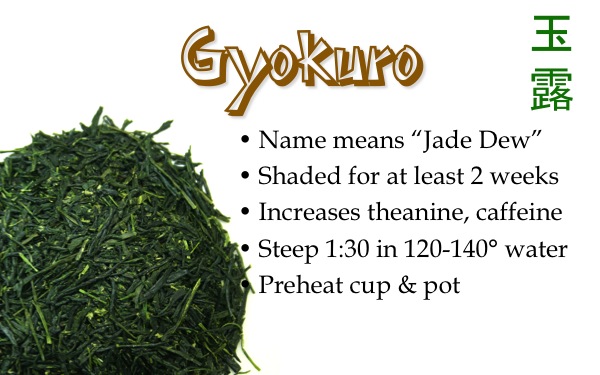
  • Gyokuro
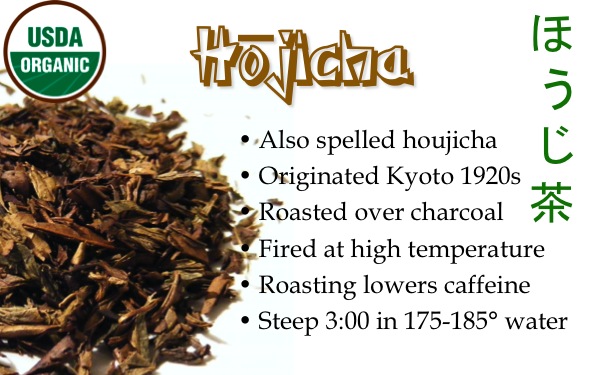
  • Organic Houjicha (roasted green tea)
  • Organic Genmaicha (toasted rice tea)
  • Organic Matcha
Japan is the world’s 8th largest producer of tea, with about 119,000 acres cultivated and an annual production of 101,500 tons. These numbers are from before the Fukushima Daiichi nuclear disaster, which has shut down some of Japan’s tea production. The overwhelming majority of Japanese tea is consumed domestically, with only 2,105 tons exported, or about 2% of production. The country that purchases the most Japanese tea is the United States.
We discussed the Fukushima Daiichi disaster at some length, but instead of including that information here, I’m going to write a full blog post about its effect on Japan’s tea industry when I have a chance.
There are four base grades of tea in Japan:
  • Kukicha   (“twig tea”)
  • Bancha   (“coarse sencha”)
  • Sencha   (“decocted tea”)
  • Gyokuro   (“jade dew”)
We did not taste kukicha or bancha, proceeding instead to the two higher grades.
Sencha
Not all organic tea from Japan will carry the USDA Organic seal. Many Japanese tea farmers prefer to work with their own country’s organization and carry the JAS (Japan Agriculture Standard) Organic seal instead.
Gyokuro
Note the short steep times and cool water used for these teas. Recommendations for the top grades of Gyokuro go down as far as 40 degrees C (104 F).
After tasting the two more mainstream Japanese green teas, we went on two a couple of their wonderful specialty blends: Houjicha and Genmaicha.
Houjicha
Genmaicha
We wrapped up the tasting with Japan’s famous powdered green tea: matcha. We tasted a USDA organic matcha from Aoi, prepared in a traditional chawan, or matcha bowl. Then we made matcha lattes using a sweetened matcha powder with frothed milk.
Matcha
We are lucky to have Karin Solberg, a local artist who works in pottery, producing matcha bowls for us. She talked about the traditions of the bowls, how they are made, and why they are designed as they are. All of the bowls in the picture below are Karin’s.
Matcha Equipment
In part two of this article, I’ll talk more about Karin and about the Japanese tea ceremony and the Way of Tea.
If you live in the area and were unable to attend this session, I sure hope to see you at one of our future stops on our World Tea Tasting Tour. Follow the link for the full schedule, and follow us on Facebook or Twitter for regular updates (the event invitations on Facebook have the most information).

What’s the difference between Japanese and Chinese green tea?
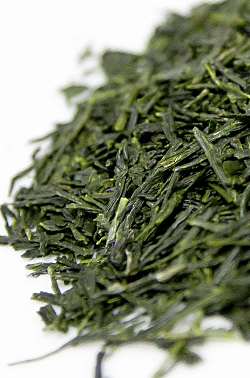

sencha leaves

Japanese sencha leaves

As I did last month and the month before, I took a look at some of the search terms that brought people to this blog and found a question that I didn’t really address. This time: “What’s the difference between Japanese and Chinese green tea?” The obvious smart-aleck answer is that one comes from Japan and the other comes from China, but it runs a bit deeper than that.

First off, it’s not the plants themselves. The first varietal discovered of the tea plant is Camellia sinensis var. sinensis: the Chinese tea plant. About 1400 years ago, during the Sui Dynasty, Buddhist monks introduced tea — and the tea plant — to Japan. This means that the same varietal of tea plant is growing in China and Japan.

Terroir, on the other hand, can definitely have an effect. The climate, soil, and other factors can definitely affect the taste of the tea. Also, the Japanese have been crossbreeding and developing their strains of tea plant for over a millennium.

The biggest factor in the taste, though, is a very simple one: the process.

The difference between black tea and green tea is oxidation. Black tea is fully (or near-fully) oxidized, while green tea is not oxidized at all. There is an enzyme in the tea leaf that starts the oxidation process as soon as the leaf has been broken or bruised. Making green tea requires a “kill green” step that destroys the enzyme and stops the tea from oxidizing. That step requires heating the tea leaves quickly to at least 140 degrees.

To make Japanese green teas, such as sencha, bancha, and gyokuro, the leaves are steamed. To make Chinese green teas, such as dragonwell or gunpowder tea, the leaves are pan-fired. Just this simple difference in processing gives Japanese teas a rich grassy flavor and Chinese greens more of a vegetal character.

Granted, I am oversimplifying, but this is the fundamental answer to the question.