Category Archives: Caffeine

How much caffeine is in my tea?
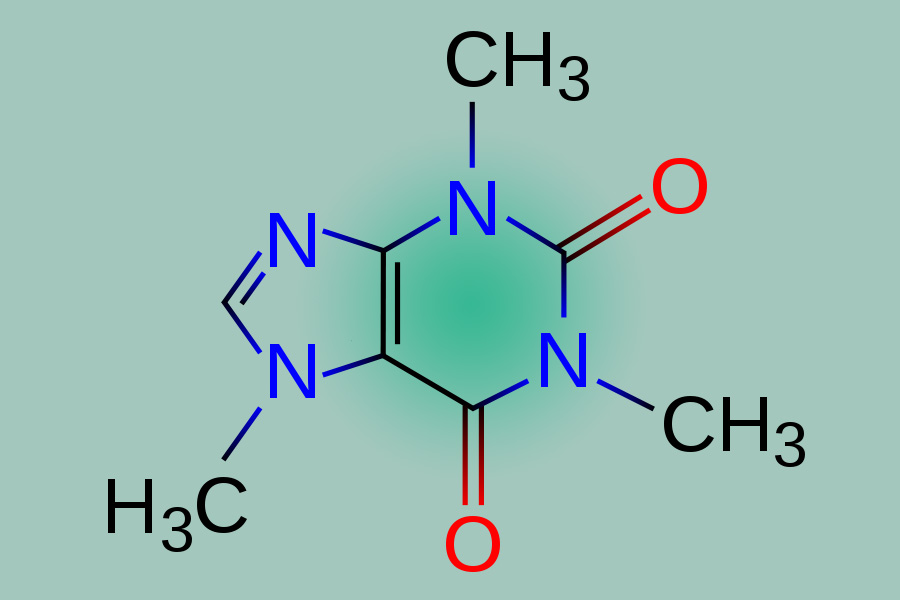
I wish there was a simple answer to this question. It would be ever so cool if I could just say, “black tea has 45 mg of caffeine per 8-ounce cup.” In fact, a number of people say it actually is that simple. Unfortunately, they’re wrong.
This graph came from the front page of the eZenTea website:

And this one is from a tweet from SanctuaryT (it said, “Finally, the truth about #tea and #caffeine!”):

They make it pretty simple, right? But that’s not very useful when they disagree with each other! The first chart shows the caffeine in green tea at 20 mg/cup and white tea at 10 mg/cup, showing that white tea has half as much caffeine as green tea. The second chart shows green tea at 25 mg/cup and white tea at 28 mg/cup, indicating that white tea has 12% more caffeine.
Then we get confusing (and frankly pretty silly) charts like this one from HellaWella:

All three charts have green tea in the same basic range (20-25 mg/cup), but the HellaWella chart breaks out black tea (which is 40-42 mg/cup in the other two charts) into “brewed tea” at 47 mg/cup and “brewed imported tea” at 60 mg/cup. Huh? “Imported”? HellaWella’s “about” page doesn’t say what country they’re from, but I’m going to guess from the spellings that they’re from the U.S. Sure, there are few small tea plantations in the U.S., but I would venture to guess that approximately zero percent of casual tea drinkers have ever had a domestically grown tea. In America, pretty much all tea is “imported.”
So why the discrepancies?
Because the people making these charts (a) don’t explain their methodology and/or (b) don’t understand tea.
As I explained in my three-part caffeine series (here’s part 1), green, white, oolong, black, and pu-erh tea all come from the same species of plant (Camellia sinensis), and in some cases, the same actual plant. We carry a black and a green Darjeeling tea that are picked from the same plants, but processed differently. No part of that process creates or destroys caffeine.
Let me make that clear: let’s say you pick a bunch of tea leaves on your tea farm. You divide them up into four equal piles. You turn one pile into green tea, one into white tea, one into black tea, and one into oolong tea. When you’re done, you make a cup of tea from each. Assuming you use the same water at the same temperature, use the same amount of leaf per cup, and steep them for the same time, they will all have the exact same amount of caffeine.
If that processing doesn’t change the caffeine content, what does?
- The part of the plant that’s used. Caffeine tends to be concentrated in the buds and leaf tips. A high-quality golden or white tea made from only buds will have more caffeine than a cheap tea made with the big leaves farther down the stem.
- The growing conditions. Soil, rainfall, altitude, and many other factors (collectively known as terroir) all affect how much caffeine will be in the tea leaves.
- The time of year the leaves were harvested. Tea picked from the same plants several months apart may have dramatically different amounts of caffeine.
- How long you steep the tea. The longer those leaves sit in the water, the more caffeine will be extracted into your drink.
- How much leaf you use in the cup. Use more leaves, get more caffeine.
- How big the cup is. This seems ridiculously obvious, but it’s something a lot of people miss. Anyone who went to elementary school in the United States knows that one cup = eight ounces. However, a four-cup coffee maker doesn’t make 32 ounces (8 x 4); it makes 24 ounces. They decided their coffee makers sound bigger if they use six-ounce cups.
Even if you and I measure the same amount of leaf out of the same tin of tea, your cup might have twice the caffeine of my cup, depending on how we like to fix it. Unless we both precisely followed the ISO 3103 standard for brewing the perfect cup of tea.
Unfortunately, the lab tests to assess caffeine content are expensive, so most tea shops never test their teas. On top of that, people can’t seem to agree on how to brew the tea they are testing. I read one study where every tea was brewed for five minutes in boiling water. That’s consistent, but it’s not realistic. You don’t brew a Japanese green tea that way, or you’ll have a bitter, undrinkable mess. Another, by Kevin Gascoyne, tested tea as most people drink it (e.g., black tea in boiling water, white tea in cooler water). That’s better but even still, Kevin’s way of brewing a particular tea may not be the way I do it.
The bottom line is that every tea is different. Very different. In fact, Kevin tested two different sencha teas and one had four times the caffeine of the other. If someone shows you a handy-dandy chart that indicates exactly how much caffeine a cup of tea has (as opposed to showing a range), it’s wrong.
While writing this blog post, I was drinking green rooibos from South Africa, which has no caffeine at all. It is a non-oxidized “redbush” tea has a much softer flavor than red rooibos. I brewed this cup for 4:00 using boiling water. It’s a remarkably forgiving drink, and I’ve steeped it for as long as 10 minutes without ruining it. It’s usually good for at least two infusions.

Caffeine Math: How much caffeine is in a tea blend?
For some reason, it seems like I write a lot about caffeine on this blog. My three-part series on the subject is the most popular thing I’ve ever posted. My recent post about theanine talked about caffeine as well. One thing I haven’t addressed in detail is what happens to caffeine content when you blend tea with something else.
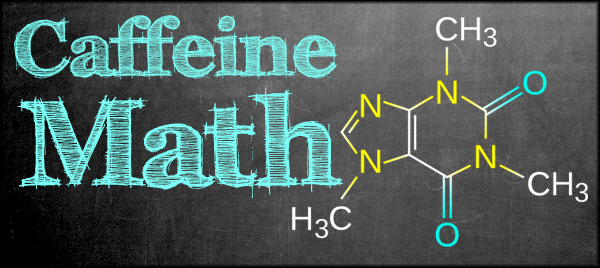
The first thing we have to do is clear our minds of preconceptions. Remember that there’s no simple formula saying that one kind of tea has more caffeine than another (see my caffeine myths article for details). And resign yourself to the fact that there’s no way short of spending a couple of thousand dollars on lab tests to determine how much tea is in a commercial blend, for reasons I’ll explain in a moment.
Let’s start with an example. Assume you have a tea you enjoy. You use two teaspoons of tea leaf to make a cup, and we’ll say this tea gives you 20mg of caffeine. You decide to use this tea in a blend. What happens to the caffeine level?
Ingredient blends
If you blend with other bulk ingredients, the caffeine calculations are simple ratios. If you blend the tea 50/50 with peppermint, then instead of two teaspoons of tea (20mg of caffeine), you’re using one teaspoon of tea (10mg of caffeine) plus one tablespoon of mint (no caffeine). You’ve cut the amount of caffeine in half. If your blend is 1/3 ginger and 2/3 tea, it will have 2/3 as much caffeine as the straight tea.
If you’re blending tea with other tea, the ratios work the same way. Blend together two tea styles with equivalent caffeine levels and the result will have the same amount of caffeine as the original tea blends.
All of this is contingent upon your measuring techniques. It becomes more complicated if you blend by weight instead of volume. Put together a cup of green tea and a cup of peppermint, and two teaspoons of the blend will contain (about) one teaspoon of tea and one teaspoon of mint. If you put together an ounce of gunpowder green tea and an ounce of peppermint leaves, the result is very different. Gunpowder tea is very dense, and peppermint leaves are light and fluffy. Two teaspoons of that mixture might only have a half teaspoon of tea, which means a quarter of the caffeine.
Extracts and oils
In many commercial tea blends whole ingredients like chunks of berry, flakes of cinnamon, and bits of leaf are more for looks than flavor. Soak a strawberry in hot water for three minutes and you’ll see what I mean. The real flavoring in those blends comes from extracts and essential oils that are sprayed on the tea leaves. In that case, the caffeine content is pretty much unaffected. A teaspoon of flavored tea leaves has the same caffeine as a teaspoon of unflavored tea leaves.
A little tea blending secret: sometimes the chunks of fruit in the tea really are chunks of fruit, but they’re not what you think they are. Tea blenders can purchase small chunks of dried apple that are sprayed with (or even soaked in) flavorings or extracts. Your piña colada blend might just be apple bits flavored with coconut and pineapple extracts. There’s very little flavor in the dried apple, so all you’re getting is the flavoring that was added. Why use them at all? Because it’s easy to experiment with, it doesn’t require the tea company to invest in leaf-spraying equipment, and it adds some visual variety to the blend. The chunks can even be colored.
A couple of real-world examples
Let’s start with genmaicha. This is a classic Japanese blend of green tea and roasted rice. I started with a tablespoon of my favorite genmaicha:

The base tea in this blend is sencha, which is fairly easy to recognize from the color and needle shape of the leaves. I don’t know the exact caffeine content of the sencha, but I can do a bit of Googling and come up with an estimate. Let’s go with 30mg per cup. Now, we’ll separate the tea leaves from the rice:

The main thing I learned from this exercise is that I don’t have the patience to pick all of the rice out of a tablespoon of genmaicha! The separation I did showed that a tablespoon of this particular genmaicha contained about 1/3 tablespoon of rice and 2/3 tablespoon of sencha. Since rice has no caffeine, that means a cup of this genmaicha probably has about 20mg of caffeine in it.
I was going to try the same experiment with a Moroccan mint tea, but found that the one I have on hand has no peppermint leaves. It appears to contain only tea leaves and mint extract. That means it has the same caffeine level as the tea used to make it — in this case a gunpowder green tea.
Doing the math
I don’t think you actually have to do much math to estimate caffeine levels. It’s imprecise at best because tea leaves don’t come labeled with their caffeine content. But if you look at a tea blend and it appears to be about half tea leaves and half something else, it’ll have about half the caffeine of the tea alone. Some blends I’ve looked at lately appear to have very little tea leaf — those might as well be decaffeinated tea! Others, like the Moroccan mint I mentioned a moment ago, are almost entirely tea, so treat them just as you would unflavored tea.
Tea and caffeine part III: Decaf and low-caf alternatives

This article is the second of a three-part series.
Part I: What is caffeine?
Part II: Exploding the myths
Part III: Decaf and low-caf alternatives
So you’ve decided you like tea, but you really don’t want (or can’t have) the caffeine. What are your alternatives?
Well, first there’s decaf tea. As Part I of this series explained, decaffeination processes don’t remove 100% of the caffeine, so this is a reasonable alternative if you want less caffeine, but not if you want none at all. There’s another problem with switching to decaf: the selection of high-quality decaffeinated tea is — let’s just say, limited.
It’s easy to find a decaf Earl Grey or a decaf version of your basic Lipton-in-a-bag. But if your tastes run more to sheng pu-erh, sencha, dragonwell, lapsang souchong, silver needle, Iron Goddess of Mercy, or organic first-flush Darjeeling, you have a problem.
You can try the “wash” home-decaffeination method, but I explained a couple of days ago why that process is overrated. You’re likely to be able to remove 20% or so of the caffeine that way, but that’s about it.
Another alternative is simply to brew weaker tea and/or use more infusions. Let’s do the math for an example. Assume you’re a big fan of an oolong that contains 80 mg of caffeine in a tablespoon of leaves, and you drink four cups of tea per day.
If you use a fresh tablespoon of leaves for each cup, and you steep it for three minutes, you will be extracting about 42% of the caffeine in each cup, which equals 34 mg per cup, or a total of 136 mg of caffeine for the day. If you shorten your steep time to two minutes, the extraction level drops to about 33% (total of 106 mg). Alternatively, you could use the leaves twice each time, so you’re extracting about 63% of the caffeine, but using a total of half as many leaves (total of 101 mg). Or, if you don’t mind significantly weaker tea, just use 1-1/2 teaspoons of leaves instead of a full tablespoon. Half the leaves means half the caffeine (total of 68 mg).
No caffeine at all
If you look through the selection of teas in a health-food store, you’ll notice that most of them have no tea at all, and the vast majority of those non-tea drinks have no caffeine. The problem is that chamomile for a tea drinker is like Scotch to a wine drinker; it’s just not the same.
There are a couple of beverages, however, that are somewhat similar to tea. Both come from South Africa and both are naturally caffeine-free.
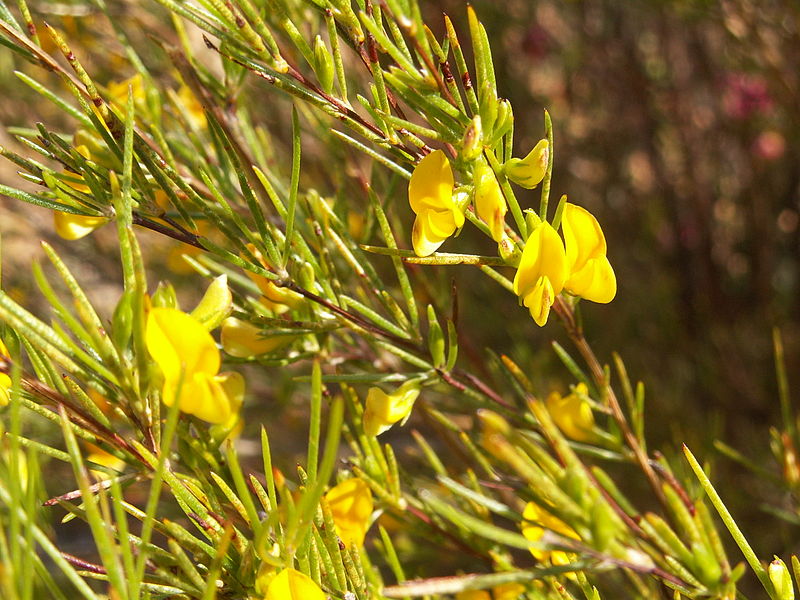
Rooibos is often called “red bush” in the United States because the way it’s usually prepared leaves a deep red infusion. Typically, rooibos is oxidized (not fermented) like a black tea. It can also be prepared more like a green tea. I blogged about green rooibos last August if you’d like to know more about it.
North American news shows, along with people like Oprah and Dr. Oz, have been singing the praises of rooibos lately, bringing it more into the mainstream awareness. It is very high in antioxidants and much lower in tannins than a black tea. Unfortunately, there isn’t a lot of independent research published about it yet, so many of the claims can’t really be backed up. The one that can be backed is that it has no caffeine and it tastes kind of like black tea (green rooibos is a bit grassy with malty undertones, more like a Japanese steamed green tea with a touch of black Assam).

Honeybush, like rooibos, grows only in South Africa. Also like rooibos, it is naturally caffeine-free and can be prepared either as a red or a green “tea.” When blooming, the flowers smell like honey, and honeybush tends to be somewhat sweeter than rooibos. Honeybush isn’t nearly as well-known as rooibos in the U.S., and the green version is very hard to find. I’ve found that if you want a flavored honeybush, citrus complements it very well. My “Hammer & Cremesickle Red” is the most popular honeybush blend in our tea bar (here is a blog post about it, and you can find it on the store website here).
A blended approach
If you like the idea of reducing your caffeine intake, but you don’t like the idea of a weaker tea (as I described above) or switching to rooibos or honeybush, you might want to consider blending. If you mix your tea half-and-half with something containing no caffeine, then you can still brew a strong drink, but get only half the caffeine from it. Combine that with the other tricks, like taking two infusions, and you can cut it even farther.
Tea and caffeine part II: Exploding the myths
A misunderstood molecule
This article is the second of a three-part series.
Part I: What is caffeine?
Part II: Exploding the myths
Part III: Decaf and low-caf alternatives
It’s amazing. It seems like the more I learn about tea, the less I know — and the more I have to unlearn. Over the many years that I’ve been drinking and enjoying tea, I’ve picked up a lot of misconceptions. I’ve even been guilty of spreading a few of those. In the last couple of years, though, as I’ve been more actively studying tea, I’ve discovered the errors of my ways, and this article will serve both as an educational tool and a mea culpa for repeating things without doing my homework.
I already started the myth busting in the previous article with some discussion of decaffeination (Myth: decaf tea has no caffeine. Fact: decaf tea has had some of its caffeine removed). With no further ado, then, let’s continue the process by taking a look at a series of common myths and misconceptions about tea and caffeine, and the relevant facts for each.
You can decaffeinate tea at home with a short “wash”
I picked up this one in several books and numerous articles on the web. In its most common form, the myth says that if you add boiling water to your leaves, swish it around for a short time (most commonly 10 to 30 seconds) and then dump it, you’ve just removed most (claims range from half to 80% or more) of the caffeine.
Bruce Richardson debunked this in his article, Too Easy to be True: De-bunking the At-Home Decaffeination Myth, which appeared in the January 2009 Edition of Fresh Cup magazine. Working with a chemistry professor at Asbury College and one of his students, they determined that it took a 3-minute infusion to extract 46-70% of the caffeine from the tea leaves. You could do a 3-minute wash, I suppose, but you’d be extracting 46-70% of the flavor, too.
Kevin Gascoyne presented some of his research in a 2012 World Tea Expo seminar: A Step Toward Caffeine and Antioxidant Clarity. He used a batch of Long Jing Shi Feng (a green “Dragonwell” tea), which he steeped for varying amounts of time. He measured caffeine content of each infusion and graphed the results. At 30 seconds, a bit over 20% of the caffeine had been removed. By 3 minutes, it was around 42% (even lower than Richardson’s numbers). It was 8 minutes before 70% of the caffeine was extracted, and the graph pretty much flattened out there.
This process is roughly cumulative, so if you infuse your tea for 6 minutes, you’re getting about the same total caffeine as if you’d infused those same leaves 3 times, at 2 minutes per infusion. My favorite shu pu-erh may not have more caffeine than, say, your favorite sencha, but by the time I’ve finished off my 7th infusion — and you’ve infused your leaves once — I’ve probably consumed more caffeine than you have (although I’ve had 7 cups of tea and you’ve had 1).
Green tea has less caffeine than black tea
Pretty much every piece of research in the last decade has debunked this myth. And when I say “debunked,” I’m not saying that the opposite is true; I’m saying that different teas have different caffeine content, but the processing method has little to do with it.
For example, Kevin Gascoyne, in the seminar I mentioned above, presented a chart of the teas that he’d tested, ranked by caffeine content. Aside from the pu-erh teas clustering toward the center (we’ll look at why in a moment), the distribution of styles (white vs. green vs. oolong vs. black vs. pu-erh) was almost random. Even very similar teas had very different caffeine levels, like the Sencha Ashikubo with 48 mg of caffeine and the Sencha Isagawa with 12 mg.
As Gascoyne analyzed his data, he came to the conclusion that there’s a certain amount of caffeine in the tea leaves, and the processes of picking, crushing, steaming, pan-firing, rolling, oxidizing, fermenting, drying, and tearing neither create nor destroy caffeine (one exception to this, according to an article on RateTea, is that roasting a tea like houjicha can dramatically reduce caffeine). If a particular tea bush in Taiwan produces a very high-caffeine oolong tea, then that exact same bush would produce a very high-caffeine black or green tea.
The caffeine content depends on many things, including the varietal of bush, the type of soil, the fertilizer used (if any), the weather, the season when the leaves are picked, and maybe even the time of day. Richardson’s article says that adding nitrogen fertilizer can raise caffeine content by 10%. Gascoyne said he analyzed tea picked from the same plantation at different times of year and found dramatically different caffeine levels.
White tea has no caffeine (or very little)
This one is not only a bad generalization like the previous myth, but often completely backwards!
Another thing that affects caffeine extraction is the part of the plant you use. Caffeine is a natural insecticide. The caffeine tends to congregate in the newer growth, thus protecting the plant from bugs that might eat its tender shoots and young leaves. Richardson’s article described research results from Nigel Melican, the student doing the analysis. His caffeine percentage findings were:
Bud-6.3%
First leaf-4.6%
Second leaf- 3.6%
Third leaf-3.1%
Fourth leaf-2.7%
Leaf stalk-2.0%
Two leaves and a bud-4.2%
Since the finest white tea is often made from all buds or a bud-and-a-leaf, it will actually have significantly higher caffeine than a strong black tea made from the whole stalk or the 2nd-4th leaves.
When hydrating, you should avoid caffeinated beverages
According to Kyle Stewart and Neva Cochran in their seminar, Tea, Nutrition, and Health: Myths and Truths for the Layman, at World Tea Expo 2012, “studies show no effect on hydration with intakes up to 400 mg of caffeine/day or the equivalent of 8 cups of tea.”
The Food and Nutrition Board of the Institute of Medicine agreed. In their 2004 reference intakes for water, they state: “caffeinated beverages appear to contribute to the daily total water intake similar to that contributed by non-caffeinated beverages.”
In other words, if you want to drink six pints of water per day for health reasons, it’s perfectly fine to steep some tea leaves in that water before you drink it!
You shouldn’t drink tea with caffeine at night
Stewart and Cochran cited another study in their seminar which analyzed tea and sleep. They found that people unused to caffeine would experience longer times to fall asleep and lower sleep quality, as would people who consumed more than 400 mg of caffeine per day (around 8 cups of typical tea).
People who spread their consumption out through the day, maintaining caffeine in the system (cups at 9:00 am, 1:00 pm, 5:00 pm, and 11:00 pm) were able to sleep with little disruption.
But what if you have no tolerance for caffeine, or you need to maintain very low levels? In the third and final part of this series, we’ll explore some alternatives you might want to try.
Tea and caffeine part I: What is caffeine?
The most popular drug?
This article is the first of a three-part series.
Part I: What is caffeine?
Part II: Exploding the myths
Part III: Decaf and low-caf alternatives
In his excellent book, A History of the World in 6 Glasses, Tom Standage selected the six beverages that he felt had the greatest influence on the development of human civilization. Three of the six contain alcohol; three contain caffeine. Tea was one of the six.
Is it the caffeine that has made tea one of the most popular beverages in the world? The flavor? Its relaxing effects? I think that without caffeine, Camellia sinensis would be just another of the hundreds of plant species that taste good when you make an infusion or tisane out of it. Perhaps yerba maté would be the drink that challenged coffee for supremacy in the non-alcoholic beverage world.
“Caffeine is the world’s most popular drug”
The above quote opens a paper entitled Caffeine Content of Brewed Teas (PDF version here) by Jenna Chin and four others from the University of Florida College of Medicine. I’ll be citing that paper again in Part II of this series. Richard Lovett, in a 2005 New Scientist article, said that 90% of adults in North America consume caffeine on a daily basis.
But yes, caffeine is a drug. It is known as a stimulant, but its effects are more varied (and sometimes more subtle) than that. It can reduce fatigue, increase focus, speed up though processes, and increase coordination. It can also interact with other xanthines to produce different effects in different drinks, which is one reason coffee, tea, and chocolate all affect us differently.
Tea, for example, contains a compound called L-theanine, which can smooth out the “spike & crash” effect of caffeine in coffee and increase the caffeine’s effect on alertness. In other words, with L-theanine present, less caffeine can have a greater effect. See a great article from RateTea about L-theanine here.
Even though Part II of this series is the one that dispels myths, I really need to address a common misconception right now. First, I’m going to make sure to define my terms: for purposes of this series, “tea” refers to beverages made from the Camellia sinensis plant (the tea bush) only. I’ll refer to all other infused-leaf products as “tisanes.” Okay, now that we have that out of the way:
“All tea contains caffeine”
Yes, I said ALL tea. The study I mentioned a couple of paragraphs ago measured and compared the caffeine content of fifteen regular black, white, and green teas with three “decaffeinated” teas and two herbal teas (tisanes). With a five-minute steep time, the regular teas ranged from 25 to 61 mg of caffeine per six-ounce cups. The decaf teas ranged from 1.8 to 10 mg per six ounce cup.
That’s right. The lowest caffeine “regular” tea they tested (Twinings English Breakfast) had only 2-1/2 times the caffeine of the most potent “decaffeinated” tea (Stash Premium Green Decaf).
There are two popular ways to remove caffeine from tea. In one, the so-called “direct method,” the leaves are steamed and then rinsed in a solvent (either dichloromethane or ethyl acetate). Then they drain off the solvent and re-steam the leaves to make sure to rinse away any leftover solvent. The other process, known as the CO2 method, involves rinsing the leaves with liquid carbon dioxide at very high pressure. Both of these methods leave behind some residual caffeine.
(As a side note: I’m not a fan of either process. When I don’t want caffeine, I’d much rather drink rooibos than a decaf tea. I only have one decaf tea out of over 80 teas and 20 tisanes at my tea bar, and I’m discontinuing that one.)
This is why tea professionals need to make a strong distinction between the terms “decaffeinated” (tea that has had most of its caffeine removed) and “naturally caffeine-free” (tisanes that naturally contain no caffeine such as rooibos, honeybush, and chamomile).
“Coffee has more caffeine than tea”
Almost everyone will agree with the statement. For the most part, it is true, assuming you add some qualifiers: The average cup of fresh-brewed loose-leaf tea contains less than half the caffeine of the average cup of fresh-brewed coffee. In the seminar, Tea, Nutrition, and Health: Myths and Truths for the Layman, at World Tea Expo 2012, the studies Kyle Stewart and Neva Cochran quoted showed the plain cup of fresh-brewed coffee at 17 mg of caffeine per ounce versus the plain cup of fresh-brewed tea at 7 mg per ounce (that’s 42 mg per six-ounce cup, which agrees nicely with the numbers from the caffeine content study I quoted above).
Interestingly, though, a pound of tea leaves contains more caffeine than a pound of coffee beans. How can that be? Because you use more coffee (by weight) than tea to make a single cup, and caffeine is extracted more efficiently from ground-up beans than from chunks of tea leaf. Tea is usually not brewed as strong as coffee, either.
At another 2012 World Tea Expo seminar, A Step Toward Caffeine and Antioxidant Clarity, Kevin Gascoyne presented research he had done comparing caffeine levels in dozens of different teas (plus a tisane or two). The difference between Kevin’s work and every other study I’ve seen is that he prepared each tea as people would actually drink it. For example, the Bai Mu Dan white tea was steeped 6 minutes in 176-degree water, while the Tie Guan Yin (Iron Goddess of Mercy) oolong was steeped 1.5 minutes in 203-degree water. Matcha powder was not steeped per se, but stirred into the water and tested without filtering.
The results? Caffeine content ranged from 12mg to 58mg for the leaf teas, and 126mg for the matcha — which is higher than some coffees.
In our next installment, I’ll look at the myths regarding caffeine in tea, including what kinds of tea have the most caffeine and how you can remove the caffeine at home all by yourself — or can you?
 Tea With Gary