Category Archives: Books

Start Spreading the News

I’m not leaving today, but I am heading for New York New York next month! I’m looking forward to drinking tea, telling tea stories, and signing tea books at a café in NYC called The Monkey Cup, where my friend and fellow tea blogger Linda Gaylard did a book signing last year.
The trip is actually a book tour for my latest children’s book, Who Pooped in Central Park?, but I’m taking a couple of hours off on Sunday June 26 to relax with some friends and some tea and tell some of the stories from Myths & Legends of Tea, including one from the upcoming volume 2. If you’re on Facebook, please join the event page for the signing. If you have questions, I can answer them there.
I love drinking tea. I love telling stories. I love hanging out with other tea lovers. Drinking tea while telling tea stories to tea lovers is my idea of heaven! I hope to see you there.
Thanks to Jo Johnson of Scandalous Tea for setting up the visit!

Tea Stories with Gary Robson
Sunday, June 26, 4:30 pm to 6:30 pm
The Monkey Cup
1730 Amsterdam Ave, NY, NY
As I write this, I’m savoring a cup of Jinxuan Jade Oolong. This mild oolong has a smooth, buttery taste that I just can’t get enough of. If you don’t want to drink it, make a cup anyway, just to watch the “agony of the leaf,” as the tightly-rolled balls of tea open up in the hot water into full pairs and trios of leaves still attached to a bit of stem. I made mine with water just under the boiling point and steeped it for three minutes. Yum!

I’ve created a new Tea Cupping Journal!

Developing a good palate for tea really requires keeping notes. Remembering what teas you do and don’t like needs notes, too, for most of us. And I’ve been searching for a tea journal that I really liked for a while. There are some pretty good ones out there, but I’m an individualist. I had to do my own thing. And my own thing is called A Tea Journey: Your Personal Tea Cupping Journal.
(Caution: blatant self-promotion ahead)
This guided journal is designed to guide you through the next 100 teas you taste. Keeping notes about each cup of tea encourages you to drink your tea actively, paying attention to taste, aroma, appearance, and how it feels in your mouth. When you journal about it, tea becomes an experience to savor and linger over instead of just another drink.
Tea is a subjective experience. Between these covers, nobody’s opinion matters but your own. Don’t worry about what other people think of a particular tea; just record your own impressions.
Each tea page is numbered, so you can see at a glance just how many teas you have tasted and written about. Some tea journals (especially the cupping journals intended for experts and aficionados) use terminology that may not be clear to a beginner. At the front of the journal, I included descriptions of the common tea styles and some related tisanes (rooibos, honeybush, yerba mate, and so forth). Also, on the page facing tea number one, I included short descriptions of what to write in each section.

Comparative cupping is a great way to develop your palate. Get two similar teas and try them side by side, recording your impressions on facing pages of the journal.
Obviously, the best possible Christmas present for a tea lover would be one of these journals and a big box of tea — and maybe a copy of Myths & Legends of Tea.
Enjoy, and thank you for putting up with my utterly shameless self-promotion this week!

While writing this blog post, I was enjoying a cup of Houjicha, a roasted Japanese tea about as different from traditional Matcha, Sencha, or Gyokuro as you could possibly get. The roasting adds a nutty flavor and a toasty aroma that go beautifully with a cold, windy Montana day.

The Iron Goddess of Mercy – Part 1
This is one of the stories from my book, Myths & Legends of Tea Volume 1. I will post the conclusion tomorrow [Update: here it is]. In the book, each story is followed by notes about the tea and how to prepare it. I hope you enjoy the stories!

To read more about Myths & Legends of Tea, download a sample chapter, or buy a copy (paperback, Kindle, or Apple iBook), please visit the main book page!
The Iron Goddess of Mercy
China, 1761
It was the reign of the Qianlong Emperor, the sixth emperor of the Qing Dynasty in China, but our story concerns no emperors, warlords, or nobles. It is just a tale of a humble farmer by the name of Wei.
Wei lived in Anxi Country in the Chinese province of Fujian. People there were struggling with hard times. Fujian, they say, is eight parts mountain, one part water, and one part farmland. Wei’s tiny village was no exception. He and his neighbors grew what they could. A bit of wheat, a bit of rice, and a few sweet potatoes were enough for most of them to get by.
Their favorite crop was tea. They worked hard to produce good tea, using the complex oolong production style. Their process wasn’t bad but the result was usually mediocre, as it came from poor stock.
“Oh, well,” they used to say. “You can’t get silk from an earthworm.”
Each week, Wei would go to market in the city. Each week, he passed an old temple that had fallen into disrepair. The pathway was overgrown, the gates had fallen, and it appeared that nobody had worshipped there in a very long time. It was such a part of the scenery that Wei walked by it without even seeing it.
Like the rest of his village, Wei was a Buddhist. It’s difficult to describe how Buddhism works to Westerners like us, as the Buddha himself isn’t considered a god but an enlightened being. What we often refer to as gods and goddesses in Buddhism, actual Buddhists would call bodhisattvas. The temple Wei passed each week was built for the Bodhisattva Guanyin, whom you or I might call the Goddess of Mercy.
One particular day – a day that would become a major turning point for Wei, Wei’s village, and lovers of tea everywhere – Wei stopped on the road to rest. Not that stopping on the road was an unusual occurrence. The trip was long and Wei was not as young as he used to be. On this very notable day, however, he stopped right at the pathway to the temple of Guanyin.
After Wei set down his heavy load, he pushed back his hat and wiped the sweat from his forehead. What used to be the temple’s garden was surrounded by a small rock wall, more decorative than functional. It would do no good at keeping out deer or rodents, and in its current tumbledown state, even a rabbit could hop right through in several places.
Once, the flowers and cherry trees of the garden had been carefully-tended, but that was long ago. The undergrowth almost completely obscured the path, bushes had grown tall and scraggly, and the unpruned cherry trees blocked the sun to the flowers. At least, he thought, the wall provides a place to sit and the trees give me shade.
He looked down the pathway, wiped his sleeve across his forehead again, and thought about the temple.
Guanyin is the Goddess of Mercy, he thought. Okay, perhaps he called her a bodhisattva rather than a goddess, but he was, after all, Chinese, and neither goddess nor bodhisattva is a Chinese word, so I shall use the more familiar word in my telling of Wei’s story.
It is not seemly that we should treat Guanyin’s temple with such disrespect, he continued to himself. We should show … well … mercy.
He picked up his wares and continued to market, but his moment of epiphany (or dare I say, enlightenment?) stuck with him throughout the day. The following week, he brought some old gardening tools with him and stashed them beside the pathway on his way to market. He hurried through the selling of what little he had to sell and the buying of what little he could afford to buy, and then he headed home.
When Wei reached the temple, he retrieved his tools and began clearing the path. Carefully, he pruned back the bushes that encroached on the pathway. Thoughtfully, he trimmed the tree branches that overhung the walk. Delicately, he pulled the weeds from the path itself. Soon, the sky began to redden as the sun fell in the west, and he secured his tools behind the rock wall and went home, a bit disappointed that he had cleared only the beginning of the path.
Over the following weeks, Wei repeated the process. Sometimes he would clear the plants. Sometimes he would fix the flat rocks and fill in gaps to smooth the path. Sometimes he would leave the path alone for an evening and work on the wall. He made a special trip with a friend from the village to fix the gate.
This continued until the path was clear all the way to the temple entrance. Pleased with his progress, he lit a candle and stepped into the temple itself.
The sorry state of the exterior was nothing compared to the disrepair of the inside. Webs occupied the corners of the room, and spiders occupied the webs. Dust was everywhere. The offering bowl was reduced to ragged shards, and vines crept in the windows. A mouse skittered across the floor, and a snake watched hungrily from behind the altar. But Wei noticed none of it. All of his attention was drawn to the statue of Guanyin.
There she sat! The center of the temple was dominated by the statue of a beautiful maiden meditating. In her lap she held a fish basket. Although the statue was dirty and old, it was unbroken and the fine details of her necklace and her Tang Dynasty clothing were clear. Wei thought he could see sadness on that lovely face, and it nearly broke his heart.
He stood staring at Guanyin for many minutes, finally breaking his reverie to look about the room. To one side was a painting of Guanyin with a child on each side and a white parrot above. A beetle crawled across the frame. Even the painting looked sad, he thought.
Wei was touched by the experience and vowed that he would get rid of that melancholy look. He continued coming back each week on his way home from market. On one visit, he brought a stick long enough to take down the spider webs. Of course, he carefully took the spiders outside without harming them. Guanyin is, after all, the Goddess of Mercy.
The next week, he brought a broom and swept out the temple. The next, he delicately dusted the statue itself. He found the nest the mice had built and moved it outside. The snake, he scooted out the door with the broom. This had to be repeated several times as snakes can be stubborn once they’ve chosen a home.
The next time he stopped at the temple, he looked at the shattered bowl in front of Guanyin’s statue. He carefully gathered the pieces of the broken offering bowl in the sleeve of his robe and took them home. He set the pieces on his table and studied them. Wei was a simple farmer. He didn’t have the skills to repair the bowl. But perhaps he knew someone who did.
Wei once again gathered up the bowl fragments and carried them to the home of his good friend Wang, the potter. Wang invited Wei into his home and went immediately to the teapot. After all, when a friend visits, it is important to serve them tea.
As the water heated, Wei began to tell Wang about the temple. Wang listened as he carefully measured out the leaves. At first, the tale did not interest him much, for China is filled with old temples and roadside altars. Some are well-kept. Some are not.
As large bubbles began to form and rise through the water (the Chinese people call this stage “fish eyes”), Wang put the tea on to steep. When Wei started to tell him about the offering bowl Wang’s ears perked up.
“I do not know how to fix the bowl,” Wei told him, “and I do not have the money to buy one.”
“Let me look,” Wang said, and Wei spread out the pieces before him. Wang became so engrossed in studying the broken bowl that he almost forgot to pour the tea. He was so distracted that he hardly noticed the muddy flavor and the bitterness of their tea. When you can rarely afford to buy good tea, you soon become accustomed to poor tea.
“Can you repair this,” Wei asked anxiously, “or perhaps make another one like it?”
“Where will you get the money to pay for it?” Wang responded. “I am very busy and must make many bowls to sell so that I can feed my family. And Guanyin’s temple is your project, not mine.”
“You are my friend, Wang. When you were sick last summer, who brought tea and rice for you and your wife? When the monsoon rains came early two seasons ago, who helped you to make a ditch to drain your wheat field and irrigate your rice properly?”
“You are right, Wei. I am sorry. Friends help their friends. I shall make you a proper bowl. I cannot do it today, and maybe not for a couple of weeks, but I will make a bowl that you will be proud to give to Guanyin.”
And so things went. Wei replaced the offering bowl with the one that Wang made him. He pruned the trees. He found an inexpensive incense burner and set it in a nook on the wall. He took a pitcher of water and washed the statue. He kept the pathway clear. He even planted some flowers. And every week he lit incense and meditated before he left.
Tune in tomorrow for the conclusion to Wei’s story!
Oolong-related articles on Tea With Gary
-

The Iron Goddess of Mercy – Part 1
The Iron Goddess of Mercy Part 1 — China, 1761 — It was the reign of the Qianlong Emperor, the sixth emperor of the Qing Dynasty in China, but our story concerns no emperors, warlords, or nobles. It is just a tale of a humble farmer by the name of…
-

The Iron Goddess of Mercy – Part 2
The Iron Goddess of Mercy Part 2 — China, 1761 — It was the reign of the Qianlong Emperor, the sixth emperor of the Qing Dynasty in China, but our story concerns no emperors, warlords, or nobles. It is just a tale of a humble farmer by the name of…
-

Canon cameras and oolong tea
Why should you drink oolong tea when you’re taking pictures with a Canon camera? Let me explain…
-
The Oolongs of Taiwan: Stop 6 on the World Tea Tasting Tour
Taiwan may not have originated oolong tea, but it is definitely at the forefront of oolongs today. At this stop on the tea tour, attendees learned about what oolong tea actually is, and tasted a variety of Taiwanese oolongs, including Bao Zhong, White Tip Bai Hao, and of course Tieguanyin,…
-
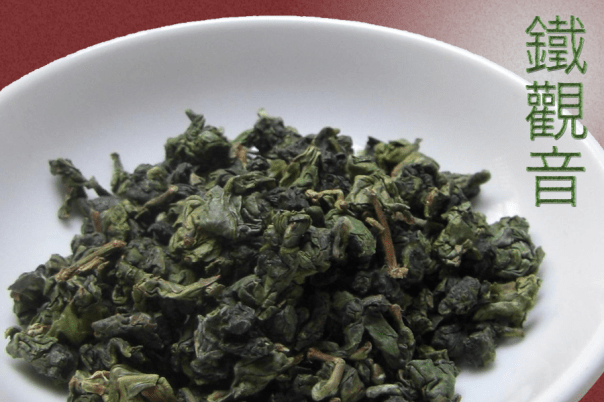
Free mystery tea (Tieguanyin)!
A friend stopped by the tea bar the other day and brought a bag of tea from China that a friend had given her. She didn’t know what it was, and she’d had it for five years, so she asked if I’d like to have it.

The Iron Goddess of Mercy – Part 2
This is the continuation of yesterday’s post, which is one of the stories from my book, Myths & Legends of Tea Volume 1. In the book, each story is followed by notes about the tea and how to prepare it. I hope you enjoy the stories!
In our story so far, a farmer named Wei has discovered an abandoned temple to Guanyin, the Goddess of Mercy, and worked tirelessly to restore it to its former beauty.

To read more about Myths & Legends of Tea, download a sample chapter, or buy a copy (paperback, Kindle, or Apple iBook), please visit the main book page!
The Iron Goddess of Mercy
China, 1761
One day, Wei walked into the temple and realized he had done everything he could do. All of the little things were repaired. Everything was clean. The incense was burning and someone – he did not know who – had placed an offering in the bowl. He looked at the statue of Guanyin and thought he detected a trace of a smile. Just a tiny bit. Just at the corner of her mouth. But he didn’t see the sadness he had seen before.
There may actually have been a hint of smile on the statue’s face, or Wei may have been imagining it. It really didn’t matter, though. It brought a real smile to Wei’s face. There’s a special kind of happiness we get from doing things for others, things that bring us no personal benefit. That is what Wei felt as he walked home that afternoon.
That night, as Wei slept, he had a vivid dream. Not like our normal dreams, where things have soft edges and little detail and we forget them as soon as we wake. This dream was crystal clear, and felt like he was actually experiencing it.
Wei stood on the shore of an ocean where a mighty storm was raging. He was on a rock looking down at the powerful waves crashing against the shore. The wind whipped the spray into his face and threatened to knock him from his precarious perch. Although it was daytime, the dark clouds above hid the sun from him, making everything look like it was drawn in charcoal.
He seemed to actually feel the sea water on his skin, hear the howl of the wind and the roar of the surf, smell the salt in the air. Never had he experienced a dream with such clarity, and it made him nervous.
He fell to one knee and braced himself against the wind so that it wouldn’t sweep him into the surf booming against the sharp outcroppings below him. As he knelt there, the clouds parted far out over the water and he saw a beam of sunshine fight its way through. Where it hit the water, the head of an enormous sea dragon breached the surface of the sea, and the furious storm-whipped waves began to calm around its mighty neck. As more of the dragon crested, Wei saw someone standing on its back, wearing flowing white robes.
As the dragon approached, the calm water and the beam of light came with it. Soon, Wei could make out the woman riding upon the dragon. It was Guanyin, carrying a willow branch in her right hand and a jar of clear water in her left. Although water coursed from the back of the sea dragon, Guanyin’s hair and robes were dry. On her face was an expression so serene, so calm, that Wei did not fear the monstrous beast that towered high over the shore. Guanyin stood effortlessly, her dry feet showing no signs of slipping on the wet scales of the dragon’s back.
When the dragon approached his rock, Wei was encompassed by the beam of light. The crashing of the waves ceased and the world around him suddenly felt like it was painted in delicate watercolor. Tranquility settled over him, and he rose to his feet to find himself looking into the eyes of Guanyin. He fell back to his knees and bowed his head.
“Rise,” she told him. He stood awkwardly, intimidated by her presence and the head of the dragon looming over him, water dripping from the barbels alongside the fearsome mouth.
She studied him for a long moment before she spoke. He kept his head down, but could not stop himself from looking at her.
“You are a good man, Wei,” she said. “You have worked long and hard to restore my temple, and you have shown me great respect. What would you ask from me as a reward?”
He responded without stopping to think. “I did what I did because it needed to be done. I did not fix your temple because I sought reward. I fixed it because it was the right thing to do.”
“I know that,” the goddess responded. For the first time, Wei saw a smile on her face, and it brought such joy to his heart that he almost interrupted her. Luckily, he held back, for it is not wise to interrupt the gods. But what reward could compare with bringing a smile to the face of the Goddess of Mercy? No man could ask for more.
“Had you done this for a reward,” she continued, “I would not be inclined to give you one. But your motives are pure and enlightened. Kindness deserves kindness, and for that reason, I shall reward you.
“You did not select a gift, so I have selected one for you. You shall find it behind the temple, shadowed by the large bear-shaped rock. It holds the key to your future and your village’s future, so treat it with care and respect.”
He bowed his head again as the dragon pulled back from the rock upon which he stood. The clouds dissipated from the sky, and the sea became smooth as glass. A single yellow butterfly danced before him as the dragon swam away, gradually disappearing under the water.
Wei stood on the rock, overcome with joy. Slowly, the vision faded and he settled into a deep dreamless sleep.
When Wei awoke in the morning, he lay quietly in his bed, serene and rested. Then the dream came back to him. He leapt out of bed and rushed through his morning routine. He felt no hunger, and took only a moment to eat a half-bowl of rice, barely tasting it as he ate.
He rushed to the temple. How different it looked! The stone wall looked sturdy and solid. Flowers were beginning to bloom in the rays of sunlight that streamed through the neatly-pruned cherry trees, which were showing signs of blooming themselves. The entrance to the temple was inviting, clean, tidy.
Without even pausing to enter the temple and light incense, Wei stepped from the path and circled around behind. He hadn’t ventured here before. It was still wild. A rivulet of water burbled happily down the steep slope, and only a small area was flat and level. In that small area stood the bear-shaped rock that Guanyin had referred to, taller than Wei himself.
He looked eagerly in the rock’s shadow, not knowing what to expect, and saw nothing but dirt, rocks, and a pathetic little sprig of a plant.
I see nothing, he thought. My treasure must be buried.
But as Wei kneeled to start digging, something about the sapling caught his eye. The deep green of the leaves and their slightly jagged edges looked familiar. It was a tea plant! Small, undernourished, with only a few leaves, but a tea plant nonetheless. He dug it up and carefully transplanted it into his garden at home.
For days and weeks, he watered it, tended it, fertilized it, all the while not quite sure if this tiny plant was really his reward from the goddess. The scraggly plant grew quickly into a thick healthy bush. The trunk grew strong and thick; the leaves glossy and bright. He picked a leaf and crushed it between his fingers. The aroma was strong and sweet. It was time.
Carefully, he selected a handful of delicate new buds and the young leaves next to them. He laid them out in the sun to wither, and went to tell his friend Wang about his prize. Wang came back to see the tea bush, and they took the leaves into the house to cool.
“Should I go to the city and find a tea master to help me prepare this properly?” Wei asked his friend.
“No,” said Wang. “Guanyin gave you this tea plant. Meditate as the leaves cool. Clear your mind, and then follow your instincts.”
And so he did. He followed the same process that he always used with the scruffy tea plants that he and his neighbors grew. Tossing, a bit of oxidizing, fixing; he dedicated the next day to working with his prized leaves.
He rolled the leaves as oolong tea makers did – and still do. Not being very skilled at it, he ended up not with neat little balls, but with little curled-up tadpole shapes, which he roasted very lightly. Over the next two days, they dried hard as he looked on impatiently. At last, the leaves appeared ready.
Excited, Wei fetched one of his most prized possessions: a beautiful black iron teapot. He took a small scoop of the leaves and dropped them into the teapot and they made sharp “ping” sounds, almost like iron pieces tumbling into the iron pot. He rushed to get Wang and some of his neighbors. They looked at him dubiously as he chattered on about the visit from Guanyin in his dream. They passed around one of his dried leaves and looked it over uncertainly.
Then he poured the hot water over the leaves in his teapot, and the aroma of the tea struck them. They rushed in to look, to smell, and – when the tea was finished steeping – to taste.
The tea was magical. It had a rich amber color and a bold taste with overtones of honey and spice. They held the liquid in their mouths and it felt smooth and light. The taste lingered long after the tea was swallowed, and it brought what could only be called an energizing calm to the villagers. All of the tea they had ever produced before suddenly seemed inadequate and drab.
Because of the hard dried leaves and their ringing sound when dropped on iron or steel, Wei called the tea tieguanyin, which we translate today as Iron Goddess of Mercy.
As Wei’s tea bush flourished, he took cuttings for his neighbors, his friends, and his own farm. All of the other tea plants in the village were slowly replaced, and he taught everyone in the village how to produce his special tea. Soon there was enough tieguanyin to take to market, and the reputation of the tea spread like fire.
The poor village prospered and expanded, but Wei was always there to remind them to take time for Guanyin’s temple. Together, they expanded the garden around the temple, lovingly planted with the most beautiful and fragrant flowers, the most luscious fruits, and of course, the goddess’ own tea bushes.
They sculpted a streambed for the water flowing down the slopes behind the temple. They directed the water around the bear-shaped rock and past the temple to the front, where the garden filled with the tinkling sound of water over rocks, and made a pool in front, which they filled with koi and lilies. In that magic way that ponds have, it filled itself with frogs, who added their music to the sound of the stream.
Drinking a cup of tieguanyin there made the garden seem brighter and the tea taste better. Life was not always easy in the village, but it was never as hard as it had been before Wei began his work on Guanyin’s temple.
Does that temple still stand? I don’t know. If so, I think you’ll agree that the statue of Guanyin upon that alter must now be smiling as tea lovers the world over enjoy the rich ambrosia that we call tieguanyin.
Oolong-related articles on Tea With Gary
-
The Iron Goddess of Mercy – Part 1
The Iron Goddess of Mercy Part 1 — China, 1761 — It was the reign of the Qianlong Emperor, the sixth emperor of the Qing Dynasty in China, but our story concerns no emperors, warlords, or nobles. It is just a tale of a humble farmer by the name of…
-
The Iron Goddess of Mercy – Part 2
The Iron Goddess of Mercy Part 2 — China, 1761 — It was the reign of the Qianlong Emperor, the sixth emperor of the Qing Dynasty in China, but our story concerns no emperors, warlords, or nobles. It is just a tale of a humble farmer by the name of…
-
Canon cameras and oolong tea
Why should you drink oolong tea when you’re taking pictures with a Canon camera? Let me explain…
-
The Oolongs of Taiwan: Stop 6 on the World Tea Tasting Tour
Taiwan may not have originated oolong tea, but it is definitely at the forefront of oolongs today. At this stop on the tea tour, attendees learned about what oolong tea actually is, and tasted a variety of Taiwanese oolongs, including Bao Zhong, White Tip Bai Hao, and of course Tieguanyin,…
-
Free mystery tea (Tieguanyin)!
A friend stopped by the tea bar the other day and brought a bag of tea from China that a friend had given her. She didn’t know what it was, and she’d had it for five years, so she asked if I’d like to have it.

Myths & Legends At Last!
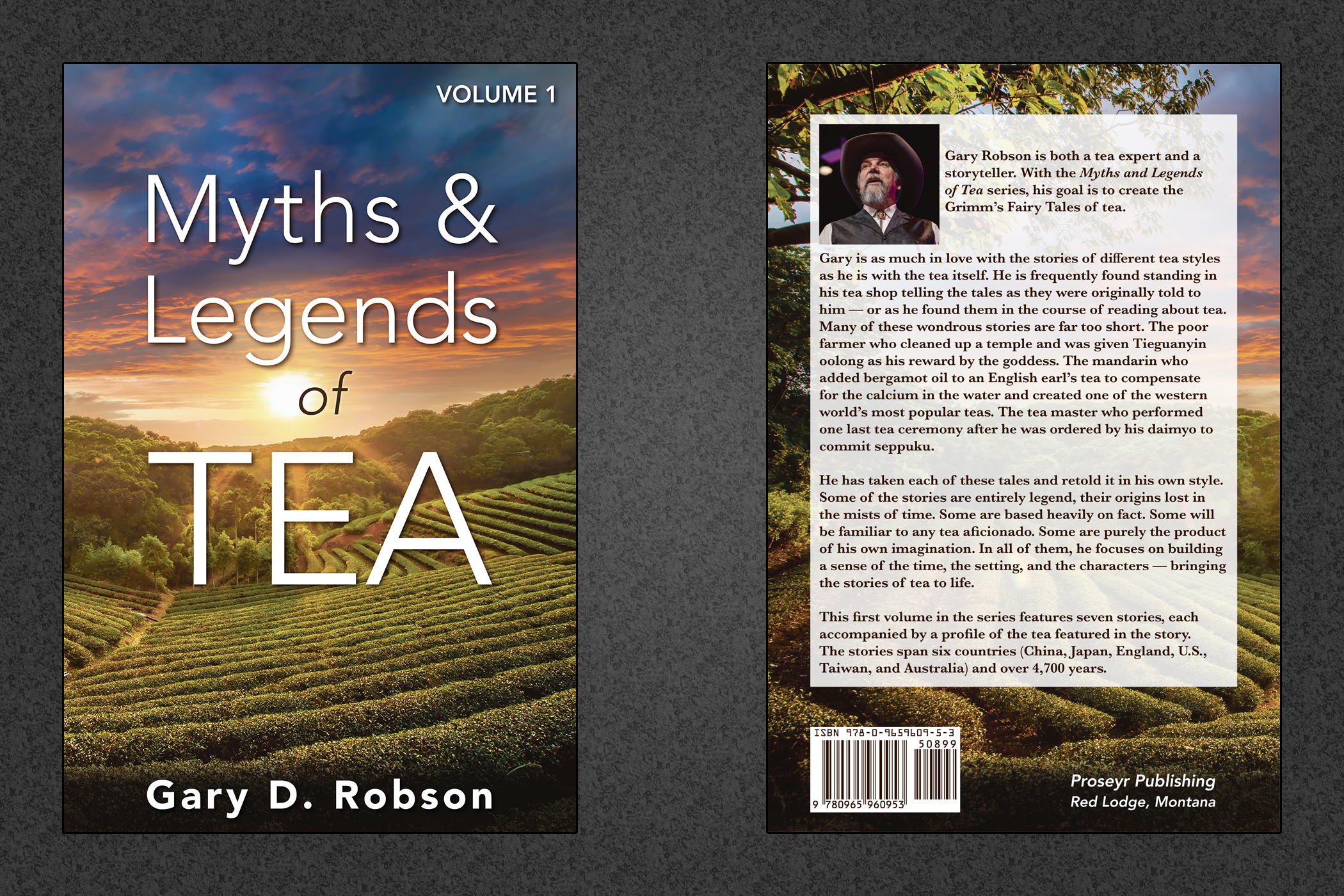
Since I first announced I was working on a book called Myths & Legends of Tea, a lot has happened. For one thing, the project got delayed, interrupted, and re-prioritized for almost two years. For another, it was broken into four volumes. I am pleased to announce, however, that Volume 1 is done!
To read more about Myths & Legends of Tea, download a sample chapter, or buy a copy (paperback, Kindle, or Apple iBook), please visit the main book page!
This first volume in the series features six stories (seven if you include the prologue), each accompanied by a profile of the tea featured in the story, and a prologue that sets the stage. The stories are:
Prologue: The Origin of Tea
China, 2737 BC One of the most-recited myths in the tea world is that of Shennong, the legendary Chinese emperor who introduced agriculture to China, worked extensively with herbs to create the first Chinese pharmacopoeia, and invented acupuncture. In working with herbs, Shennong discovered that boiling water somehow made even “bad” water healthy to drink. One day, Shennong settles under a tree to relax with a cup of hot water. As he rests and waits for the water to cool, leaves from the tree blow unnoticed into his cup. After a while, he notices a heavenly aroma. He raises the cup to his lips and becomes the first man to enjoy what is now the world’s most popular drink.
The Japanese Tea Ceremony: Tea, Serenity & Death
Japan, 1591 It is never wise to offend a daimyo, as Tea Master Sen no Rikyū discovers when his patron Toyotomi Hideyoshi commands Rikyū to commit seppuku (ritual suicide). Rikyū, who developed the Japanese tea ceremony as we know it today, asks Hideyoshi for permission to conduct one last ceremony. Rikyū shares his philosophy, his poetry, and the beauty and serenity of the tea ceremony with four of his disciples. Each is given a gift and all but one of his disciples, Zen priest Nanpō Sōkei, leave the tearoom. Rikyū hands him a sword. It is time.
The Iron Goddess of Mercy
China, 1761 During the reign of the Qianlong Emperor, the sixth emperor of the Qing Dynasty, a poor farmer by the name of Wei is walking to market. He notices a crumbling abandoned temple of Guanyin, the Goddess of Mercy. Every time he passes the temple, Wei stops for a while to fix it up. He works on the pathway, the gates, the temple building, and the statue of the goddess. When he finishes, the goddess appears to him in a dream and gives him a reward: the tea plant that becomes the heart of one of the greatest oolong teas.
Earl Grey: This Water Sucks!
England, 1806 Lord Charles, soon to become the second Earl Grey, is content at his home in Howick Hall, save one unhappy thing: the water is terrible, and it produces quite an inferior cup of tea. He and Lady Grey have experimented to no avail, and they finally turn to a tea expert for help. Chen shows up at Howick with a huge chest of tea and a virtual mobile laboratory of bottles and vials containing everything from essential oils to ground herbs. We know the rest. Even though Charles goes on to become Prime Minister of the United Kingdom, his own fame will be eclipsed by the tea that bears his name.
Teatime in Georgia: The Birth of Southern Sweet Tea
United States, 1870 One oft-repeated story is that iced tea was invented in 1904 by a vendor named Richard Blechynden at the St. Louis World’s Fair. He was having little luck selling hot tea, says the story, and dropped ice cubes in the tea, creating the first iced tea. Nice story, but it doesn’t account for the 1879 cookbook Housekeeping in Old Virginia, which includes a recipe for iced Southern sweet tea. Where did iced tea really come from? Our version of the legend is set in Georgia, where a lady named Harriet Suggett is struggling to come up with an alternative to the popular alcoholic tea punches of the day for an event that includes members of the rapidly-growing temperance societies.
Oriental Beauty: The Braggart’s Tea
Taiwan, 1931 Huang is very good at keeping his head down. He comes from a prominent family that has been farming in Beipu for many generations, but since his father and brother were killed in the uprising almost 25 years ago, Huang has tried not to draw too much attention to himself. When his tea crop is destroyed by leafhopper insects, he is near despair. That field of tea is all that he and his mother, Lin, have to live on. The leaves are chewed, the tips have gone white, and his neighbors have already given up. But Huang doesn’t give up so easily!
Post-apocalyptic Earl Grey
Australia, 20 years from now The zombie apocalypse has spread mercilessly across the country. Only small pockets of the uninfected remain. Sam’s band of survivors is a small one, and they have resigned themselves to a long and difficult road ahead. It will be a much easier road, though, if they can only lay their hands on some tea. Earl Grey, perhaps. Little do they know how much that tea will change their lives… I am particularly excited about the cover of the book, which uses a photograph by Nicholas Han of the sunset over a tea plantation in Taiwan.
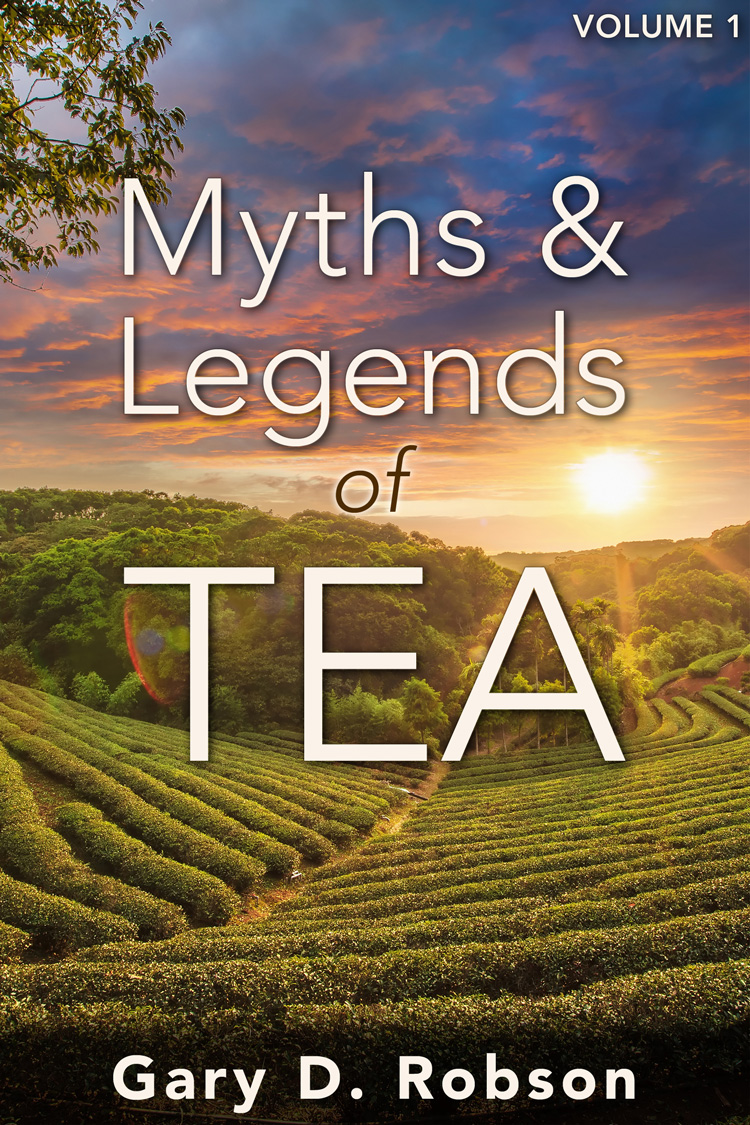

Announcing Myths & Legends of Tea
Most writers don’t like to talk about their work in process. I guess I’m not most writers, because I like to talk about pretty much everything. I do usually hold back, though, until I’m really sure the book is going somewhere. At this point, I’m far enough along that I’m ready to let the cat out of the bag.
To read more about Myths & Legends of Tea, download a sample chapter, or buy a copy (paperback, Kindle, or Apple iBook), please visit the main book page!

As anyone who has visited my tea bar knows, I am as much in love with the stories of different tea styles as I am with the tea itself. Thus far, I have mostly told the tales as they were told to me, or as I found them in the course of reading about tea. Many of these wondrous stories are far too short. The poor farmer who cleaned up a temple and was given Tieguanyin oolong as his reward by the goddess. The mandarin who added bergamot oil to an English earl’s tea to compensate for the calcium in the water and created one of the western world’s most popular teas. The tea master who performed one last tea ceremony after he was ordered by his daimyo to commit seppuku.
In Myths & Legends of Tea, my goal is to create the Grimm’s Fairy Tales of tea.
I am taking each of these tales and retelling it in my own style, most of them somewhere between 2,000 and 3,000 words long. Each is accompanied by a profile of the tea featured in the story. Some of the stories are entirely legend, their origins lost in the mists of time. Some are based heavily on fact. Some will be familiar to any tea aficionado. Some are purely the product of my own imagination. In all of them, I am focusing on building a sense of the time, the setting, and the characters, and bringing the stories of tea to life.
I know what you’re thinking. At least I hope I know what you’re thinking. “When will I be able to buy this wondrous book?” (If that’s not what you’re thinking, please don’t tell me). If all goes according to plan, sometime in the autumn of 2013. I’ll keep you all up to date!
 Tea With Gary