Author Archives: Gary D. Robson

Tea Dragons
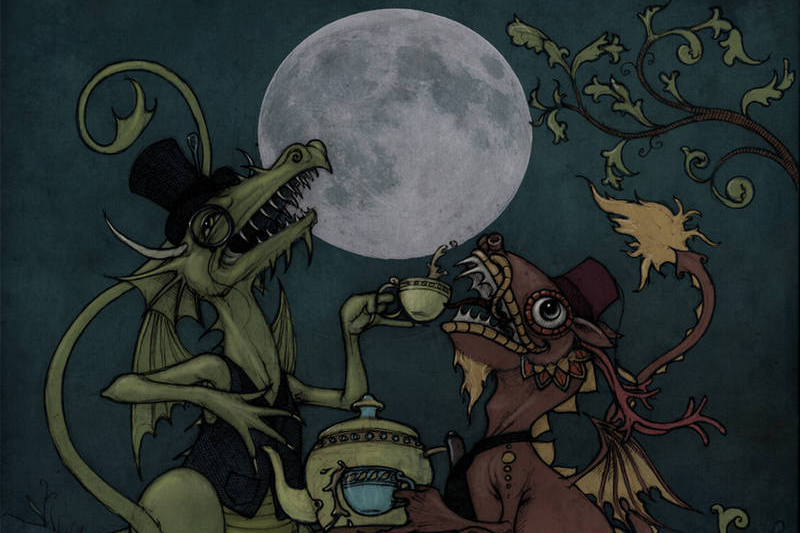
Sometimes my wanderings around the Web are a pure waste of time, and sometimes I end up finding something delightful. This is one of the delightful ones.
While browsing DeviantArt (a website for artists), I decided to search for tea-related stuff. Lo and behold, I found some wonderful drawings of “Tea Dragons” by Thomas S Brown. The dragons are whimsical, and each one just cries out for a story — or at least a good caption. My favorite, with my own caption added, is the White Tea Dragon:
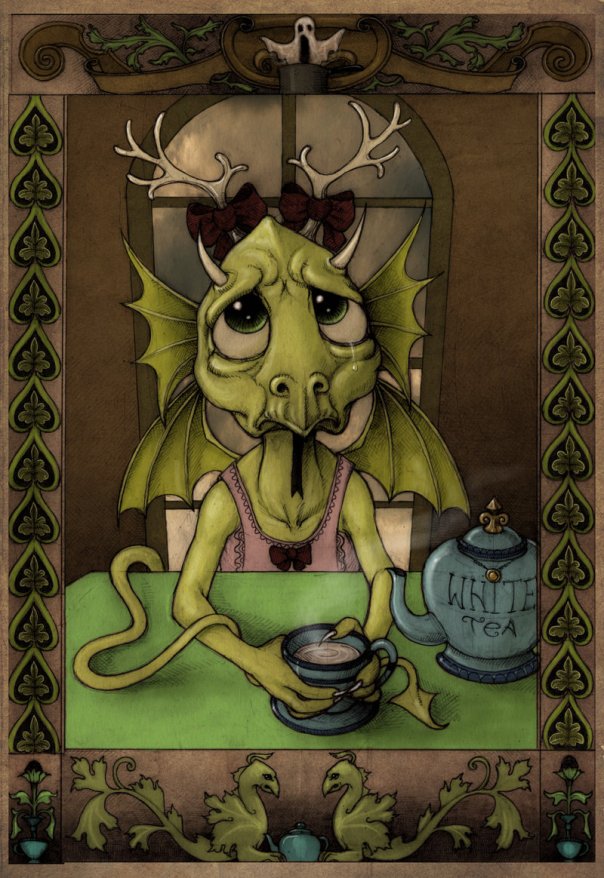
Tom, who goes by “CopperAge” on DeviantArt, said that he originally started doing tea dragons as sketch cards for cons and steampunk events. He’s done about 20 of them so far. When he showed them to his wife (and creative partner), Nimue, she came up with the idea of writing a tea dragon book. They are currently shopping the book around with different publishers. According to Tom, she channeled Lewis Carroll a bit as she wrote it.
The steampunk origins of the tea dragons show better in “Tea Dragon Moon,” which I’ve also taken the liberty of captioning. Note that I haven’t read the book, so these captions are coming straight from my imagination and have nothing to do with Tom and Nimue’s book.
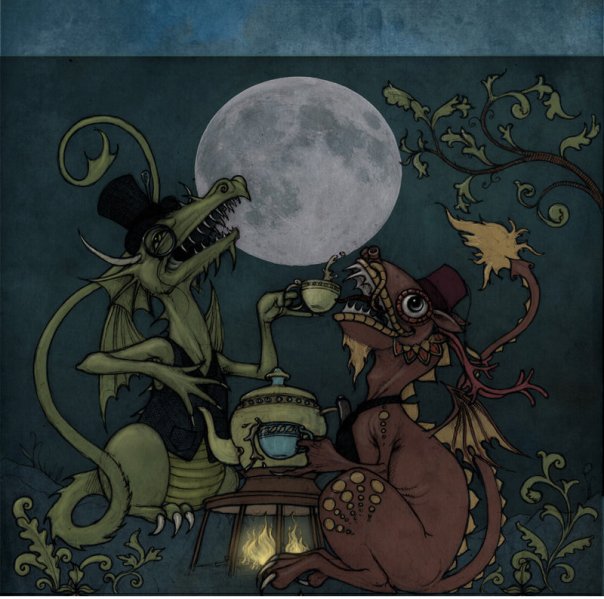
“Quite right, Abernathy, quite right. I do believe I have a few extra sheets of copper laying about. Mayhaps you could whip something up in that lab of yours?”
I’m sure the question running through everyone’s mind, though, is what Tom’s favorite tea is. Looking at the “Tea Dragon Moon” illustration, I figured it would be some kind of über-industrial super-smokey lapsang souchong. I suppose his response fits just as well, though. He said he likes a strong black tea, but he’s “not averse to Earl Grey and occasionally a bit of Jasmine.” I suppose, actually, that his “Grand Tea Master” might be brewing up a batch of jasmine tea, or maybe lotus blossom…
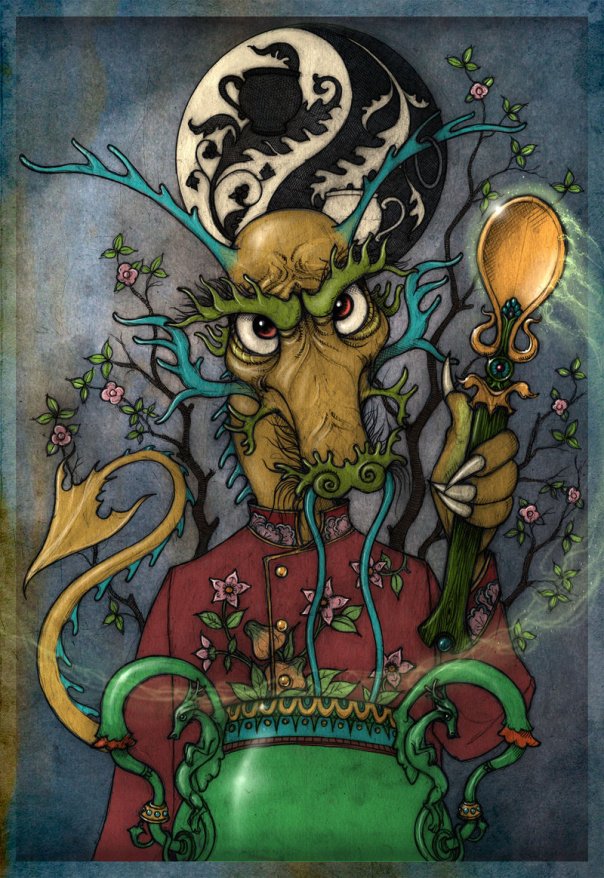
Since we’re on the subject of lapsang souchong, though, Tom did mention that he was recently commissioned to produce a tea label. It’s for an Earl Grey/Russian Caravan blend. Hmmm. That could end up similar to my own Mr. Excellent’s Post-Apocalyptic Earl Grey. I’ll have to track it down when it’s ready and give it a try.
A final note on DeviantArt: don’t be put off by the name, or because members are referred to as “deviants.” The site is simply a great place for artists to share their work and communicate with each other. Sure, it has nude elves, but there’s a lot of wonderful traditional art in there, too. There’s a “family filter” you can turn on if you’re offended by nude bodies. If you’re an art fan, go take a look at the site.

Making sweet tea on demand

If my tea bar was in Georgia, sweet tea wouldn’t be a problem for me. I would always have a pitcher or two sitting in the fridge. But here in Montana, the demand for sweet tea is pretty low. If I serve three or four glasses of sweet tea in a week, that’s a lot. Why is that a problem? Because properly-prepared sweet tea is made in advance. Ideally, it should sit overnight, but a few hours is probably okay. It will keep for a little while, but not indefinitely. If I make it by the pitcher, I’m going to end up throwing away most of it.
My goals are simple: I want it to taste like sweet tea (in the opinion of my Southern friends), and I have to be able to prepare it from scratch in about five minutes.
I’ve been fiddling with solutions to the problem, and I think I’ve come up with an acceptable solution. My method is based on my 20-ounce iced tea glasses, my ice machine (which makes very small cubes), and various other things specific to my specific setup. Obviously, you’ll need to tweak it a bit for your own use.
For sweetening iced teas (especially boba tea), I keep simple syrup on hand all of the time. We make it using equal quantities of boiling water and plain sugar, and then cool it down to room temperature. It’s much easier than trying to mix granulated sugar into cold tea.
First, I add a tablespoon of strong black tea to the infuser. I use our Irish Breakfast Tea, which is a blend of Assam and Tanzanian tea. The leaves are finely broken, which maximizes the surface area for steeping.
To the leaves, I add four tablespoons of simple syrup and about 10oz of boiling water. I suppose I could use some alternate method for sweetening the tea, but I have never heard a request for diet sweet tea. If it’s not real sweet tea with sugar, it’s just sweetened tea, I suppose.
While it is steeping, I fill the glass all the way to the brim with ice.
I steep the tea for five minutes. I would never steep a cup of Irish breakfast tea that long for myself, especially with that much leaf, because I’m a bit of a purist and I don’t add milk or sugar. Steeping that long makes plain tea very bitter. Using this much sugar, however, offsets that bitterness, and adding it to during the steep makes the tea taste different than if it’s added after the fact.
When the tea is poured over the ice, most of the ice will melt. Add a straw and you’re good to go.

Random observations from the tea bar

Looking for something pithy and educational about tea today? Well, you picked the wrong blog post. Today I am just posting a free association of recent observations and happenings at the my tea bar.
Never give up. Never surrender.

I love pu-erh tea. I have far more of it in the tea bar than our local population can justify, especially if you include the “dark tea,” which is tea fermented like a pu-erh but not produced in Yunnan. I have grown used to having to explain pu-erh to every person I mention it to. It’s part of the education mission of the tea world.
Then, one of my regulars brought in a friend from out of town. He bought a quarter-pound each of Irish Breakfast and my own Scottish Breakfast blend (which I call “Gary’s Kilty Pleasure”). He asked for something different, and I asked if he’d tried pu-erh. He knew what it was! He liked it! We probably spent 15 minutes talking about pu-erh and he bought a tuo-cha (bird’s nest shaped pu-erh cake) and some loose pu-erh. The education efforts of tea shops around the country are paying off!
I hate cheap equipment.
Some of the equipment in the tea bar has worked beautifully since the day we bought it. Some has been a source of endless frustration.
The milk heater/frother units we got from Keurig? One broke in just over 3 months, the other in just under a year. Fragile parts, hard to clean, cheap construction. The ones we got from a company I’d never heard of, on the other hand, are both working beautifully.
Tea timers? I suppose it’s not the manufacturer’s fault that we drop them from time to time. But some timers survive multiple drops and some die after the first.
Frothing wands? I just had to deal with our third dead wand in a year. They really should last more than six months. This just isn’t acceptable.
Never put out pressed tea samples
Found this out the hard way. One of our distributors carries these wonderful little pressed hearts of tea they call Antony & Cleopatra. I thought it was a cool novelty idea and ordered a pound of them. They’re black tea, not a pu-erh like most pressed teas. They are actually halfway decent black tea, which makes them better than just a novelty item. Just drop it in the teapot, pour in boiling water, and in a few minutes you have a cup of tea.
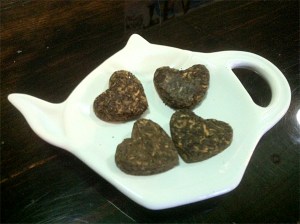
I put a big jar of them (sealed, of course) on the tea bar and a little plate (actually a cute little teapot-shaped teabag holder) in front of the jar with some of the tea hearts on it. Can anyone guess what happened? Anyone? Bueller? Yeah, that’s right. People ate them. Apparently compressed tea leaves make pretty yucky-tasting cookies. Who’d have guessed?
Bleach is your friend
Ever hear commercials for cleaning products that say “even gets out tough tea stains?” There’s a reason for that. Tea stains everything, especially infusers, filters, and teapots. Luckily, a tablespoon of bleach in a pint of water will get rid of all those tea stains in no time flat. Of course, you’ll be rinsing the bleach smell out for a little while, but it’s worth it. Sparkly clean!
Everybody thinks lattes have to have coffee in them
“Latte” is used in English as a short form of the Italian “caffè latte,” which simply means “coffee with milk.” Other drinks can have milk in them, too. Tea lattes are absolutely wonderful drinks. Generally speaking, they have two ingredients: tea and heated/frothed milk. Sometimes a sweetener. So why is it that people keep asking what kind of coffee we add to our tea lattes? They aren’t tea caffè lattes. They are tea lattes.
There. I feel better now.

Vietnamese Lotus Tea
Although my tastes generally run to non-flavored tea, I have long enjoyed Chinese jasmine tea. Technically, it is scented rather than flavored, but either way you’re getting more than just the flavor and aroma of the tea. The producer starts with a good green tea, produces in the Chinese manner (pan-fired rather than steamed, as the Japanese do). They pick fresh jasmine blossoms and layer them in with the tea overnight. The scent from the jasmine infuses the tea, and in the morning they take the jasmine blossoms out and re-dry the tea to remove the moisture from the flowers. This process is typically repeated up to about six or seven times.
I speak here of the traditional production method. Cheap green tea can be made by simply spraying jasmine extract onto tea leaves.
At World Tea Expo this year, one of my goals was to expand my knowledge of tea from parts of the world other than the ones we most encounter in the U.S. (China, India, Japan, Kenya, and Sri Lanka) and to expand the tea selection in my tea bar. I made quite a few new discoveries, one of which was lotus blossom tea from Vietnam.
Vietnam?
If you walk into an average tea shop, you’re not likely to encounter much Vietnamese tea, if any at all. Vietnam, however, is the sixth-largest producer of tea in the world, with annual production approaching 200,000 tonnes — over double that of Japan, which has fallen to tenth place.

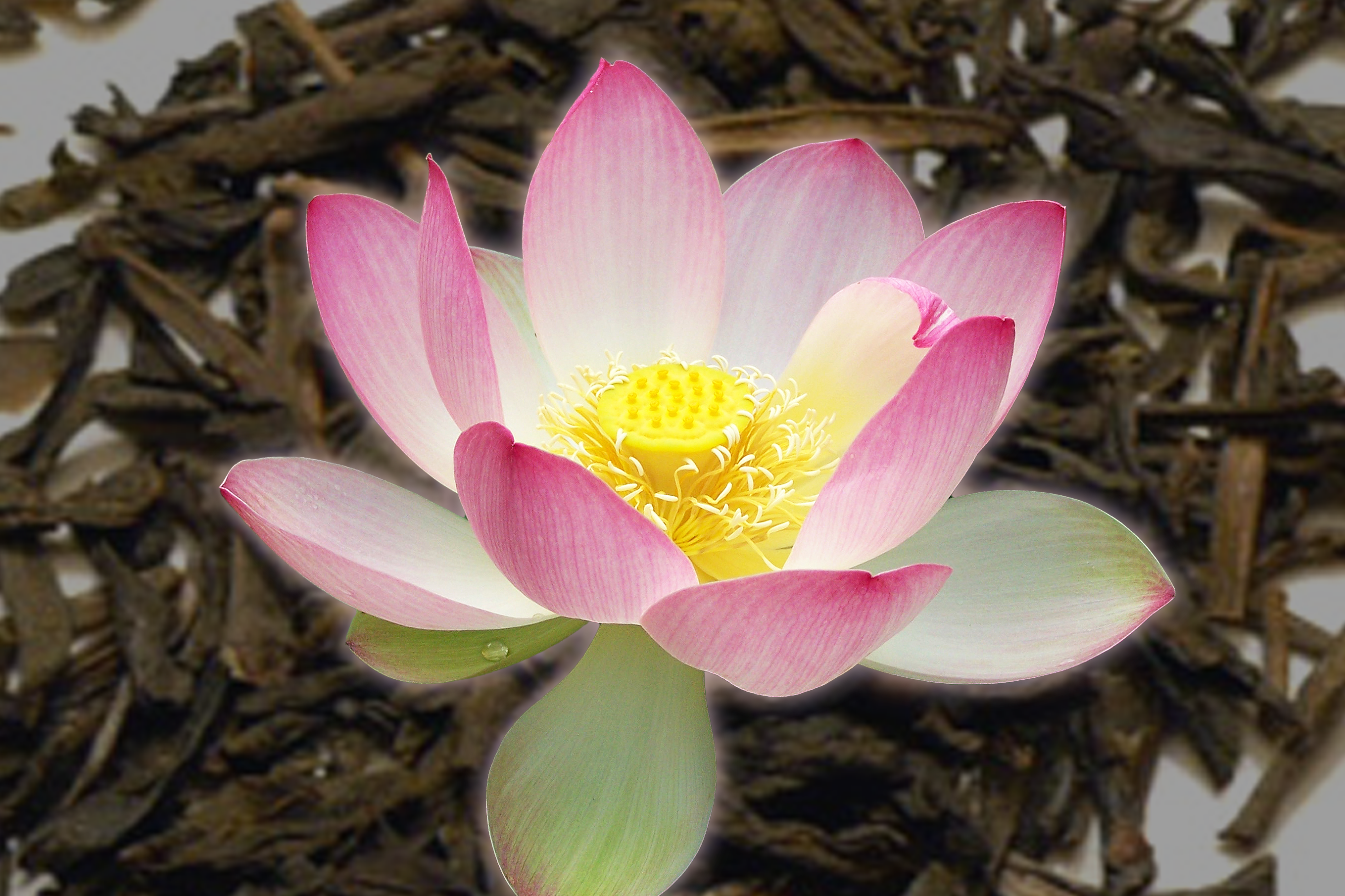
Green tea in Vietnam is produced as it is in China. The tradition of lotus blossom tea is similar to that of jasmine tea, but with a twist. Unlike a jasmine flower, a lotus blossom is a large bloom that seals up tightly like a tulip. By ancient Vietnamese tradition, lotus blossom tea is produced by filling fresh lotuses with green tea and binding the blossom together overnight. In the morning, the flower is opened and the highly-scented tea extracted. Today, the process is more likely to be like jasmine tea. Often, freshly-picked lotuses — or just the stamens of the flowers — are sealed up with the tea in an airtight container or baked with the tea.
Lotus tea, like jasmine tea, gets more aroma than flavor from the flower. Since lotus is much less delicate than jasmine, I settled on a pretty short brewing time of two minutes. When I raised the cup to my nose, the first thing to hit me was the smell of anise (licorice). I’m not a big licorice fan, so I was a bit put off, but I took another whiff. Beneath that strong anise is the vegetal aroma so common with Chinese green teas, but a bit earthier. The taste is very pleasant with a nice medium body to it.
The lotus tea I have came from the Thái Nguyên province in northeastern Vietnam. It is a mountainous area where a lot of Vietnam’s tea is grown.
I don’t know if it’s going to become one of the most popular teas in the tea bar, but it will certainly become one of our regular offerings. I’ve begun recommending it to people who want to try something a bit different, and reactions have been mostly either “wow!” or “meh.” If you like floral tea and you’re ready to move beyond the jasmine blossoms of China and the cherry blossoms of Japan, then I would definitely recommend trying this unique Vietnamese treat.

Tall Montanan is Tall?
I was perusing a post from a fellow tea blogger about World Tea Expo 2013 … well, perhaps I shouldn’t call it a “post.” It’s more of an essay. Or perhaps a minor tome. If you bound it in creepy leather and added a few paragraphs about demons, you could even call it a small grimoire. But I digress…
Ahem. Anyway. Geoffrey F. Norman (a.k.a. “the Lazy Literatus“) wrote about his experiences at the expo and featured a little snippet about me in which he mentioned one of my blends: Mr. Excellent’s Post-Apocalyptic Earl Grey tea. I mention this for four reasons:
1) He posted this picture of us with the caption, “Tall Montanan is Tall.”

Photo courtesy of Geoffrey F. Norman.
Copyright Geoffrey F. Norman 2013.
2) It’s a good blog post. If you’re interested in tea and/or World Tea Expo, I recommend giving it a look.
3) It reminded me that I promised to send him a sample of Mr. Excellent’s Post-Apocalyptic Earl Grey and forgot in all the hubbub. Sorry, Geoffrey. I’ll get that on its way ASAP.
4) And, last but not least, he’s a perfect example of not blogging on a schedule!
Champagne, Tequila, Darjeeling, and Dark Tea
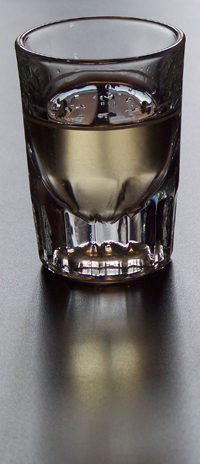
If you make a carbonated white wine, it’s called a “sparkling wine,” unless you are producing it in the Champagne region of France. Then, and only then, should it be called Champagne. I say “should” because there are a number of countries that didn’t sign (or don’t honor) the treaties involved, but that’s a whole different blog post.
The same applies to beverages made from distilling blue agave cactus. If you are in the Mexican state of Jalisco, or designated portions of certain other states, you may call that beverage Tequila. Otherwise, you have made mezcal.
The theory behind these distinctions is not so much the strict corporate trademark enforcement that governs most usage of names in the U.S. It is more a question of terroir. If you were to take two cuttings from the same grape vine and plant one in Napa Valley, California and the other in the Rhine Valley of Germany, you would get different wines from the two vines. Terroir describes the effect that the soil, weather, drainage, and related geographical factors have on the resulting taste of the beverage, whether it be wine or tea.
Darjeeling tea is often called the Champagne of tea (this appellation is usually reserved for first flush Darjeeling tea, but we’ll ignore that distinction for the moment). This little factoid has little to do with the subject of the article, but does make for a marvelous segue from alcoholic beverages to teas, n’est pas?
Like Champagne and Tequila, Darjeeling refers not only to a particular style of tea, but to the origin of that tea: the Darjeeling district of West Bengal, India. Darjeeling tea is unique because of its terroir, but also because of the varietal of the tea plant that they use. Most tea grown in India comes from Camellia sinensis var assamica (the varietal native to India), but Darjeeling tea comes from Camellia sinensis var sinensis (the varietal native to China). Combining the terroir of West Bengal with the flavor of the Chinese tea plant produces the tea we’ve all come to know and love.
And, finally, we get to dark tea
Another geographically-named tea style is pu-erh (also spelled pu’er or puer), named for the town in the Yunnan province of China where the style originated. Only recently has the tea industry really started using the more generic name of “dark tea” to refer to fermented (as opposed to oxidized) teas.
There are two ways to make pu-erh: sheng and shu (also spelled shou).
SHENG (a.k.a. raw or green pu-erh) is the more prized by collectors. The tea is stored in a slightly damp humidity-controlled environment and allowed to slowly ferment. It’s generally not considered ready to drink for years after being picked. Shengs have the same vegetal flavors and aromas as a good Chinese green tea, but with very complex earthy undertones.
SHU (a.k.a. ripe or cooked or black pu-erh) gets a bacterial “kick-start” to the fermentation process, so it’s ready to drink within a matter of months instead of years. Shu pu-erh requires very little steeping time (I’ve spoken to producers that recommend as little as ten seconds), and many pu-erh drinkers start with a “wash,” where you add boiling water, swirl for a few seconds, and pour it off before doing a “real” steeping. Shu pu-er tends to be extremely earthy, with a “composty” undertone. The flavor profile is even richer and deeper than a strong black tea (often reminiscent of a good Keemun), but with very little astringency.
There are several common shapes of pu-erh cakes, including rectangular bricks, bird-nest shapes (“tuo cha”), and flat disks (“beeng cha”).

The standard size for a beeng cha (like the one pictured above, which I wrote more about) is 357 grams, although they can be found in smaller sizes as well. I’ve found several suppliers for 100g beeng chas lately, which is a more affordable alternative for someone new to dark teas or someone sampling a new variety.
Tuo chas, on the other hand, are available in a wide variety of sizes usually centered around 80-120g. Mini tuo chas have become quite common. Each is a single serving of tea, roughly 5g.
Bricks can be found in a variety of sizes as well.
Something new (to me, anyway) is the log-shaped dark tea. My wife, Kathy, and I found these at the World Tea Expo (the big annual industry trade show for tea people) a couple of weeks ago. The ones we purchased for our tea bar are logs about 3.625 kilos (8 pounds), 25 inches long by 5 inches in diameter. We’re selling a single log in its bamboo wrapping with a canvas carry tote for $99.99, but most people will be more interested in slices taken from the log.
In the picture below, Kathy and I are posing with what the tea grower calls the world’s largest log of dark tea. If it puts the size of that tea log in perspective, I am 6’5″ tall (195 cm) not counting the hat and boots. Not having a spare thousand dollars laying around, we didn’t buy that one!


Why I Use a Tea Timer
I’m not a tea snob, but … oh, who am I fooling? Of course I’m a tea snob. But that’s only because my favorite tea is objectively and fundamentally better than your favorite tea. And my favorite sports team could absolutely kick the snot out of your favorite sports team. But I digress…

I drink tea all day at work. Of course. “Work” is a tea bar and bookstore. I can’t read books all day, but I most certainly can (and do) drink tea. Whether I’m having my favorite tea or experimenting with something new, I time my brew. I do the same at home, in hotel rooms, and (quite discretely) in restaurants.
Why do I do this? Because my OCD requires me to prepare each tea precisely the same or I won’t enjoy it? Of course not! And, by the way, the acronym should be CDO, so it’s in alphabetical order like it ought to be. But I digress again…
If I don’t use a timer, there are two different ways I end up brewing my tea:
The impatient understeep
The tea is ready, right? That color looks about right. Man, that smells delicious. It must be ready by now. It feels like it’s been steeping all afternoon. That’s it. I can’t wait any longer. I’m drinking it now.
Hmmm. I wonder why this tea tastes so mild and watery?
The distracted oversteep
I have a couple more minutes until this tea is ready. I’ll run over and put that tin away. Why did nobody wash this infuser? I’d better put some more water on to boil. Oops, the phone is ringing. I’d better answer it.
(20 minutes later) Oh, my tea is probably ready. I wonder it’s so bitter and nasty?
By using a timer, I avoid both of these problems, although for the second problem it really needs to be a time that makes noise.
By timing tea for customers, I also assure that they get a consistent cup of tea every time they visit. In that case, being diligent about the amount of leaf, amount of water, steep time, and any other variables I can control means that our tea is shown off well, which encourages people to buy loose tea.

If I learn just one new thing…

Back in my days in the software industry, I used to put on a lot of educational seminars. One day, I was teaching an all-day session and noticed one of my customers, a gentleman by the name of Ken Combs, sitting about fifteen rows back in the audience. At the first break, I went over to him and said, “What are you doing here, Ken? You could be teaching this seminar!” I absolutely loved his response: “I figure if I can learn one new thing, then the whole day is worth it.”
Before using this insightful little anecdote to segue into the subject of this blog, I have to tell a little tale of that seminar. It was, as I said, an all-day seminar. I’m pretty good at projecting my voice, and when I’m dealing with small groups, I usually eschew microphones. This particular day, however, I had an audience of about 120 people and we were in a hotel ballroom with dubious acoustics, so I had a sound system. Like most hotel ballrooms, this one had accordion-style dividers that could separate it into smaller rooms, and we were using about a third of the room.
The morning session went well, but the afternoon became Public Speaker Nightmare #23™: there was a wedding reception in the other part of the ballroom. They had a live DJ. He had a much more powerful sound system than I did. After about an hour with my sound system cranked up all the way, shouting into the microphone, I called a quick break and strolled over to the reception, where I asked the DJ if he’d mind taking the volume down a bit because he was making my job impossible. “Not my problem, dude,” he said as he cranked his volume up higher.
We tried everything. We appealed to the bride. We called the hotel’s booking desk. We tried to find the weekend manager. And throughout it all, I shouted my voice raw trying to be heard in the back of the room. I couldn’t talk for two days after that (I’m not sure whether my wife wrote a thank you note to the bride for that or not), and we did end up getting a portion of our rent for the room refunded, but it made for one miserable seminar.
Despite all of that, Ken learned his one new thing and I applied his philosophy from my side of the lectern and got much more careful about room bookings for future events. Remember I promised to bring this back to tea? Well, fast forward twenty years or so, and here I am at the World Tea Expo. I still try to follow Ken’s philosophy, and it serves me well.
I attended two good educational sessions yesterday, which I’ll probably be writing more about: “Le Nez du Thé” (the nose of tea) and a tea blending workshop. I certainly learned more than one thing in each. After the exhibit hall closed, I went to the Tea Bloggers Roundtable. Mostly, I went for networking purposes, to meet some of these people I know only through their blog posts and tweets. It was a wonderful networking event, but even without that I learned something.
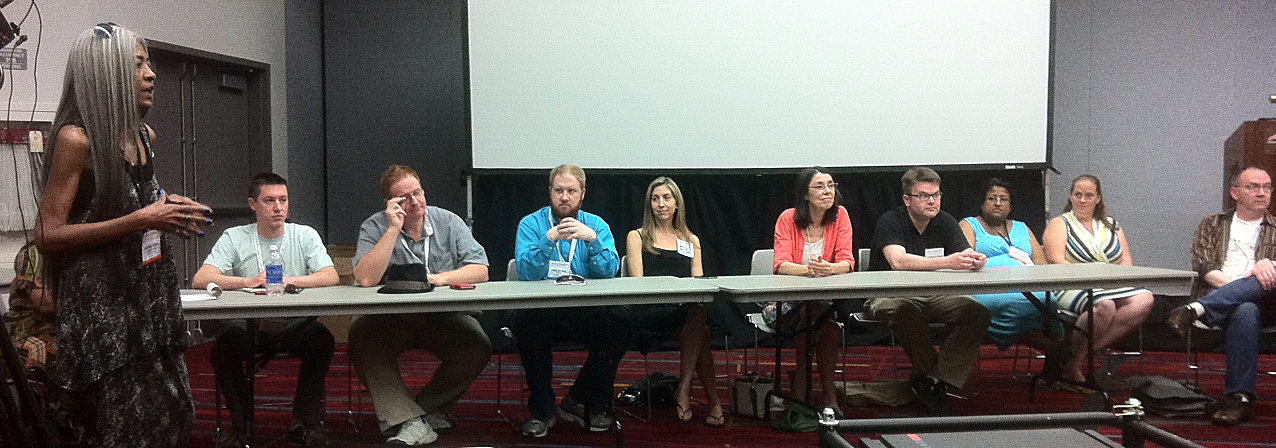
Yes, there was a bit of the mutual admiration society going on there, and the interplay was fun to watch (Godden and Coffey should take their show on the road), but it was also a very worthwhile session. There were more bloggers in the audience — including yours truly, of course — and the format was flexible enough that the distinction between panelist and audience member blurred. As everyone talked and questions were asked (and sometimes answered), it became clear that no two bloggers in the room really had the same objectives. For all of us, the blog is a representation of our personality enveloping the world of tea. Some of the blogs consist almost entirely of tasting notes (e.g., Nicole Schwartz’s “AmazonV” blog) and some have no tasting notes at all. We talked about tea, but mostly about the art of blogging, the expectations of our readers, and the trials and tribulations of trying to keep up any kind of a schedule for blog posts. I hope there’s another blogging event like this one again very soon!
Spelling Madness: Tieguanyin
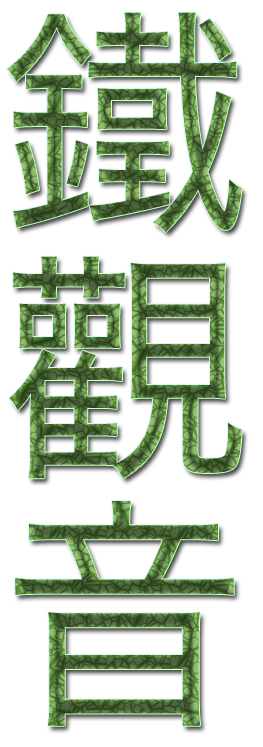
In my first day at the 2013 World Tea Expo, I believe I have seen “Tieguanyin” (a wonderful oolong often called “Iron Goddess of Mercy” in English) spelled at least six different ways. In fact, a quick scan of this blog shows that I have spelled it at least three different ways. Tieguanyin, Tie Guanyin, Tae Guan Yin, Ti Kuan Yin, Tie Gwan Yin, Tie Kwun Yin… which one is right?
In reality, none of them are “right.” The name of the tea is Chinese, which is written in Chinese characters. Even in Chinese, there are two different ways to write it (鐵觀音 in traditional Chinese and 铁观音 in simplified Chinese). Some of the sounds in Chinese don’t translate clearly and unambiguously into English, and translations vary over time as well.
How important is it to have a consistent standardized spelling? I think a quick Google experiment will solve that. Let’s try Googling some different spellings and see how many hits we get (NOTE: I did this in 2013. Your mileage may vary):
- tieguanyin: 483,000 results
- tie guanyin: 776,000
- tie guan yin: 488,000
- ti kuan yin: 379,000
- tie kwun yin: 1,200,000
- tae guan yin: 39,000
And when I Googled “Iron Goddess of Mercy,” I got 341,000 results.
I’m not sure how much this reflects how common any given spelling is, and how much it reflects how good Google is at guessing what you mean. The Wikipedia entry for Tieguanyin came up as the top result for almost all of those searches, even though the article doesn’t use most of those spellings. How can we expect to reach agreement on the spelling of the name when producers can’t reach agreement on how much to oxidize the tea?
As with most ambiguous names, the best way to handle it is to pick a spelling and stick with it, something I’m still struggling with myself. You’ll never change the rest of the world, but at least you’ll be consistent.
Joining the Association of Tea Bloggers
 I (well, technically this blog) have been accepted for membership in the Association of Tea Bloggers. If you don’t work in the tea business, this probably doesn’t mean much to you, but I am very excited about it.
The association has been around for four years this month. It is comprised of people who blog primarily about tea, and there is a list of criteria for membership. What I really like about it is the connection with like-minded people. Some blog far more frequently than I do (you must write at least three posts a month to be accepted as a member) and some less. Some do straight text and some mix in video and audio. Some blogs are run by a single individual, and some by a group.
One of the benefits of membership is access to members-only discussion forums. I’ve used such forums in other businesses and found them invaluable when you’re looking for advice.
I’m hoping that some of the other members of the association will be attending World Tea Expo next week in Las Vegas. It would be nice to meet them face to face. If you’re a tea blogger and you’ll be there, let me know. We can get together for a cup and a chat. Or maybe even — dare I say it? — a beer.
Members of the general public who are interested in tea will find a different benefit from the association: the feed aggregator. This aggregator collects all of the posts from all of the member blogs and shows them all in one place. If you want to get a feeling for what’s going on in the world of tea, just browse through this feed and click on any post that looks interesting.
If you are a Facebook user, you can also pick up an aggregated feed of many of the blogs by visiting the Association of Tea Bloggers Facebook page.
As I get more involved with the Association of Tea Bloggers, I’ll make sure to write more about it.
 Tea With Gary