Author Archives: Gary D. Robson

Caffeine Math: How much caffeine is in a tea blend?
For some reason, it seems like I write a lot about caffeine on this blog. My three-part series on the subject is the most popular thing I’ve ever posted. My recent post about theanine talked about caffeine as well. One thing I haven’t addressed in detail is what happens to caffeine content when you blend tea with something else.
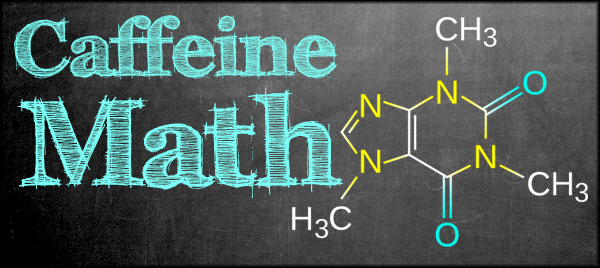
The first thing we have to do is clear our minds of preconceptions. Remember that there’s no simple formula saying that one kind of tea has more caffeine than another (see my caffeine myths article for details). And resign yourself to the fact that there’s no way short of spending a couple of thousand dollars on lab tests to determine how much tea is in a commercial blend, for reasons I’ll explain in a moment.
Let’s start with an example. Assume you have a tea you enjoy. You use two teaspoons of tea leaf to make a cup, and we’ll say this tea gives you 20mg of caffeine. You decide to use this tea in a blend. What happens to the caffeine level?
Ingredient blends
If you blend with other bulk ingredients, the caffeine calculations are simple ratios. If you blend the tea 50/50 with peppermint, then instead of two teaspoons of tea (20mg of caffeine), you’re using one teaspoon of tea (10mg of caffeine) plus one tablespoon of mint (no caffeine). You’ve cut the amount of caffeine in half. If your blend is 1/3 ginger and 2/3 tea, it will have 2/3 as much caffeine as the straight tea.
If you’re blending tea with other tea, the ratios work the same way. Blend together two tea styles with equivalent caffeine levels and the result will have the same amount of caffeine as the original tea blends.
All of this is contingent upon your measuring techniques. It becomes more complicated if you blend by weight instead of volume. Put together a cup of green tea and a cup of peppermint, and two teaspoons of the blend will contain (about) one teaspoon of tea and one teaspoon of mint. If you put together an ounce of gunpowder green tea and an ounce of peppermint leaves, the result is very different. Gunpowder tea is very dense, and peppermint leaves are light and fluffy. Two teaspoons of that mixture might only have a half teaspoon of tea, which means a quarter of the caffeine.
Extracts and oils
In many commercial tea blends whole ingredients like chunks of berry, flakes of cinnamon, and bits of leaf are more for looks than flavor. Soak a strawberry in hot water for three minutes and you’ll see what I mean. The real flavoring in those blends comes from extracts and essential oils that are sprayed on the tea leaves. In that case, the caffeine content is pretty much unaffected. A teaspoon of flavored tea leaves has the same caffeine as a teaspoon of unflavored tea leaves.
A little tea blending secret: sometimes the chunks of fruit in the tea really are chunks of fruit, but they’re not what you think they are. Tea blenders can purchase small chunks of dried apple that are sprayed with (or even soaked in) flavorings or extracts. Your piña colada blend might just be apple bits flavored with coconut and pineapple extracts. There’s very little flavor in the dried apple, so all you’re getting is the flavoring that was added. Why use them at all? Because it’s easy to experiment with, it doesn’t require the tea company to invest in leaf-spraying equipment, and it adds some visual variety to the blend. The chunks can even be colored.
A couple of real-world examples
Let’s start with genmaicha. This is a classic Japanese blend of green tea and roasted rice. I started with a tablespoon of my favorite genmaicha:

The base tea in this blend is sencha, which is fairly easy to recognize from the color and needle shape of the leaves. I don’t know the exact caffeine content of the sencha, but I can do a bit of Googling and come up with an estimate. Let’s go with 30mg per cup. Now, we’ll separate the tea leaves from the rice:

The main thing I learned from this exercise is that I don’t have the patience to pick all of the rice out of a tablespoon of genmaicha! The separation I did showed that a tablespoon of this particular genmaicha contained about 1/3 tablespoon of rice and 2/3 tablespoon of sencha. Since rice has no caffeine, that means a cup of this genmaicha probably has about 20mg of caffeine in it.
I was going to try the same experiment with a Moroccan mint tea, but found that the one I have on hand has no peppermint leaves. It appears to contain only tea leaves and mint extract. That means it has the same caffeine level as the tea used to make it — in this case a gunpowder green tea.
Doing the math
I don’t think you actually have to do much math to estimate caffeine levels. It’s imprecise at best because tea leaves don’t come labeled with their caffeine content. But if you look at a tea blend and it appears to be about half tea leaves and half something else, it’ll have about half the caffeine of the tea alone. Some blends I’ve looked at lately appear to have very little tea leaf — those might as well be decaffeinated tea! Others, like the Moroccan mint I mentioned a moment ago, are almost entirely tea, so treat them just as you would unflavored tea.

Tagged! A tea background story

Oh, these silly tagging things that go around. Normally, I ignore them, but Geoffrey Norman (a.k.a. the Lazy Literatus) tagged me for a tea-related Q&A and it’s hard to resist when he looks at you with those big puppy dog eyes…
(1) First, let’s start with how you were introduced and fell in love with the wonderful beverage of tea.
Easy. I hate coffee.
I got my start with tea as a comfort thing when I was little. Any time I got sick, Mom’s immediate response was tea and toast. Tea relaxes me and makes me feel like I’m being taken care of. It was many years later that I discovered the amazing variety of beverages you can produce with the Camellia sinensis plant. There’s a lot beyond black tea in teabags and loose green tea leaves in the Chinese restaurant!
(2) What was the very first tea blend you ever tried?
I hereby define the word “blend” to mean a combination of ingredients, thus disqualifying Lipton teabags and the aforementioned green tea in the Chinese restaurant. That means the answer is “Morning Thunder” from Celestial Seasonings (tagline: The Awakening Power of a Thousand Charging Buffalo). I grew up in Boulder, Colorado, which is where Celestial Seasonings is based, so it was ubiquitous when I was in junior high and high school. Then, my junior year in high school I got a job driving a delivery truck for an office supply store, and Celestial Seasonings was one of my stops.
(3) When did you start your tea blog and what was your hope for creating it?
The first tea-related post I wrote on my other blog was in June of 2011, shortly after opening my tea bar. About four months later, I gathered all of the tea-related posts from that blog and split them off into a new one: Tea With Gary. That’s what you’re reading now.
(4) List one thing most rewarding about your blog and one thing most discouraging.
Rewarding: I have met some awesome people through tea blogging, and I feel like I’ve debunked some myths about tea.
Discouraging: Where are my tens of thousands of screaming fans? Hey, no offense to the hundreds of readers I do have, but I had hoped for more after 2-1/2 years.
(5) What type of tea are you most likely to be caught sipping on?
I drink a lot of different kinds of tea, but the two I’m most likely to be drinking are Iron Goddess of Mercy oolong (a.k.a. Tieguanyin) and various shu pu-erhs.
(6) Favorite tea latte to indulge in?
When I make myself a tea latte, it’s almost always masala chai. I like a nice spicy chai with frothy milk, a dash of agave nectar, and a sprinkle of cinnamon on the foam.
(7) Favorite treat to pair with your tea?
A lightly-salted big soft Bavarian-style pretzel.
(8) If there was one place in the world that you could explore tea culture at, where would it be and why?
Oh, my, that’s a rough question. For tea culture, it would have to be Japan. When I was last there I hadn’t really explored Japanese tea culture and ceremony, and I’d like to go back now that I know a little bit about it. As for tea horticulture, I’d like to visit some tea plantations in either China or Kenya.
(9) Any tea time ritual you have that you’d like to share?
Unfortunately, I don’t take the time for ritual very often. Most of the time I’m making a quick cup to consume while I do something else.
When I do observe a ritual, it really varies with the type of tea I’m drinking. I prepare and drink my pu-erh differently than my matcha, obviously.
(10) Time of day you enjoy drinking tea the most: Morning, Noon, Night or Anytime?
Any time. Any time at all. Due to my ADHD, the caffeine doesn’t affect me the same way it affects normal people. I do have a tendency to drink tea that’s lighter in the caffeine at night, though (e.g., houjicha), or even switch to rooibos.
(11) What’s one thing you wish for tea in the future?
That there’s never one single business and one single variety that reaches the levels of dominance that Starbucks has reached in coffee. I like tea being a different experience depending on where I go and who I’m with. I enjoy every tea shop having a unique atmosphere, a unique selection, and their own way of presenting the tea. Diversity is a great thing, and I want the diversity in the tea world to increase rather than decrease.
Joining Tea Across America

The more I learn about tea, the more I want to learn. The more I experience, the more I want to experience. I experiment, I read books, I read blogs, I attend tea conferences, and I take classes. I buy tea from all over the world, and try out different blends and combinations. Basically, I do whatever my budget allows.

One thing my budget has not, alas, allowed has been traveling to the world’s great tea growing areas and getting familiar with tea bushes. My tea experiences all start with processed leaves, not with the plants themselves. Today marked the first step in changing that.
I got a phone call this afternoon from Naomi Rosen, of Joy’s Teaspoon. I met Naomi at a blogger’s panel at World Tea Expo 2013 this summer (CAUTION: this link to World Tea Expo plays video and makes noise — careful where you are when you click it). Naomi was calling because she’s working with Jason McDonald of FiLoLi Tea Farm and the United States League of Tea Growers on a new initiative they call #TeaAcrossAmerica.
Their simple yet ambitious objective: put a tea plant into every state and the District of Columbia. Some U.S. states already have established tea plantations. Others have hobbyists with a few bushes going. Many states have climates that Camellia sinensis considers inhospitable. I happen to live in one of those states: Montana.
Naomi asked if I’d be willing to represent Montana in #TeaAcrossAmerica, and I jumped at the opportunity. To participate, I need to take a cutting from FiLoLi Tea Farm in Brookhaven, Mississippi, and grow it here in Montana. Jason has written up some directions to make caring for the cutting easier, and I’ll be able to keep it indoors where the harsh Montana winters won’t kill it. My tea bar has east-facing bay windows that should be a great place to keep the plant, with full morning sun and afternoon shade. The only problem will be humidity — it’s very dry here — but we can deal with that.
It’s going to be a month or two before my little tea bush arrives, so we have plenty of time to prepare. I will keep everyone up-to-date on the progress as we get things going. In the meantime, thanks to Jason for the opportunity and to Naomi for suggesting me as a volunteer!


Gold Nugget Pu-Erh
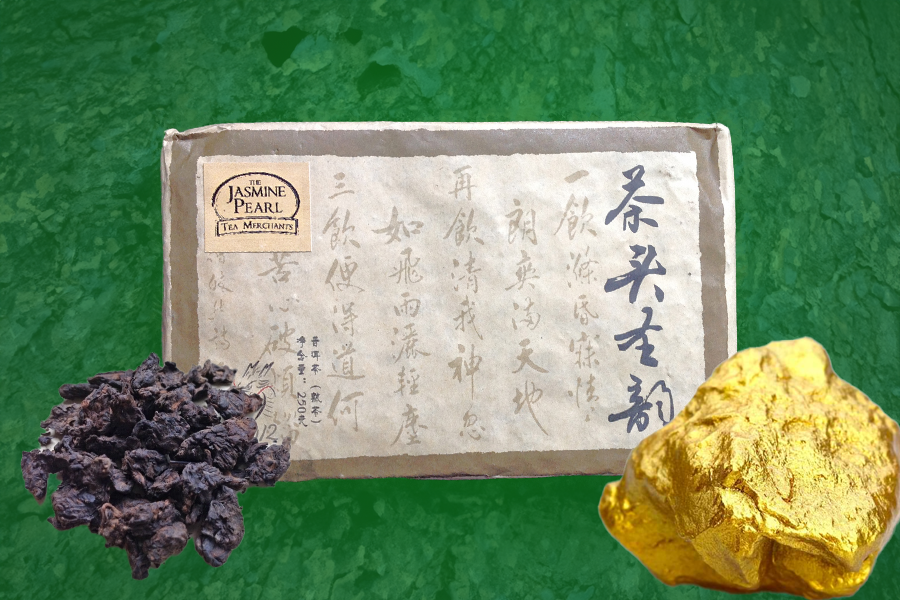
We went to Portland, Oregon for a book show last week. I was there to roll out my new book (Who Pooped in the Cascades?) and to take a look at interesting books from other authors — not to mention a whole lot of networking. While we were there, I took some time out to meet fellow tea blogger Geoffrey Norman for a cup or three of tea (and maybe a beer or two, but that’s completely beside the point). I told Geoffrey to pick his favorite tea shop in Portland and take me there. He chose The Jasmine Pearl on NE 22nd, and the adventure went from there…
My daughter, Gwen, accompanied Geoffrey and I to the shop, and we entered to the wondrous smell of tea blending and brewing. We met the owners and several other staff members, and then settled in to browse.
As I typically do when entering a new tea shop, I explored their tea list to see what they had available. They had the usual selection of flavored teas & scented tea (Earl Grey, Moroccan mint, jasmine pearls…) and old standbys (tieguanyin, English breakfast, gunpowder green…). They also had some very interesting-looking varietals and single-source teas, including kukicha, dong ding oolong, and Gaba oolong.
After we looked around a bit, they informed us that tasting was free and pretty much everything was available to taste. One of the staff pulled out a couple of gaiwans, along with cups, strainers, and other related accoutrements, and asked where we’d like to start.

We started with the kukicha and dong ding oolong, and they were both good. The Gaba oolong, on the other hand, was an absolutely wonderful, and it has a great story behind it, too — but that’s for another blog post.
After going through the oolongs, Gwen chose to try her favorite black tea, a lapsang souchong, and she ended up loving it.
I, on the other hand, wanted to try pu-erhs.
I asked what was their richest, earthiest, most complex pu-erh. She immediately guided me to the Gold Nugget. Not to spoil the ending to this story, but I ended up buying some to bring home.
It looks like any other brick of pu-erh when it’s wrapped up like that, but when the wrapper comes off, it gets different. It seems that it has the name “Gold Nugget” for a reason.

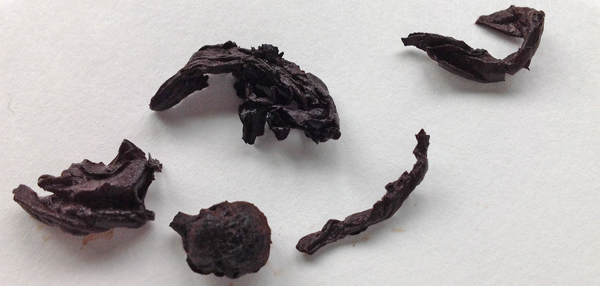
Most pressed tea is made with larger leaf varietals of Camellia sinensis, and the leaves are laid out rather randomly. This requires flaking off bits of the tea with a pu-erh knife or some similar implement. This shu (“ripe”) pu-erh uses whole leaves, but they are rolled up like an oolong or gunpowder tea first. These “nuggets” are then pressed into the cake.
When I’m comparing tea, I like to keep the variables to a minimum. The little pile of nuggets in the picture weighs 7 grams. I put them in my infuser and did a 10-second wash with boiling water, which I drained out completely. Then I added 16 ounces of boiling water and let it steep for three minutes.
To me, three minutes is a long steep time for a shu pu-erh. When I’m drinking my favorite pu-erhs, I usually go for more like 90 seconds. Our first taste of this in the tea bar, on the other hand, was steeped for five minutes, because I told her I liked it strong.
I do, indeed, like it strong, but after steeping for five minutes, the flavors are rather muddled together. That’s why my first pass at home was for three.
The result was exactly what I had asked for: rich and complex are great adjectives for this tea. This is pretty much the polar opposite of the last pu-erh I blogged about. I will, however, be using longer steep times than usual for my first infusion, simply because those nuggets are rolled so tight that it takes a couple of infusions to open them up all the way.
All in all, it was a great trip, and I came back with some great tea, lots and lots of autographed books, and some fond memories. After the tea tasting, we met my wife at a sushi restaurant and had some wonderful sushi rolls and interesting beers. I wouldn’t say Geoff knows as much about beer as he does about tea, but I think we’ll be having some future conversations about the differences and similarities in teas and beers.

Tea and theanine
I mentioned theanine (C7H14N2O3) in the first post of my caffeine trilogy, but I haven’t really gone into any detail about it. I suppose now is as good a time as any.

L-theanine (commonly just called theanine) is an amino acid found in tea, guayusa, and certain mushrooms. It acts as a relaxant, helps to improve concentration, and adds a savory (umami) flavor to whatever it’s added to. Most important—at least when we’re talking about tea—is what it does when combined with caffeine.
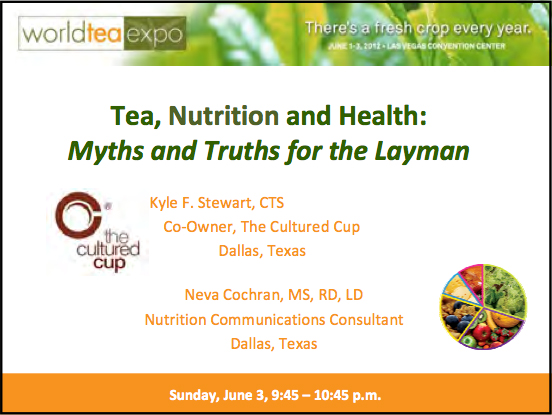
At the 2012 World Tea Expo, I attended a session entitled “Tea, Nutrition and Health: Myths and Truths for the Layman,” presented by Kyle Stewart and Neva Cochrane. They discussed the relaxation and alertness affect of tea, and also noted that a “2012 study found tea was associated with increased work performance and reduced tiredness, especially when consumed without milk or sugar.”
This caught my attention not only because of the increased work performance, but because it validated my personal preference for tea without sweetener or milk.
Stewart and Cochrane attributed the increased work performance to the combination of caffeine, theanine, theophylline, and theobromine. There have been some excellent articles on theanine, including Tony Gebely’s “Theanine: a 4000 Year Old Mind-Hack” and RateTea’s “L-Theanine and Tea.”
Both of them agree with the conclusion that theanine coupled with caffeine produces a seemingly-contradictory combination of relaxation and alertness. This isn’t news to tea aficionados, of course. People have been relaxing and focusing themselves with tea for millennia. Many of the health benefits of tea come from the caffeine, and those obviously apply to theanine-free drinks like coffee, cola, and cocoa.
Caffeine by itself doesn’t work quite the same way, however.
The “spike & crash” affect of caffeine is well known to any coffee drinker. You’re droopy and tired, you have your morning cup, and you swiftly find yourself wide awake and full of energy. A while later, bam! You’re back where you started, and possibly in a pissier mood than when you started. Yes, I said “pissier.” It’s a technical term. When drinking tea, thanks in large part to the theanine content, the effects take longer to kick in, and also take longer to wear off. Mixing a relaxant (theanine) with a stimulant (caffeine) works quite well in this case.
Wikipedia summarizes a half-dozen studies with this statement:
“Theanine has been studied for its potential ability to reduce mental and physical stress, improve cognition, and boost mood and cognitive performance in a synergistic manner with caffeine.”
“Boost mood,” eh? As I wrote last week, there has been at least one study that indicates tea improves mood. That study, however, defined a good mood as decreased fatigue. It appears that there may be more to the mood-enhancing effects of tea than my previous post indicated!
Tea, Hydration, Elevation, and Good Moods
I have heard it since I was a kid: Drink plenty of fluids means water. It doesn’t include caffeinated beverages like tea. That statement didn’t come with much explanation when I was little. Later, Mom explained that only clear liquids count. I couldn’t figure out why 7-Up was okay when I was sick, but iced tea wasn’t. When I got married, my wife explained to me that it was the caffeine that caused the problem. Caffeine, you see, is a diuretic. That means it makes you pee. The more you drink, the less hydrated you are. This explanation has always bothered me, but I never went to the trouble to research it for myself.
Until now.

I came across a paper entitled Caffeine ingestion and fluid balance: a review, by R.J. Maughan and J. Griffin. They reached the conclusion that large amounts of caffeine consumed by people unused to caffeine can, indeed, cause dehydration. On the other hand, people who regularly drink caffeine can consume quite a bit of it without a problem. To quote their results directly:
“The available literature suggests that acute ingestion of caffeine in large doses (at least 250-300 mg, equivalent to the amount found in 2-3 cups of coffee or 5-8 cups of tea) results in a short-term stimulation of urine output in individuals who have been deprived of caffeine for a period of days or weeks. A profound tolerance to the diuretic and other effects of caffeine develops, however, and the actions are much diminished in individuals who regularly consume tea or coffee. Doses of caffeine equivalent to the amount normally found in standard servings of tea, coffee and carbonated soft drinks appear to have no diuretic action.”
In conclusion, when I am sick and/or dehydrated, I may feel free to drink my tea.
But wait! It gets better! I came across another paper entitled The effect of drinking tea at high altitude on hydration status and mood by D. Scott, J.A. Rycroft, J. Aspen, C. Chapman, and B. Brown. This is an absolutely awesome study, simply because they performed it at Mt. Everest base camp. It’s not a statistically valid sampling (only 13 people participated), and I’m not sure how valid a study performed at 17,500 feet altitude is for us lowlanders at 5,500 feet. But, hey, it was done at Mt. Everest base camp, and the procedure they used in the study does seem reasonably rigorous.
To put the results in their own words:
“The study shows therefore that even when drunk at high altitude where fluid balance is stressed, there is no evidence that tea acts as a diuretic when consumed through natural routes of ingestion by regular tea drinkers, but that it does have a positive effect on mood.”
Immediately upon reading this, I began putting together a list of people that might benefit from a few cups of tea. There are even those rare occasions when my own mood is not particularly sunny and bright. Not many, of course, but I must be prepared and have some good tea set aside for those moments.
Alas, upon closer reading I discovered that the “positive effect on mood” is actually “subjects reporting reduced fatigue when tea was included in the diet.” Oh, well. If you think about it, tea has long been touted as a good relaxant, so this particular finding makes sense.
With my hopes for a worldwide cure for bad moods rudely dashed, I shall have to fall back on tea as a way to hydrate and reduce fatigue. Sounds like the perfect thing to have along on a hike or at the gym. Surely that’s no surprise to my tea-loving readers!

Making traditional masala chai at home
Before we address the topic at hand, may I take a moment to get something off of my chest?

Today we are discussing a tea called masala chai. The word “masala” refers to a yummy blend of spices, often containing cardamom, ginger, and pepper. The word “chai” means “tea” in Hindi (and Urdu, and Russian, and Bulgarian, and Aramaic, and Swahili, and a variety of other languages). Therefore, when you refer to “chai tea,” you’re talking about “tea tea.” Although most Americans call masala chai just “chai,” they really should be calling it “masala” or “masala tea” if they don’t want to say “masala chai.”
We can thank the coffee industry for confusing our terminology a couple of decades ago, as they coined the phrase “chai latte” to differentiate masala chai (traditionally made with milk) from coffee lattes. Your other word of the week is “latte,” which just means “with milk” and has nothing whatsoever to do with coffee. Tea made with heated and frothed milk is a latte, too!
Thank you. I feel better now. On to the aforementioned topic at hand:

I would never presume to tell you the right way to make a cup of tea. As I’ve mentioned so many times before, there is no single right way to do it. In this post, however, I will talk about one of the traditional ways to make masala chai. In India, where this concoction (or decoction, if you prefer) originated, it is almost always made with milk and sugar.
In a coffee shop, masala chai (which they usually call a chai latte) is almost always made from a pre-sweetened concentrate. It’s quick and easy to make, and it tastes pretty good. But it doesn’t taste like authentic masala chai.
In a tea shop, masala chai is usually brewed fresh from a blend of black tea leaves and masala spices. If they add milk, it is usually poured in after the tea is brewed, unless the tea shop is specifically set up for lattes. You get that fresh-brewed taste, but somehow the spices don’t seem quite right to me (my tea bar does it differently, but that’s a topic for another post).
At home, you can make it the way they do in India.
The masala spices
First of all, the masala spice mix and the tea (chai) are usually purchased and stored separately. Just as many Americans have a family chili or soup or cookie recipe, many Indian families have their own masala recipe handed down through the generations. You can research and experiment to come up with your own, or go to your favorite tea shop and see if they have a blend for sale. Many tea shops (including mine) will sell you the masala spice mix they use in-house without the tea.
If you’re really serious about it, you’ll make each batch up fresh, grinding cardamom, cloves, cinnamon, pepper, ginger, and whatever other spices you use as needed. I know a few folks that do it that way, but not many. I’d recommend starting with a mix that you like.
The tea
In India, the tea leaf of choice is usually a rich black Indian tea like Assam. It’s brewed pretty strong so that you can taste the tea through all of the spice and milk and sweetener. That doesn’t mean you need to use an Assam, but it’s a good place to start.
The milk
Milk serves a definite purpose in masala chai. You can extract flavor from many spices much better in fats or oils than you can in water, as any chef will tell you. Steeping the spice blend in milk will result in a richer, more nuanced flavor than steeping it in water. In India, the milk of choice is typically water buffalo milk, which can be difficult to get hold of here in North America. The usual substitute is whole milk, although 1% or 2% is common with the more health-conscious crowd. Nonfat milk is rather pointless, as the fat is the main reason for using it.
The sweetener
Sugar. Some drink their masala chai unsweetened, but if there is sweetener, it will typically be sugar.
That said, when I’m making masala chai at home, I usually use honey or agave nectar.
The process
You’ll need a pan, a stove, and a strainer to do this. This is my recipe for making enough for you and a few friends. Adjust accordingly if you’re drinking it by yourself.
- Heat up a pint (16 oz) of milk in the pan, but do not bring to a boil!
- Add 1-1/2 tablespoons of masala spice mix and simmer for five minutes, stirring gently
- Bring a pint (16 oz) of water to a boil in a kettle or microwave
- Add the water to the pan along with 1-1/2 tablespoons of tea leaves
- Stir in 1 teaspoon of sugar or honey
- Allow to simmer for another five minutes, stirring occasionally
- Pour through strainer to remove leaves and spices, and serve immediately
Put out more sugar or other sweetener for your guests. That single teaspoon is a lot less than a traditionalist would use, but I prefer to let everyone choose their own level of sweetness.
For best results, enjoy with your favorite Indian foods. Masala chai does a wonderful job of cutting the spiciness of curries. You can also use your masala chai tea in your Indian cooking: see my post on Chai Rice.
NOTE: The resulting masala chai will not look like the latte in the picture above. To get that look, I frothed up some milk and placed the foam on the top of the cup, and then added a dash of cinnamon powder.

Tea blends you can’t put in a bag
Before I get to the subject of today’s blog post, I’d just like to get a little announcement out of the way. My last post was the 100th post to Tea With Gary. Yay! Celebration! Fireworks!

Okay, now on to tea blends.
Professionals developing tea blends have several goals in mind beyond just making something yummy. One absolute requirement is that it has to be simple for the consumer to make at home. And by simple, I mean the instructions have to read like this: “Put ____ teaspoons of leaves in ____ ounces of water at ____ degrees, and steep for ____ minutes.” If at all possible, “water at ____ degrees” should be replaced with “boiling water,” but sometimes that’s not practical.
When I’m having fun with tea blends at home (or in my case, at the tea bar), I’m often faced with a conundrum. I want to combine significantly different teas, but they require different steep times or water temperatures — or sometimes both. A perfect example of this is the oolong/pu-erh blend that I made the other day.
I like the particular oolong that I used (Iron Goddess of Mercy) steeped for about three minutes. I wanted to try blending it with a loose-leaf ripe pu-erh, but I really didn’t like the results. Even if I backed off on the amount of pu-erh, that three minutes is just too long for me. If I steeped the blend as long as I’d steep the pu-erh by itself (about a minute and a half), then the oolong flavor didn’t come through properly.
For such an obvious solution, it took me the better part of a day to come up with it. Here are my instructions for this lovely blend:
- Place 1-1/2 teaspoons of Iron Goddess in 16-ounce infuser (or teapot) filled with 200 degree water
- Steep for 1:30
- Add 2 teaspoons of shu pu-erh to infuser
- Continue steeping for another 1:30
- Pour tea into mug, filtering out leaves
- Enjoy
The alternative would be to brew the two teas separately and then combine them in the cup, but that ends up being much more complicated and messy, and dirties two infusers. On the other hand, that method allows you to use the leaves more than once — and both of these teas lend themselves to multiple infusions. It also takes some experimentation to make that system work.
A direct translation of that infusion method to multiple infusers would look like this:
- Place 1-1/2 teaspoons of Iron Goddess in infuser (or teapot) with 8 ounces of 200 degree water
- Steep for 3:00 and pour tea into 16-ounce mug, filtering out leaves
- Place 2 teaspoons of shu pu-erh in a second infuser (or teapot) with 8 ounces of 200 degree water
- Steep for 1:30 and add tea to mug from step 2, filtering out leaves
- Once both teas have been blended in the mug, stir briskly
- Enjoy
If you just do the math here, it would seem to be a completely equivalent brewing process, but it’s not. The results are quite different when you steep 1-1/2 teaspoons of oolong in 8 ounces of water or when you steep 1-1/2 teaspoons of oolong in 16 ounces of water. Making that second method produce the same results would require a good bit of finagling.
For me, though, this game isn’t about producing the perfect cup for resale. It’s about experimenting with flavors, doing things that Lipton can’t put in a bag, and coming up with something I like. There are some blends that have worked very well for me this way. There are others that have pretty much bombed every time.
Among the experiments I’ve considered successful are adding fresh raspberries to pouchong oolong, adding a dash of zinfandel (wine) to an aged wild shu pu-erh, and mixing a short-steeped green tea with a long-steeped white tea. Primary among the bombs is blending green and black tea. Regardless of steep time and style, I have yet to find a combination I find palatable.
Don’t be afraid to experiment. Don’t be afraid to blend things together that might make your tea absolutist friends gasp. Tea should be fun.
Kombucha: A Tea Guy’s Perspective

Several times in the last couple of years, people have come in to the tea bar and asked if we have kombucha. The first time, I did a quick Google search, looked at the process required to brew it, and said no. After the third time, I figured I should look a bit deeper into this phenomenon. Conveniently enough, the Healthy Beverage Expo was held in Las Vegas alongside the World Tea Expo (the largest trade conference in the tea business), so I was able to sign up for a kombucha seminar to go along with all of the tea seminars I was taking.
I learned quite a bit in the seminar, although virtually none of what the instructor covered was applicable to a tea shop serving freshly-brewed drinks. Almost everything she talked about applied to RTD (ready-to-drink) bottled beverages, which really doesn’t interest me. We don’t serve bottled tea or soda — or even bottled water — so RTDs didn’t really interest me much. I was there to learn about fresh beverages.
Following the seminar, I did some further research and made an informed decision about selling kombucha in my tea shop. Here is my thought process:
What is kombucha?
Kombucha is a fermented drink made from a fairly heavily sweetened black tea (about 1 cup of sugar per gallon of tea), although other types of tea can be used as well. A symbiotic culture of bacteria and yeast known by the acronym “SCOBY” (it stands for “Symbiotic culture of bacteria and yeast”) is placed on top of the tea blend. It grows into a gelatinous mass on top of the tea as it ferments the sugars in the tea mixture. After a week or so, the freshly grown bacteria/yeast mat can be separated out into a new SCOBY for the next batch, and the liquid can be drawn off to drink.
It’s really good for you, right?
First of all, I don’t select teas based on health claims. I select teas that taste good. At times, those goals align, but I’m frankly underwhelmed at the amount of hard data backing most herbal health claims, and I’m not going to pass on health claims to my customers unless they are backed up by honest-to-goodness, peer-reviewed, reproducible studies — preferably with double-blind clinical studies.
Sitting in the kombucha seminar, I was struck by the PowerPoint slide titled “Health Benefits.” It listed every imaginable ailment from cancer to Alzheimer’s, heart disease to diabetes. The list was absolutely stunning. Before I had a chance to react, someone else in the audience asked what the basis was for this list. The instructor informed us that she had recorded everything her friends, family, and customers had told her. If someone told her they drank kombucha and their gout got better, she’d put gout on the list.
In other words, all of these health benefits were unconfirmed hearsay with no scientific basis whatsoever. A short amount of digging brought me to an article on kombucha by the American Cancer Society. I think one quote from that article sums it up really well:
Available scientific evidence does not support claims that Kombucha tea promotes good health, prevents any ailments, or is works to treat cancer or any other disease. Serious side effects and occasional deaths have been linked with drinking Kombucha tea.
Not exactly a ringing endorsement.
Logistics of kombucha
In a tea bar environment, I have dried leaves with a shelf life measured in months. The few fresh items I need, such as milk, boba pearls, and lemon slices, can either be purchased on a moment’s notice at the grocery store, or made in a matter of minutes. Kombucha requires at least a week to brew, which means if you want to serve it fresh, you need to be very good at predicting demand a week in advance.
If you wish to store and keep it, you have to bottle or keg it, and that takes me back to the RTD issue I opened this article with. If I’m going to serve a bottled beverage, I’d might as well buy it from someone else instead of trying to ferment it myself.
Fermentation leads to another issue as well. The yeast in the SCOBY does exactly what yeast does in beer or wine: it consumes sugars and excretes alcohol and carbon dioxide (CO2). The CO2 provides carbonation, most of which is allowed to escape. The alcohol is another issue. The Federal government puts strict controls over alcohol content in beverages. If you wish to sell fresh-brewed kombucha, you must carefully control and measure the amount of alcohol.
Not only can we not sell beverages to children if they contain more than a fraction of a percent alcohol, but without the proper licenses, we can’t produce alcoholic beverages in the tea bar anyway.
My conclusion
I used to do a lot of homebrewing. I really enjoyed making and drinking my own beer. If I still had all of my equipment set up for the beer, I’d probably brew up a batch of kombucha just for fun, although I’ve yet to try a kombucha that didn’t taste like old gym socks. I’m not, however, going to make it in the tea bar because the logistics are complex, it doesn’t fit the business model of freshly-brewed tea, and the health benefits are unsubstantiated.

The intimidation factor in tea
In terms of consumer education, the tea industry is where the coffee industry was a couple of decades ago. When I was in college in the 1970s, going into a coffee shop and ordering a vente half-caf no-foam skinny vanilla latte with a shot of white chocolate and a half-pump of peppermint would have gotten you some very strange looks. Starbucks created the terminology and spent years teaching it to their customers—and convincing their customers that it was the standard terminology in all coffee shops. Coffee aficionados have become very comfortable with the terminology and the technology behind their drinks.

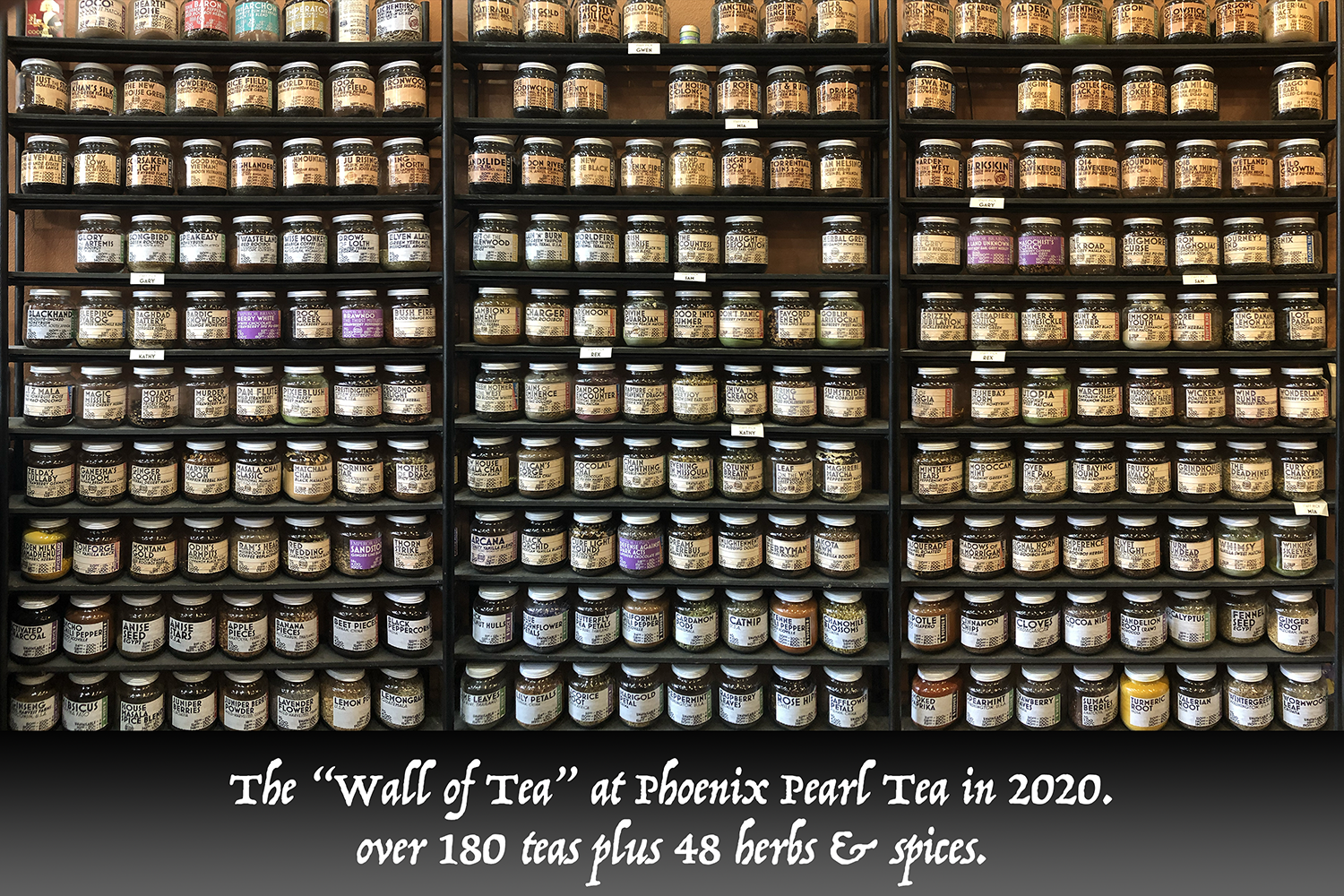
Most of my tea customers, on the other hand, are completely overwhelmed by the array of 120 different teas laid out before them. They don’t know the difference between an oolong and a green tea, they’ve never heard of pu-erh, and they think orange pekoe is an orange-flavored tea. They aren’t going to make a complex drink order, largely because the consumer terminology hasn’t standardized and partially because they don’t know what they want. Instead, we have to walk them through it question by question without sounding bothered or talking down to them.
Every day I have conversations like this one:
Customer: I’d like a chai, please.
Me: Masala chai? Okay. We have nine to choose from. Do you want something traditional, or do you want to experiment?
Customer: Experiment?
Me: We have chocolate chai, spice apple chai, rooibos chai, vanilla chai…
Customer: Wow. I think I’ll go traditional.
Me: Here’s our most popular masala chai. It’s a house blend that uses a nice estate grown Assam tea as the base.
Customer: [sniffs] That smells great. I’ll go with that one.
Me: Hot or iced?
Customer: Oh, definitely hot.
Me: Sounds good. Then would you like it prepared as a latte with frothed milk, or just as a cup of straight tea?
Customer: A latte sounds good.
Me: What kind of milk would you like? I have nonfat, 2%, whole, half-and-half, vanilla soy, or coconut.
Customer: Hmmm. What would you recommend?
Me: The vanilla soy is good, but the whole milk is more traditional and makes a pretty nice froth.
Customer: I’ll go with whole milk then.
Me: And would you like it sweetened at all?
Customer: How do most people do it?
Me: In India, you’d probably get it sweetened with sugar. I tend to prefer agave nectar myself, although I don’t sweeten my own masala chais very much.
Customer: Do you have stevia? I’d like a bit of that.
Me: Sure thing. One last question: would you like that for here or to go?
Customer: I’ll drink it here, please.
Me: Okay, then. I’ll have that ready for you in about five minutes.
[This conversation is a lot longer than it would be for a typical non-latte tea, where I just check to see whether they want it hot or iced, here or to go, and they add their own sweetener and milk if they want any.]
Our job as tea experts is to make tea as friendly as possible. If the customer looks exasperated after the first question, I’ll point them at the staff favorites board or just ask if they’d like it made the way most of our customers take it.
I visited a lovely tea shop in Seattle last winter called Vital T-Leaf. Just my kind of place. They set out a gongfu set and we must have sampled a dozen different pu-erh teas. The woman doing the serving had the ceremony down pat, and all of the equipment arrayed before her: tray, kettle, cups, strainers, gaiwan, spoons, and more. We examined the dry leaf and wet leaf and tasted and discussed each tea.
To me, that was the perfect tea shop for the trained tea lover—and I spent plenty of money there in appreciation, but that would not work in Red Lodge, Montana. Most of my customers are intimidated just by the tea list itself. Add the presentation they used in Seattle, and few would even approach the tea bar. Even the way the tea is delivered to the customer matters. To me, the gonfu-style presentation when I ordered at the Teahouse Kuan Yin (see picture above) was perfect. A non-tea person wouldn’t have the slightest idea what to do with that. We prepare the tea and deliver it fully steeped, so our customers don’t have to worry about what kind of equipment we use and what we do with it. After all, they aren’t paying us a few bucks a cup to make them prepare their own tea!

Over the last couple of years, though, I’ve noticed more and more customers coming in and knowing what they want. Many of the regulars are starting to ask detailed questions about the equipment, the process, and the tea styles themselves. They want to know the origins of the funny names (one of the reasons I’m writing the Myths & Legends of Tea book that will hopefully be out by Christmas), the regional differences in style, and the reasons for the differences.
Update: The book is out now, and available in paperback and ebook.
More customers come in knowing what they want, or asking what’s new.
One huge difference remains between coffee aficionados and tea aficionados, though. Most of the coffee people I know neither know nor care what kind of coffee beans are being used — their custom order is all about the additives and preparation methods, so it stays the same every time. Tea people, on the other hand, are more likely to come in and experiment: a longjing dragonwell from China yesterday, a gyokuro from Japan today, and a first-flush Darjeeling from India tomorrow.
We encourage this, of course. The coffee shop down the street sells dozens of different coffee beans, but on any given day they’ll only be serving one or two of them. The differences among plain coffee beans are much more subtle than the differences in tea leaves, so that works for them. If we want our customers coming in to our shop instead of buying Lipton’s in tea bags at the grocery store, that approach won’t work for us. We need to educate our customers on style, terroir, and infusing methods. But we need to do it without being snobbish or intimidating.
It’s a delicate balance, but all of the good tea shops have figured it out. Mayhaps that’s what defines a good tea shop?
 Tea With Gary