Monthly Archives: December 2017

Quick and Easy Peppermint Matcha Fudge

When I had a tea shop, I used to do tea tasting/classes on Saturday afternoons. One was about mint. We examined peppermint, spearmint, and wintergreen, and then tasted a variety of teas and tisanes that we blend with the various mint leaves and extracts.
My wife, Kathy, decided that since it was a couple of days before Christmas, we should have a special treat. We’ve done a fair amount of cooking with tea, especially matcha (you can browse through some of the recipes here), and we have a brand-new peppermint matcha at the shop, so she decided to do a quick and easy matcha fudge.
It’s a white chocolate bakeless recipe; Kathy calls it “cheater” fudge.
Ingredients
- 16 oz white chocolate
- 1 ten-oz (300 ml) can of sweetened condensed milk
- A pinch of salt
- 2 tsp unsweetened matcha (we used the Maghreb Mint from Phoenix Pearl)
- 1/2 cup of chopped unsalted almonds
Process
- Combine the white chocolate and condensed milk in a double boiler over simmering water (a microwave works too). Stir regularly and make sure everything is completely melted.
- Stir in the matcha and pinch of salt. Blend it very thoroughly and make sure there are no little patches of dry matcha powder left.
- Once it’s completely smooth, pour into a greased 8×8 inch baking dish.
- Sprinkle the nuts over the top, and press them down gently to make sure they’re well attached.
- Chill overnight in the fridge, (at least three hours) and then cut into small pieces (about 1″ to 1-1/2″ square)
You can use this same process with other flavored matcha, although you probably won’t want to use sweet matchas designed for lattes.

Curing your mate gourd

If my article about yerba mate inspired you to try the traditional South American method of drinking yerba mate, you’ll need to get yourself a mate gourd.
As a reminder, it’s pronounced MAH-tay, it’s spelled “mate” in Spanish, and often spelled “maté” in English as a hypercorrection to differentiate it from the English word “mate.”
You can find mate gourds in many tea shops and just about any place that sells loose-leaf yerba mate. There are zillions of online sources as well, but if you like being able to see the actual gourd you’ll be buying, you’ll probably end up in a brick-and-mortar shop.

Once you get the gourd home, don’t just start drinking from it. Before using your new gourd for the first time, you’ll need to cure it to assure the best flavor and longest gourd life. Here’s the process:
- Put a couple of tablespoons of dry yerba mate leaf in your gourd.
- Fill it all the way to the top with hot water, but NOT boiling water! Boiling water can crack your gourd.
- Let it sit for 24 hours, and then dump out the liquid and the leaves. Don’t drink it. It will taste horrible.
- Thoroughly rinse the inside of the gourd with hot water.
- Gently scrape the inside of the gourd with a spoon. Don’t use a knife. Be careful scraping around the stem at the bottom; if you take out the stem, your gourd will leak.
- Dry the gourd completely. Set it upside down on a drying rack or prop it up where air can circulate and moisture can drip out.
Congratulations! Your gourd is now ready to use.
You only have to go through this curing process once, but you’ll want to make sure to rinse and dry completely after each use or you risk growing mold inside it. Don’t use soap! It can soak into the porous surfaces of the gourd and ruin the flavor of the mate next time you use it. A good rinse with warm water will do the trick.
Over time, the inside of your gourd will become stained, taking on the green color of the mate leaf. Don’t worry about it. That’s just a sign of a well-seasoned gourd.

Yerba mate
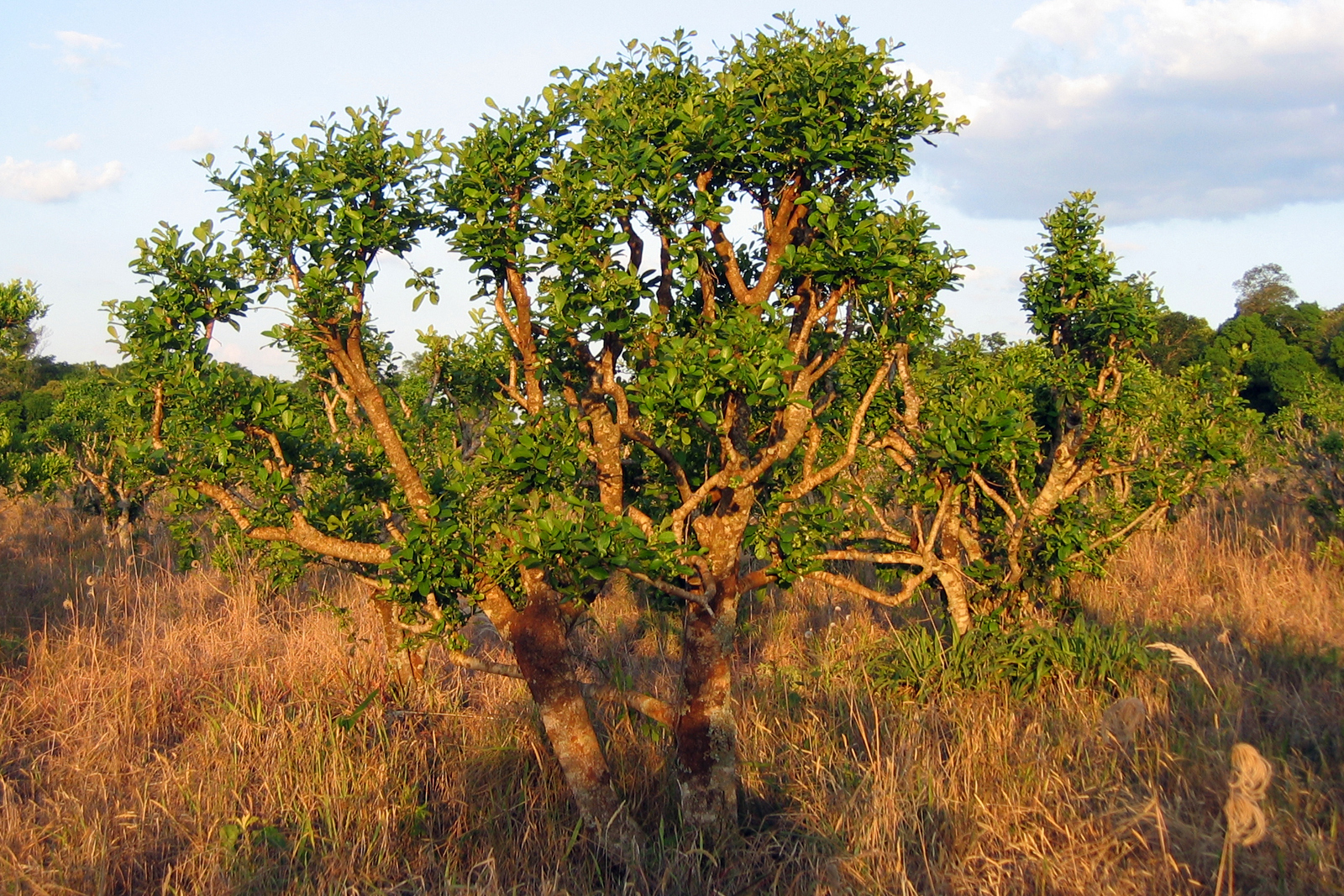
Let’s get this out of the way first: is it spelled yerba mate or maté? Normally, when words from other languages are adopted into English, their accent marks go away. In this case, it’s the other way around. In both Spanish and Portuguese, the word is spelled mate and pronounced MAH-tay. No accent mark is used, because it would shift the emphasis to the 2nd syllable. The word maté in Spanish means “killed.”
In the United States, people unfamiliar with the drink see “yerba mate” written on a jar in a tea shop and pronounce mate to rhyme with late. So it has become accepted in English to add the accent above the e just to help us pronounce the word right. Linguists call this a hypercorrection.
Yerba, on the other hand, is spelled consistently in English, Spanish, and Portuguese, but the pronunciation varies depending on where you are. As you move across South America, it shifts from YER-ba to JHER-ba.
Directly translated, a mate is a gourd, and yerba is an herb, so yerba mate (Ilex paraguariensis) is literally the herb you drink from a gourd. I don’t really care which way you spell (or pronounce) the word as long as you give this delicious drink a try!
Yerba mate is a species of holly that contains caffeine (not, as previously thought, some related molecule called mateine). It grows in Brazil, Argentina, and Paraguay, and is the caffeinated beverage of choice for many people who live in those countries.
In the U.S., mate is usually made like tea, with the leaves steeped in boiling water for a few minutes and then removed. This, however, isn’t the way Argentinian gauchos (cowboys) been drinking mate in South America for centuries.

The process uses four elements: dried yerba mate leaves, hot water, a gourd (mate), and a bombilla (straw). Bombilla is another word that varies in pronunciation in different parts of South America, ranging from BOM-bee-ya to BOM-beezh-a.
Drinking mate was a social time for the gauchos and still is throughout much of South America. You generally won’t find yerba mate served this way in a U.S. tea shop, because it’s darned near impossible to clean a natural gourd to health department standards.
- First, the host (known as the cebador), fills the gourd about 1/2 to 2/3 full of leaf. Yeah, that’s a lot of leaf, but we’ll get a lot of cups out of it!
- Next, the cebador shakes or taps the gourd at an angle to get the fine particles to settle to the bottom and the stems and large pieces to rise to the top, making a natural filter bed. Before pressing the bombilla against the leaves, dampening them with cool water helps to keep the filter bed in place.
- Finally, the cebador adds the warm water. The water is warm (around 60-70°C or 140-160°F) rather than boiling, because boiling water may cause the gourd to crack—and your lips simply won’t forgive you for drinking boiling water through a metal straw!
In most of the world’s ceremonies, the host goes last, always serving the guests first. The mate ceremony doesn’t work that way. That first gourd full of yerba mate is most likely to get little leaf particles in the bombilla, and can be bitter. So the cebador takes one for the team and drinks the first gourdful.

After polishing off the first round, the cebador adds more warm water and passes the gourd to the guest to his or her left. The guest empties the gourd completely (you share the gourd, not the drink!), being careful not to jiggle around the bombilla and upset the filter bed, and passes the gourd back to the cebador.
The process repeats, moving clockwise around the participants, with everyone getting a full gourd of yerba mate. A gourd full of leaves should last for at least 15 servings before it loses its flavor and becomes flat.
 Tea With Gary