Monthly Archives: November 2014

Tea and Beer

I’m a big fan of beer. In fact, I used to write a beer column for a local newspaper a few years back. I’ll often have a beer when I start dinner, and switch to tea at the end. I even took a seminar at World Tea Expo about pairing tea and beer, looking for common flavor characteristics in different styles of the two beverages. A conversation with fellow tea blogger Robert Godden (Lord Devotea’s Tea Spouts), however, got me thinking about the possibility of actually combining the two. You know, putting beer and tea in the same glass. Yeah, Robert’s a strange one.
But why not?
There are beer styles exemplified by certain flavors, which you might get from additives like fruit or other grains, or you might get from doing strange things to the barley, like smoking it. Why not get those flavors from tea? Especially that smoky one…
A buddy of mine, Doug “Beerbarian” Bailey, works at our local brewery, Red Lodge Ales. Doug is a sales guy, but he still understands beer pretty well. He and I both go for smoky flavors. We drink lapsang souchong and Russian caravan tea. We drink smoky rauschbier. We drink Islay Scotches like Laphroaig, which just ooze peat and smoke. We even enjoy the same pipe tobaccos.
So Doug and I had a long discussion about flavoring beer with tea, especially about making our own variety of rauschbier by adding smoked tea to a nice robust beer. It was a wonderful discussion, but we didn’t follow through on it. And then, months later, I get a private message from him on Facebook:

Initially, we’d been talking about actually adding the tea leaves to the kettle while brewing the beer, but Doug was in a hurry. He proposed adding the tea to beer that was already brewed and sitting in the keg. This brings up a few complications, like how to avoid watering down the beer and how to pour tea into a full keg of carbonated beer.
The solution to the first problem was simple: just make the tea really strong so we don’t have to use much of it. In fact, to avoid diluting the flavor of the beer, we went right past “really strong” to “stupid strong.” And as for the second problem, Doug came up with a set of fittings that allowed us to put the tea into an empty keg, pressurize it, and then add the contents of a full keg of beer to it.
The more we talked about the solutions to the problems, the more we realized making just one beer wasn’t going to cut it, so when experiment day arrived, Doug grabbed the kegs of beer and I brewed three stupid strong batches of tea from the tea shop to match them.
We started by adding carefully measured amounts of the übertea to glasses of beer. Instead of wrecking our palates with the smoked tea, we started with a lighter one. The beer is Helio Hefeweizen, a light and citrusy unfiltered wheat beer. I paired that with a cinnamon orange spice rooibos tea. I had brewed the tea with 1 ounce of leaf to 8 ounces of boiling water and steeped it for six minutes. It didn’t take a whole lot of tea to give the beer a wondrous spicy flavor with an orangy nose. We settled on 940 ml of strong tea in the 5-gallon keg of beer. It was a rousing triumph. We made a bit extra so I could take a growler home with me.

Our second experiment was completely off the wall. Doug did say he wanted something “wacky,” so I paired their Beartooth Pale Ale with an infusion of one of my own special tea blends, which I call “Coyotes of the Purple Sage.” It’s an Earl Grey made with black tea, sage, and a hint of mint. I didn’t brew it quite as strong (same amount of leaf as the first one, but with a 5 minute infusion). Our first experiment was rather overwhelming, so we backed down the ratio, using 750 ml of tea in the 5-gallon keg.
I’m not going to call this one an overwhelming success. The sage and bergamot was just a little strange in the pale ale.

The final beer was the one that started all this. We used a Russian Caravan tea, 1 ounce of leaf per 8 ounces of water, brewed for 4 minutes. The base beer is Jack’s Scottish Ale. We played around with the proportions for a bit, and ended up using 900 ml of tea per five gallon keg. We made two kegs: one for Doug’s special event, and one to put on tap in the tasting room that night. Doug named it “Smokin’ Jack.” It was exactly what we were trying to accomplish!
This will not be the last time I bring together my loves of beer and tea. Maybe it’s getting to be time to dust off all of my old homebrewing equipment and get to work.

Comparing Apples and … Tea?
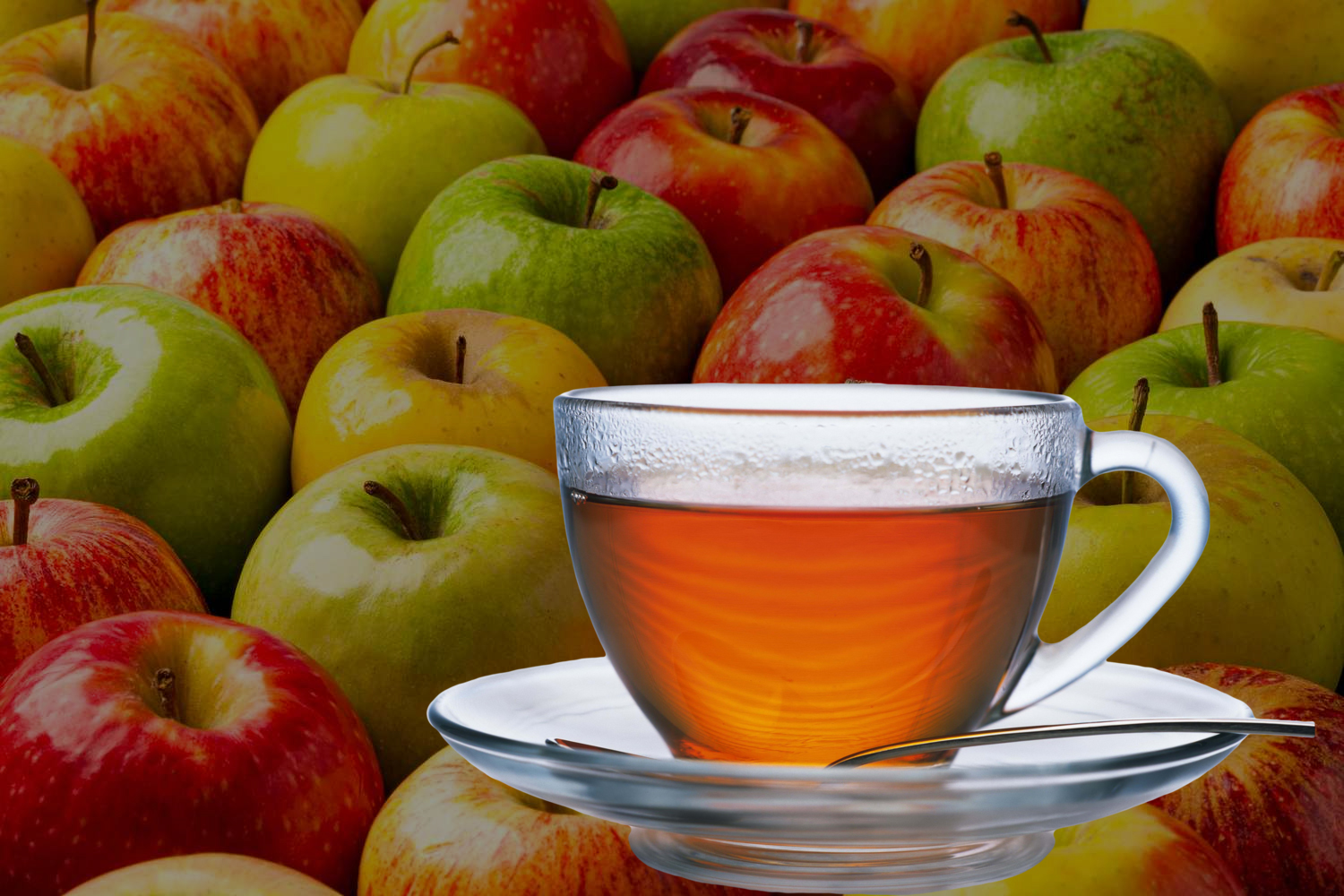
On our way back from a book conference in Tacoma, Washington, my wife pointed out that we were passing an awful lot of stands selling fresh apples. Since it was the season, we picked a big place and stopped.
What an experience!
I knew there were different varieties of apples (Granny Smith, Red Delicious, Fuji…), but I had no idea how many there were. Different colors, sizes, and flavors. Apples that are great for munching, others great for cider, and still others great for applesauce. There are over 7,500 cultivars of apple, and even though this farm had fewer than 50 of them, I was completely and utterly overwhelmed.
And then the epiphany hit me: The way I felt looking at these apples, that deer-in-the-headlights look on my face, was just what I’ve seen on people’s faces the first time they walk into my tea bar. As an aficionado, I walk into a tea shop and start hunting for things I’ve never tried, strange varieties I’ve heard of but never seen, and old favorites that they may bring in from a different source than I do. To a newcomer, though, those 150 jars behind the tea bar might as well be full of pixie dust as tea.
The way the apple farmer led us through our selection is different from the way we guide people at the tea bar, but the general philosophy is the same. His job, like our job, is to help a customer pick something that will make them happy. if you’re going to be making apple butter, he’s eager to help you find just the right apples and suggest just the right procedure. That way, you’ll be back the next time you need apples. We do the same with tea.
Sometimes, we have the customer who knows exactly what they want. “Do you have a jasmine green tea?” they’ll ask. Or, “Can I get an English Breakfast Tea with a spot of milk?” Those folks are easy.
We also have the people who have a general idea of what they’re looking for, but they’re eager to experiment. “I’m looking for a cup of strong tea. What’s the difference between your Rwandan and your Malawi black teas?”
But the challenge comes when somebody has no idea what they’re after. That’s when we play a kind of twenty-questions game.
Q. Are you looking for a straight tea or something flavored?
A. Oh, just straight tea, I think.
Q. Do you like black tea? Green tea? Oolong?
A. I like green tea.
Q. Do you prefer the grassy Japanese styles or the pan-fired Chinese styles?
A. I had a really good Japanese tea one time that tasted really nutty. They called it green tea but the leaves were brown.
Q. Was it roasted? Does the name Houjicha sound familiar?
A. I’m not sure.
Q. Here. Smell this.
A. That smells great! I’ll have a cup of that!
This kind of conversation is what it takes to guide someone to something new. Hopefully something they’ll like so much that they’ll keep coming back for more. To expedite the process, we’re reorganizing the teas behind the bar.
On one side, we’re putting straight tea, and some pure herbs and related tisanes like rooibos, honeybush, yerba mate, guayusa, and so forth. They’re organized first by style, so all of the white teas are together and all of the pu-erh teas are together. Within that grouping, they’re organized by origin: Ceylons, Assams, Kenyans, and so forth.
The other side has the flavored and scented teas, and it’s organized quite differently. Most people looking for a mango tea really couldn’t care less whether the base is white tea or green tea. All they care about is whether it has caffeine (and whether it tastes like mango, of course). To that end, the flavored side is grouped by flavor profiles: minty, fruity, flowery, and so forth. All of the berry teas are together, all of the masala chai is together, all of the Earl Grey is together, etc.
Hopefully, this will be a big help to people who think visually. They will be able to scan the jars and narrow in on something they like. When we’re done, we’ll post some pictures.
In the meantime, if you are a tea retailer, keep on talking to people. If you’re a tea consumer, keep on asking questions!

Canon cameras and oolong tea
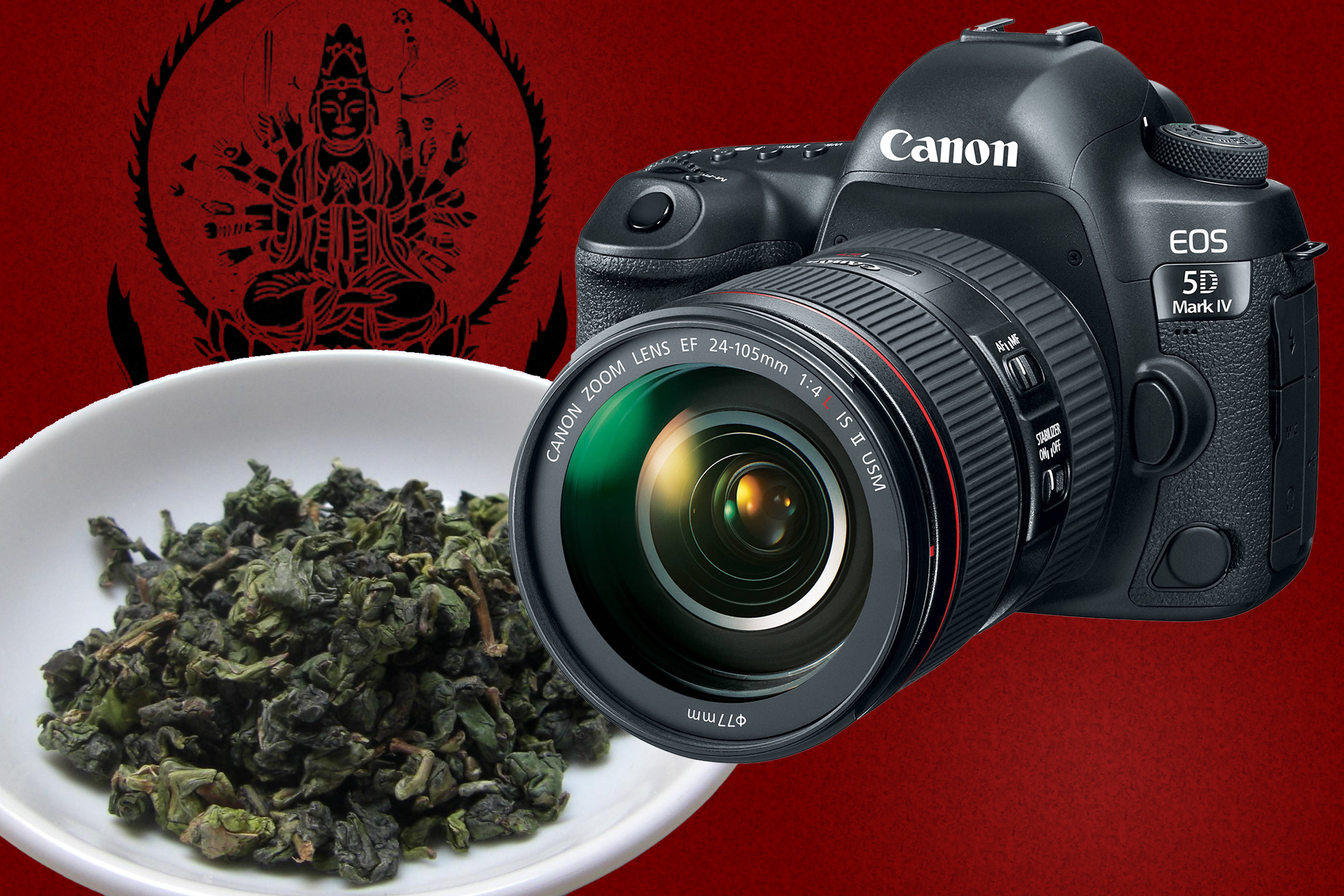
I know what you’re thinking. Has Gary lost his mind? Well, you probably think that anyway, but bear with me for a moment here…
If you can name three styles of oolong tea, one of them is probably tieguanyin, also known as Iron Goddess of Mercy. It’s a wonderful, mellow oolong that’s become one of my favorite teas. I’m drinking a cup even as I write this, and the story behind the name will be featured in the first volume of my upcoming Myths and Legends of Tea short story collection.
And if you can name three brands of cameras, one of them is probably Canon. They make a wide range of consumer level cameras, and they’ve been around a long time — since the 1930’s, in fact.
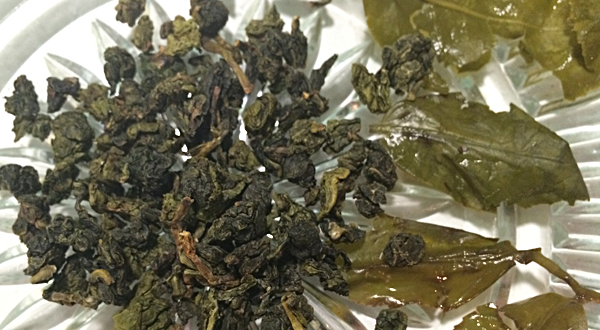
Tieguanyin comes in tightly-rolled leaves. When you steep the tea, those little tadpole shapes open up into full Camellia sinensis leaves. The tea is named for Guanyin, the Goddess of Mercy, or more correctly, the bodhisattva Guanyin, since Buddhism doesn’t have gods and goddesses in the Western sense. There are a lot of ways to spell tieguanyin, and a lot of ways to spell Guanyin’s name as well.
This brings us to cameras. The Canon company — originally known as Precision Optical Instruments Laboratory — developed prototypes of a camera back in 1933. They named this camera Kwanon, which is an Americanized version of the Japanese transliteration of Guanyin’s name. It was a camera named for the Goddess/bodhisattva Guanyin.

The name of the company is, in fact, a simplified version of the name of its first camera, the Kwanon. So next time you pull out your Canon camera, make sure to brew up a cup of tieguanyin oolong to sip while shooting your photos. I recommend brewing it for around 2-1/2 to 3 minutes in 175 degree water. You can easily use the leaves four or five times. Just add about 30 seconds to the brewing time for each additional steep.
Oolong-related articles on Tea With Gary
-

The Iron Goddess of Mercy – Part 1
The Iron Goddess of Mercy Part 1 — China, 1761 — It was the reign of the Qianlong Emperor, the sixth emperor of the Qing Dynasty in China, but our story concerns no emperors, warlords, or nobles. It is just a tale of a humble farmer by the name of…
-

The Iron Goddess of Mercy – Part 2
The Iron Goddess of Mercy Part 2 — China, 1761 — It was the reign of the Qianlong Emperor, the sixth emperor of the Qing Dynasty in China, but our story concerns no emperors, warlords, or nobles. It is just a tale of a humble farmer by the name of…
-

Canon cameras and oolong tea
Why should you drink oolong tea when you’re taking pictures with a Canon camera? Let me explain…
-
The Oolongs of Taiwan: Stop 6 on the World Tea Tasting Tour
Taiwan may not have originated oolong tea, but it is definitely at the forefront of oolongs today. At this stop on the tea tour, attendees learned about what oolong tea actually is, and tasted a variety of Taiwanese oolongs, including Bao Zhong, White Tip Bai Hao, and of course Tieguanyin,…
-
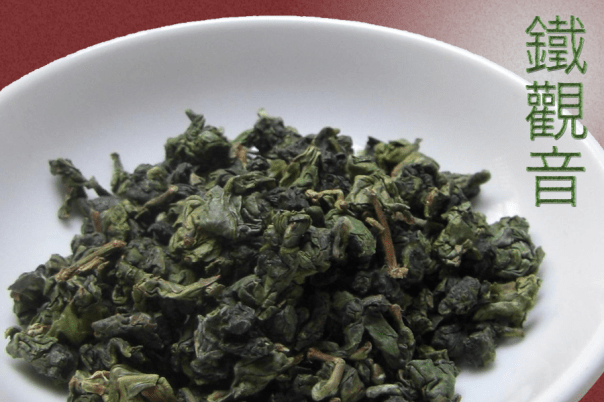
Free mystery tea (Tieguanyin)!
A friend stopped by the tea bar the other day and brought a bag of tea from China that a friend had given her. She didn’t know what it was, and she’d had it for five years, so she asked if I’d like to have it.
 Tea With Gary