Blog Archives

How to be an awesome indie tea shop customer

As I was browsing the web looking for inspiration and education (a futile effort, much of the time), I came across an interesting blog post entitled, “How Not to Be a Bad Starbucks Customer: 10 Things You Should Do.” It’s an intriguing short post that — at least in my mind — goes a long way toward clarifying the difference between the coffee world and the tea world. We can start with the easy part: it doesn’t say “coffee” in the title; it says “Starbucks.” Granted, the blog is titled, StarbucksMelody: Unofficial Starbucks News & Culture, so I guess it’s only natural to have it Starbucks-centric.
But this is the point: the U.S. doesn’t have a “coffee culture” per se, but there is a “Starbucks culture,” which comes from their undeniable domination of all things coffee. In large part, Starbucks culture is our coffee culture. And people are nervous about it. So nervous that they read blog posts about how not to be a bad Starbucks customer. They don’t want to embarrass themselves.
We need to make sure this never happens in the tea world.
Our job, as tea shop owners, barTEAstas (if I may coin a particularly ugly word), tea writers, tea growers, tea importers, and general denizens of the tea world, is to welcome, encourage, and educate newcomers. It is not to shame them, make fun of their lack of knowledge, or cause them to worry because they don’t know where to stand or don’t know our terminology. Unfortunately, the terminology issue has already reared its ugly head, and a big chunk of the blame falls on … Starbucks. As an example, there’s a wonderful tea drink called “masala chai.” In Punjabi, “masala” refers to a spice blend, and “chai” means tea. An obvious English translation would have been “masala tea,” but Starbucks went for “chai tea” instead, a rather boneheaded phrase that basically means “tea tea.”
But I digress (as I am wont to do) …
“Our job … is to welcome, encourage, and educate newcomers. It is not to shame them, make fun of their lack of knowledge, or cause them to worry because they don’t know where to stand or don’t know our terminology.”
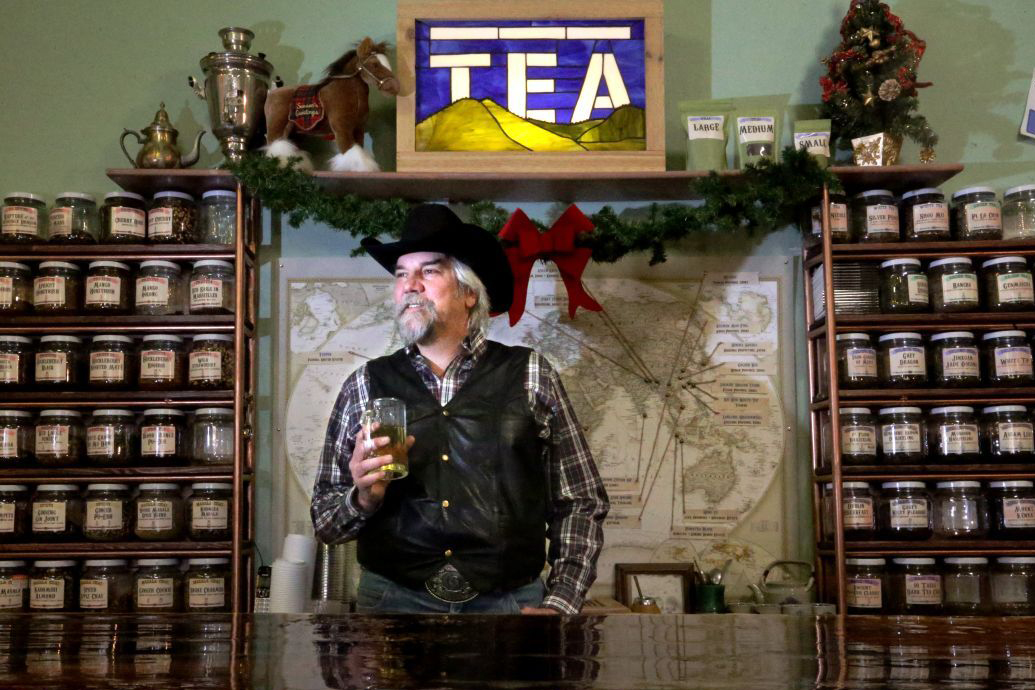
This is me behind the counter, sampling my own wares.
When you walk into an independently-owned tea shop, you are not expected to know that shop’s terminology, customs, or culture. You don’t need to feel anxious about whether you’re going to commit some horrific tea faux pas. You just need to do one thing to be the customer we all love.
What you have to do to be an awesome customer
- Enter the tea shop with an open mind and tell us what you do and don’t like.
We’ll take it from there!
Referring back to the blog post that inspired my blog post, let me re-frame what StarbucksMelody had to say from a tea perspective.
Things you don’t have to worry about
The tea experience is supposed to be calm and relaxing. You shouldn’t be stressed out about whether you’re properly prepared to walk in and order a cup of tea. And you really shouldn’t worry about these things:
- Knowing our sizes, or weird words for our sizes.
We don’t expect you to walk in the door knowing our sizes. We’ll tell you. Or maybe we’ll have cups on the counter labeled small, medium, and large — or 8oz, 12oz, 16oz. Don’t be afraid to ask. - Knowing what kind of tea we have
Coffee shops usually have a couple kinds of coffee out. They can do many things to it (add steamed milk, add flavor shots, pour it over ice, sweeten it…), but there’s generally just coffee and decaf coffee in that decanter behind the counter.
Tea shops usually have dozens (or even hundreds) of different types of tea. Even our regulars don’t know them all, as most tea shops regularly add or drop teas. If you tell us, “I’m looking for a strong hot black tea” or “I’m looking for a fruity green tea,” we can help you find one. That’s our job, and we love doing it. - Knowing how a particular tea is prepared
You don’t have to know the proper water temperature for white tea, the appropriate steeping time for Earl Grey, how to whisk a matcha, or how to rinse a pu-erh. That’s what you’re paying us for. We do know these things. - Using the right terminology
You don’t have to know a bunch of super-secret, just-for-the-cool-kids terminology to order tea. If you ask for that floral green tea that’s rolled into balls and left in your cup while you’re drinking, we know what you mean. Often, the terminology changes from shop to shop. The tea shop back home might call that style Jasmine Pearls, and my shop might call it Jasmine Dragon Tears, and they probably come from different producers. Either way, if you can describe it, we can probably figure it out. - Ordering something strange
It’s very common for people to come into my tea bar looking for something I don’t have. With any luck, I can do it anyway. You want a super-strong ginger Earl Grey latte with soy milk? I will pick the appropriate Earl Grey, add some ginger root, make it super strong for you, and froth up some soy milk. No problem. If you like it, I’ll make you a big bag of the blend and write instructions on the bag for how to prepare it. That’s what brings customers back for more. - How long your drink has been sitting out
This isn’t a coffee shop. Your tea hasn’t been sitting in a pot behind the counter for an hour. It’s being made fresh right there in front of you. - Asking questions
It’s okay to ask questions. We encourage you to ask questions. Most of the people working in indie tea shops absolutely love tea and love talking about it. If you want to know which of our teas are organic, how much caffeine they have, or what the Ethical Tea Partnership is, or where our milk oolong comes from, go ahead and ask.
The tea experience is supposed to be calm and relaxing.
It all boils down to this: Tea shops are not a place for stress. Don’t come in worrying about how to be a good customer (although we do appreciate it if you finish your phone call before you walk up to the counter), just come in looking for some good tea and let us help you get it.

Tea Lattes

The coffee industry would have you believe that the word “latte” means “espresso with steamed milk.” That basically is what “caffelatte” means, but “latte” just means “milk” in Italian. A tea latte is every bit as much a latte as a coffee latte, and the growing popularity of masala chai lattes has been bringing that point home to coffee drinkers of late. In the coffee world, a latte is typically made by preparing the espresso, mixing in the milk, and then adding foam on top. The milk is there to add flavor and to cut the espresso so it doesn’t taste as strong. In the tea world, the milk serves a somewhat different purpose. For the record here, I am not talking about Starbucks-style chai lattes, which are made with a sweet syrup. I’m talking about tea that’s fresh-brewed in milk and water.
Flavors and nutrients from tea leaves extract well in water. That’s why a straight cup of tea tastes so good. That’s why people who like milk in their tea traditionally add the milk after the tea is brewed. A lot of other things, however, don’t extract quite as well.
Many of the flavors in a masala spice blend (no, they aren’t chai spices; chai just means “tea” in Punjabi) are lipophilic. Directly translated, this means “fat-loving,” which means that they extract much better in fats (e.g., milk) than in water. That’s why it’s important to brew the masala chai in hot milk and water instead of just adding the milk later. In my tea bar, we’ve done side-by-side taste tests of tea lattes made both ways. We use a milk heater/frother instead of using the steamer that’s found on commercial espresso machines.
We tried steeping the tea in water and then adding the frothed milk vs steeping the tea in a 50/50 blend of hot water and frothed milk. In this entirely subjective set of tests using our employees and customers, the lattes brewed with milk won consistently. I realize that our production method wouldn’t work in a typical coffee shop where people are rushing in and out on their way to work. They want their drink now. They don’t want to wait four to seven minutes for a fresh-brewed cup. But in a tea bar like mine, things are different. We make a lot of lattes: close to 1/3 of all of the cups we serve. We offer a choice of milk (nonfat, 2%, whole, half-and-half, soy, almond…) and over 150 different types of tea.

The majority of our lattes are served unsweetened. For those who want it sweetened, however, we do the same thing we do when making traditional sweet tea: we add the sweetener when we’re brewing instead of at the end. Most of our customers go for either plain sugar or agave nectar, but we offer other options there, too: flavored hail sugars, honey, stevia leaf, stevia powder, and other artificial sweeteners. You can’t do something like this in a fast-moving production line environment, but you can do it at home.
A milk heater/frother is less expensive than a high-end home coffeemaker. We started out with Keurig units, but found they didn’t hold up to commercial use. There were too many fragile parts, and most of them broke in the first six months (that Keurig unit didn’t even end up on a list of the top 10 frothers this year). We switched to the Capresso frothPRO and we’ve been quite happy with them. They aren’t the fastest solution, but they’re solid, reliable, and easy-to-clean. It’s also easy to switch between heating/frothing and just heating.
If you don’t want to invest $50-$100 in a frother/heater, there’s another solution that works great at home. Just heat the milk in the microwave. Don’t let it go to a boil, but get it as hot as you can without boiling it. There are quite a few handheld battery-powered electric whisks available if you like it frothy; the list I linked in the previous paragraph includes three of them.

How do you know which types of tea work best in a latte? Experiment. One of the most popular tea lattes is called a London Fog. It’s very straightforward: just Earl Grey tea and a 50/50 mix of milk and tea. We usually start the tea steeping in water and add the milk halfway through. Make sure you use the right amount of tea leaf for the total volume of milk and water; if you’re using 8 oz of milk and 8 oz of water, use enough leaf for a 16 oz mug. Many of our blends with cinnamon make good lattes, as do fruity teas. We use sweetened matcha powder for our green tea lattes. Want something different? Try making a strong shu pu-erh latte with chocolate milk. Experiment, have fun, and then teach all of your coffee-drinking friends just how many kinds of latte there are!

Masala Chai Molasses Cookies

I’m just getting around to posting the recipe for the cookies that my wife, Kathy, made for the Red Lodge Christmas Stroll, but here you go, just in time for Christmas!
Sometimes when you’re cooking with tea, the objective is to be subtle. In this case, it’s not. Kathy wanted to add ginger to her molasses cookie recipe, and it takes something strong to stand up to all of the flavor in these cookies. She selected the Ginger Cookie Chai from our shop, which is a caffeine-free, rooibos- and caramel-based blend with lots of ginger. You could use pretty much any masala chai blend for this, but if you want to duplicate these delicious results, pick one with caramel that’s heavy on the ginger!
Ingredients
- 4 tbsp ginger cookie chai (use loose tea, not syrup, powder, or tea bags!)
- 3/4 cup + 2 tbsp margarine
- 1 cup white sugar (to mix with other ingredients)
- 1/2 cup white sugar (to roll cookies in)
- 1 egg
- 1/4 cup molasses
- 2 cups all-purpose flour
- 2 tsp baking soda
- 1/2 tsp salt
- 2 tsp ground cinnamon
- 1 tsp ground cloves
- 1 tsp ground ginger
Process
- Melt the margarine, stir in the loose tea, and simmer on low heat for 20 minutes. Water is good for extracting flavor from tea leaves, but the masala spices need the fats in the margarine (or butter, if you’re a purist) to pull all of the flavor out.
- Pour the margarine through a strainer or cheesecloth, and squeeze out everything you can. You’ll lose a bit of margarine, but don’t worry about it – that’s what the two extra tablespoons in the ingredient list is for!
- Mix the margarine infusion with 1 cup of the sugar and the egg. Mix until it’s smooth, and then stir in the molasses.
- Combine the flour, baking soda, salt, cinnamon, cloves, and ginger, and then blend them into the molasses/margarine mixture. Cover and chill for at least an hour.
- Preheat the oven to 375°F (190°C).
- Roll dough into walnut-sized balls, and roll them in the remaining 1/2 cup of white sugar. Place them on ungreased baking sheets about 2 inches apart.
- Bake for about 10 minutes, until the tops are cracked.
- Cool on a wire rack.
This recipe makes about 3 dozen cookies.

Making traditional masala chai at home
Before we address the topic at hand, may I take a moment to get something off of my chest?

Today we are discussing a tea called masala chai. The word “masala” refers to a yummy blend of spices, often containing cardamom, ginger, and pepper. The word “chai” means “tea” in Hindi (and Urdu, and Russian, and Bulgarian, and Aramaic, and Swahili, and a variety of other languages). Therefore, when you refer to “chai tea,” you’re talking about “tea tea.” Although most Americans call masala chai just “chai,” they really should be calling it “masala” or “masala tea” if they don’t want to say “masala chai.”
We can thank the coffee industry for confusing our terminology a couple of decades ago, as they coined the phrase “chai latte” to differentiate masala chai (traditionally made with milk) from coffee lattes. Your other word of the week is “latte,” which just means “with milk” and has nothing whatsoever to do with coffee. Tea made with heated and frothed milk is a latte, too!
Thank you. I feel better now. On to the aforementioned topic at hand:

I would never presume to tell you the right way to make a cup of tea. As I’ve mentioned so many times before, there is no single right way to do it. In this post, however, I will talk about one of the traditional ways to make masala chai. In India, where this concoction (or decoction, if you prefer) originated, it is almost always made with milk and sugar.
In a coffee shop, masala chai (which they usually call a chai latte) is almost always made from a pre-sweetened concentrate. It’s quick and easy to make, and it tastes pretty good. But it doesn’t taste like authentic masala chai.
In a tea shop, masala chai is usually brewed fresh from a blend of black tea leaves and masala spices. If they add milk, it is usually poured in after the tea is brewed, unless the tea shop is specifically set up for lattes. You get that fresh-brewed taste, but somehow the spices don’t seem quite right to me (my tea bar does it differently, but that’s a topic for another post).
At home, you can make it the way they do in India.
The masala spices
First of all, the masala spice mix and the tea (chai) are usually purchased and stored separately. Just as many Americans have a family chili or soup or cookie recipe, many Indian families have their own masala recipe handed down through the generations. You can research and experiment to come up with your own, or go to your favorite tea shop and see if they have a blend for sale. Many tea shops (including mine) will sell you the masala spice mix they use in-house without the tea.
If you’re really serious about it, you’ll make each batch up fresh, grinding cardamom, cloves, cinnamon, pepper, ginger, and whatever other spices you use as needed. I know a few folks that do it that way, but not many. I’d recommend starting with a mix that you like.
The tea
In India, the tea leaf of choice is usually a rich black Indian tea like Assam. It’s brewed pretty strong so that you can taste the tea through all of the spice and milk and sweetener. That doesn’t mean you need to use an Assam, but it’s a good place to start.
The milk
Milk serves a definite purpose in masala chai. You can extract flavor from many spices much better in fats or oils than you can in water, as any chef will tell you. Steeping the spice blend in milk will result in a richer, more nuanced flavor than steeping it in water. In India, the milk of choice is typically water buffalo milk, which can be difficult to get hold of here in North America. The usual substitute is whole milk, although 1% or 2% is common with the more health-conscious crowd. Nonfat milk is rather pointless, as the fat is the main reason for using it.
The sweetener
Sugar. Some drink their masala chai unsweetened, but if there is sweetener, it will typically be sugar.
That said, when I’m making masala chai at home, I usually use honey or agave nectar.
The process
You’ll need a pan, a stove, and a strainer to do this. This is my recipe for making enough for you and a few friends. Adjust accordingly if you’re drinking it by yourself.
- Heat up a pint (16 oz) of milk in the pan, but do not bring to a boil!
- Add 1-1/2 tablespoons of masala spice mix and simmer for five minutes, stirring gently
- Bring a pint (16 oz) of water to a boil in a kettle or microwave
- Add the water to the pan along with 1-1/2 tablespoons of tea leaves
- Stir in 1 teaspoon of sugar or honey
- Allow to simmer for another five minutes, stirring occasionally
- Pour through strainer to remove leaves and spices, and serve immediately
Put out more sugar or other sweetener for your guests. That single teaspoon is a lot less than a traditionalist would use, but I prefer to let everyone choose their own level of sweetness.
For best results, enjoy with your favorite Indian foods. Masala chai does a wonderful job of cutting the spiciness of curries. You can also use your masala chai tea in your Indian cooking: see my post on Chai Rice.
NOTE: The resulting masala chai will not look like the latte in the picture above. To get that look, I frothed up some milk and placed the foam on the top of the cup, and then added a dash of cinnamon powder.
Deepest Africa – The Tea of Kenya: Stop 5 on the World Tea Tasting Tour
When you think of tea, Africa probably isn’t the first place to pop into your mind, but Kenya is the largest exporter of tea in the world. Tea has revitalized their economy, and tea lovers everywhere became winners. Red Lodge Books & Tea works with family owned plantations in Kenya, and was the first tea bar in the United States to serve Kenya’s unique purple tea.

Kenya is known for its black tea, but with their expanding tea economy, the country has expanded into other styles. We tasted some green and white tea from Kenya, along with traditional estate-grown Kenyan black teas and with some fun and different tea you just can’t get anywhere else.
The teas we tasted were:
- White Whisper
- Rift Valley Green Tea
- Golden Safari (black)
- Lelsa Estate FBOP (black)
- Royal Tajiri (black)
- Purple Tea
A quick bit of background on Kenyan tea before we go any farther. As I mentioned earlier, Kenya is the largest exporter of tea in the world, and the third largest producer (after China and India). Largely because of the population difference, Kenya doesn’t consume as much of its product as China and India do. Kenya produces about 345,000 tons of tea per year, but consumes only about 32,000 tons of that. About 9.6% of the world’s total tea production comes from Kenya.
Those are fascinating statistics, but let’s put some human faces on them. When I wrote my first blog post about purple tea in 2011, I was contacted shortly afterwards by a Kenyan woman by the name of Joy W’Njuguna. I had the pleasure of meeting her in 2012 at the World Tea Expo, as you can see in the picture below. She’s not actually that short — it’s just that I’m six-foot-five and I’m wearing a cowboy hat, so she does look like a tiny little thing.
CAUTION: Before doing business with Royal Tea of Kenya or Joy W’Njuguna, please read my post from May 2014. There are at least a dozen companies (mine included) that report paying for tea and never receiving it!

I’ve learned a lot from Joy about Kenya and its tea industry. One telling tidbit is that about half of Kenya’s tea is produced by corporate farms, and the other half by independent growers. I have a soft spot in my heart for the independents, since I own a (very) independent bookstore and tea bar. Joy, in addition to representing her own family business, is involved in a collaborative export business that represents a coalition of independent family farms in Kenya. The big producers there are focused on producing very high volumes of CTC (Crush, Tear, and Curl) tea that ends up in grocery store teabags. The independent growers are focused instead on producing high-quality handmade tea that will catch the attention of the rest of the world.
I like being able to put a face to the products I buy. I like being able to show my customers a picture and say, “See these people? These people hand-picked the tea you’re drinking. Not machines. We know where the tea came from and we know what we’re buying.”
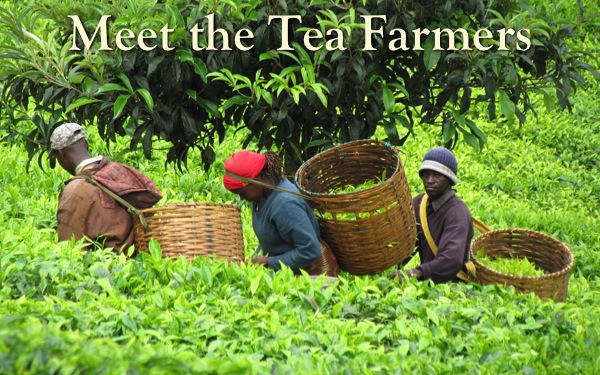
Some of the people who picked the tea we tasted at this class.
Well, that’s probably enough of a soapbox for the day — or maybe even the month. Let’s move on to the teas that we tasted. If you’re like most of my customers, you didn’t even know Kenya produced a white tea. Heck, until about a year and a half ago, I didn’t know either. So let’s start there:
White Whisper

Silver Needle is one of the flagship teas of China. White Whisper is not a clone, but a Kenyan tea made with the same process. The vast differences in terroir make show from the first sniff. It’s richer and earthier than Silver Needle. Even at the 5:00 steep time we used, it’s less delicate. Personally, though, I love the complexity of this tea. Just pay close attention to that water temperature. You pour boiling water over these leaves and you’re going to ruin it.
Rift Valley Green Tea

The first time I tried this green tea, I wasn’t really impressed. Since it’s a pan-fired tea, I followed the general guidelines for Chinese greens and steeped it for three minutes. Next pass, I read the tasting notes from Royal Tea of Kenya, which recommend a thirty-second steep. Really? Thirty seconds? Yep. That’s all this tea needs.
I love the fact that this tea comes from the slopes of Mount Kenya. Some of my best memories of my trip to Kenya when I was in high school center around that area and the day and night we spent at the Mount Kenya Safari Club. What a wonderful place!
Royal Golden Safari

I’ve written about this tea before. It’s one of my favorite black teas. In this session, as in most of my tastings, I got raised eyebrows from people when I poured this and told them it was a black tea. It brews up pale red with just a touch of astringency and appeals to many oolong drinkers. Unlike most black teas, I regularly get four or five infusions out of Golden Safari.
Lelsa Estate FBOP

Next, we moved on to a much more traditional Kenyan black. This FBOP is one of the ingredients I use in Gary’s Kilty Pleasure (my Scottish breakfast blend). The estate in Kericho participates in the Ethical Tea Partnership program, which I appreciate, and the tea has a deep red color and characteristic Kenyan “jammy” notes. The maltiness blends well with Assam tea, and those who take their tea English-style will appreciate how well it takes milk.
Royal Tajiri

“Tajiri” is the Swahili word for “rich,” and this tea lives up to its name. The finely broken leaves mean an intense extraction. If you’re a black tea lover, this one will give you everything you’re looking for — assertive astringency, deep red (almost black) color, and a very complex flavor profile.
Royal Purple Tea

I’ve written so much about purple tea on this blog (here, here, and here) that I’ll skip the background data — although the picture on that slide is new: the tea on the left is a traditional Camellia sinensis, and the one on the right is the purple tea varietal TRFK306/1. The molecular structure in the background of the slide is the anthocyanin. I didn’t have my shipment of handcrafted purple tea yet (and the sample didn’t last long!), so we were unable to compare the orthodox to the handcrafted. I will put up separate tasting notes on that when my main shipment arrives.
I will note that we brewed the orthodox purple tea for this tasting with 170 degree (F) water instead of boiling, as I’ve done in the past. The cooler water brought out more of the complex undertones of the tea and backed the astringency down, making it more to my liking. We tasted this side by side with and without milk. If you haven’t had this tea with milk before, add a bit just to see the fascinating lavender color that the tea turns!
Nandi Chai

I confess. I was bummed that we didn’t get our handcrafted purple tea in time for this event. I kind of unloaded on Joy about it, and she was good enough to find me something else fascinating and unique for this event: an African chai. The tea (a blend of purple and traditional black) is from Kenya and the spices are all from Ethiopia.
We closed the tasting with this unique chai, and it went over very well. Instead of taking up half of this post talking about it, I’m going to dedicate a whole blog post to Nandi chai in the near future.
This was the fifth stop on our World Tea Tasting Tour, in which we explore the tea of China, India, Japan, Taiwan, England, South Africa, Kenya, and Argentina. Each class costs $5.00, which includes the tea tasting itself and a $5.00 off coupon that can be used that night for any tea, teaware, or tea-related books that we sell.
For a full schedule of the tea tour, see my introductory post from last month.

Quick and Easy Masala Chai Rice

Sometimes you want to add flavor to a dish without doing something complicated. A perfect example is plain white or brown rice. Here’s a nice trick, especially if you’re cooking Indian food.
All you have to do is follow the recipe for your rice, but substitute masala chai tea for the water. I recommend brewing the tea strong, using twice as much leaf as you’d normally use in that quantity of water. Add boiling water to the leaves and give it five to seven minutes to steep. Then strain off the leaves and spices, add the tea infusion to your rice, and follow the rest of the directions as normal.
This even works with instant rice, which can otherwise be pretty bland.
 Tea With Gary