Blog Archives

Tips for reading news about tea studies
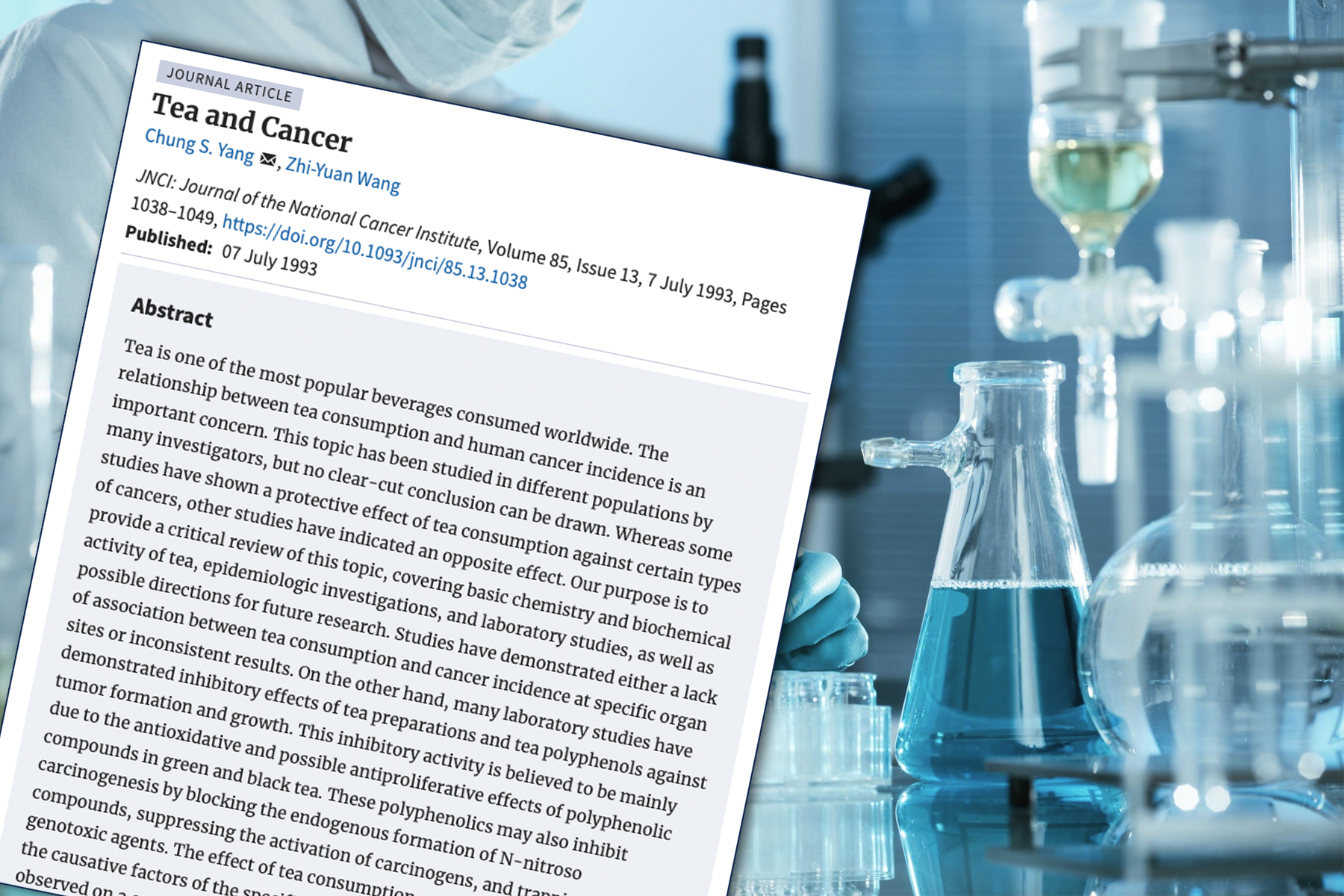
As I write this in 2014, Dr. Oz is being thoroughly (and rightfully) shredded by the Senate Commerce, Science, and Transportation Committee for pimping weight-loss scams, we shouldn’t lose sight of the fact that (a) there are a lot of valid health benefits to tea, and (b) virtually every news story about tea and health manages to misrepresent or misinterpret the scientific study they’re describing.
As you read articles about tea and health, it’s important to keep in mind that the person writing the article is usually not the person (or people) who actually performed the study it references, and that the reporter/blogger may have read only the summary, not the whole study. Also, in larger news operations, the person writing the headline isn’t the same person who wrote the article, and if they’re operating on a deadline, the headline may not accurately sum up the story.
Tip 1: Beware of extreme claims
There’s an article on Authority Nutrition entitled,”How Green Tea Can Help You Lose Weight Naturally.” It’s worth reading. There are good explanations of the benefits of tea, and it cites dozens of actual scientific studies. But any article that begins with a statement like “green tea is the healthiest beverage on the planet” should set off alarm bells. No, there’s never been a study that tested every single beverage on the planet (there’s never been a study of every style of tea on the planet, for goodness’ sake). No, we don’t have a generally-accepted definition of “healthiest beverage.” An opening sentence like that one tells you you’re about to read something sensationalistic, and you should view everything they say with skepticism.
Any article that begins with a statement like “green tea is the healthiest beverage on the planet” should set off alarm bells.
Tip 2: They only studied what they studied
There’s an article on Byron J. Richards Wellness Resources entitled, “The Effects of Green Tea on Weight Management.” The author is a Board Certified Clinical Nutritionist, the studies cited all appear to be properly-conducted randomized controlled trials, and the conclusions all appear to be realistic. So what’s the problem? Reading this may make you want to rush to your tea cabinet and throw away all of those white teas, oolong teas, yellow teas, and pu-erh teas. You need to replace those all with green tea, right. Wrong!
The studies looked at green tea. Specifically, they measured catechins and caffeine in green tea. They never compared green tea with white tea—or any other kind of tea. White tea may be even better for weight loss. So might oolong, pu-erh, or yellow. If green tea is measured against anything else in a study, it’s almost always black tea. What’s the difference between green and black tea? Black tea is oxidized, and that process converts a lot of the antioxidants into other compounds (catechins are a type of antioxidant). But white and yellow tea isn’t oxidized, and oolong is only partially oxidized. Shu pu-erh is oxidized and fermented, and sheng pu-erh is fermented without being oxidized first. Don’t draw conclusions about your oolong from a study that never even looked at oolong!
Tip 3: There’s more to tea than antioxidants
I think it’s pretty universally agreed that antioxidants are a good thing, but they aren’t the only source of health benefits in tea. When I got in a tiff with Fox News’ Chris Kilham about misrepresenting studies, it related to a study that showed coffee had some great health benefits. Reading the study showed that it looked at one thing: caffeine. All of the health benefits it listed for coffee would apply just as much to tea, guayusa, yerba maté, or Mountain Dew. If you like black tea, don’t let yourself get talked out of drinking it just because it doesn’t have the same antioxidant content as green tea.
Tip 4: All green tea is not created equal
It’s wonderful to see an article like the one titled, “Green Tea,” on the University of Maryland Medical Center page. It has tons of information, cites numerous studies, and explains potential drug interactions and side effects. But, like all of the other articles, it just references “green tea.” Did they test Japanese steamed green tea like sencha? Pan-fired Chinese green tea like longjing? Or was it roasted (hōjicha), powdered (matcha), shade-grown (gyokuro), scented (jasmine), or rolled (gunpowder)? The Kevin Gascoyne study I referenced in my 3-part series on caffeine found tea caffeine content ranging from 12mg to 126mg per cup. Yes, the most caffeinated tea had ten times as much caffeine as the least. He found a similar range of antioxidant contents. If you want to replicate the results of the study, you have to know what kind of tea they used.
Tip 5: Pay attention to who funded the study
If they had done a study that found that green tea gives people smelly feet, how much publicity do you think that would have gotten?
You can’t automatically discount a study because the funding group had something to gain from it. Tea companies are the ones most likely to fund tea studies, after all. But take a look at “Green Tea Promotes Weight Loss, New Research Finds,” an article on Medical News Today (well, actually, it’s a press release, but they don’t make that obvious until the end). It’s very clear in reading the article that Lipton did the research, and that Lipton is very excited about having done the research. It’s a big company, and their PR department did a good job of really spreading the news about that study.
If they had done a study that found that green tea gives people smelly feet, how much publicity do you think that would have gotten? I always tend to pay a little more attention to research coming from neutral parties, or research that’s been duplicated by neutral parties.
Tip 6: Check to see if the methodology was realistic
WebMD has an article entitled, “Green Tea Fights Fat,” which does appear to actually compare weight loss effects of green tea with oolong tea. But read this sentence from the article carefully: “For three months, the first group drank a bottle of oolong tea fortified with green tea extract containing 690 milligrams of catechins, and the other group drank a bottle of oolong tea with 22 milligrams of catechins.”
First, they aren’t comparing green tea with oolong. Both groups drank oolong tea. In one group, they added green tea extract, and in the other, they didn’t. So this study actually compares drinking oolong with drinking oolong plus green.
Second, the average cup of green tea has 50-100mg of catechins. That means the “extract” they fortified the bottle of oolong with made it equivalent to 7-14 cups of green tea. That’s a lot of tea!
If you have specific reasons for controlling your intake of caffeine, L-theanine, catechins, and other components, then there’s plenty of research to plunge into. Focus on people who actually study tea rather than folks like Dr. Oz or Oprah. Look at the paper and see what they actually studied. If it doesn’t apply to you, move on to the next one. If it does, take it at face value without trying to overgeneralize.
But if you’re just looking for a healthy drink that tastes good, stop worrying and buy more of what you like the most. You’re likely to drink a lot more of a beverage you love than one you don’t. If you like to experiment, all the better! If you drink a wide variety of tea, you’ll get a wide variety of nutritional benefits, and you can enjoy yourself as you do it.
Tea, Hydration, Elevation, and Good Moods
I have heard it since I was a kid: Drink plenty of fluids means water. It doesn’t include caffeinated beverages like tea. That statement didn’t come with much explanation when I was little. Later, Mom explained that only clear liquids count. I couldn’t figure out why 7-Up was okay when I was sick, but iced tea wasn’t. When I got married, my wife explained to me that it was the caffeine that caused the problem. Caffeine, you see, is a diuretic. That means it makes you pee. The more you drink, the less hydrated you are. This explanation has always bothered me, but I never went to the trouble to research it for myself.
Until now.

I came across a paper entitled Caffeine ingestion and fluid balance: a review, by R.J. Maughan and J. Griffin. They reached the conclusion that large amounts of caffeine consumed by people unused to caffeine can, indeed, cause dehydration. On the other hand, people who regularly drink caffeine can consume quite a bit of it without a problem. To quote their results directly:
“The available literature suggests that acute ingestion of caffeine in large doses (at least 250-300 mg, equivalent to the amount found in 2-3 cups of coffee or 5-8 cups of tea) results in a short-term stimulation of urine output in individuals who have been deprived of caffeine for a period of days or weeks. A profound tolerance to the diuretic and other effects of caffeine develops, however, and the actions are much diminished in individuals who regularly consume tea or coffee. Doses of caffeine equivalent to the amount normally found in standard servings of tea, coffee and carbonated soft drinks appear to have no diuretic action.”
In conclusion, when I am sick and/or dehydrated, I may feel free to drink my tea.
But wait! It gets better! I came across another paper entitled The effect of drinking tea at high altitude on hydration status and mood by D. Scott, J.A. Rycroft, J. Aspen, C. Chapman, and B. Brown. This is an absolutely awesome study, simply because they performed it at Mt. Everest base camp. It’s not a statistically valid sampling (only 13 people participated), and I’m not sure how valid a study performed at 17,500 feet altitude is for us lowlanders at 5,500 feet. But, hey, it was done at Mt. Everest base camp, and the procedure they used in the study does seem reasonably rigorous.
To put the results in their own words:
“The study shows therefore that even when drunk at high altitude where fluid balance is stressed, there is no evidence that tea acts as a diuretic when consumed through natural routes of ingestion by regular tea drinkers, but that it does have a positive effect on mood.”
Immediately upon reading this, I began putting together a list of people that might benefit from a few cups of tea. There are even those rare occasions when my own mood is not particularly sunny and bright. Not many, of course, but I must be prepared and have some good tea set aside for those moments.
Alas, upon closer reading I discovered that the “positive effect on mood” is actually “subjects reporting reduced fatigue when tea was included in the diet.” Oh, well. If you think about it, tea has long been touted as a good relaxant, so this particular finding makes sense.
With my hopes for a worldwide cure for bad moods rudely dashed, I shall have to fall back on tea as a way to hydrate and reduce fatigue. Sounds like the perfect thing to have along on a hike or at the gym. Surely that’s no surprise to my tea-loving readers!
Kombucha: A Tea Guy’s Perspective

Several times in the last couple of years, people have come in to the tea bar and asked if we have kombucha. The first time, I did a quick Google search, looked at the process required to brew it, and said no. After the third time, I figured I should look a bit deeper into this phenomenon. Conveniently enough, the Healthy Beverage Expo was held in Las Vegas alongside the World Tea Expo (the largest trade conference in the tea business), so I was able to sign up for a kombucha seminar to go along with all of the tea seminars I was taking.
I learned quite a bit in the seminar, although virtually none of what the instructor covered was applicable to a tea shop serving freshly-brewed drinks. Almost everything she talked about applied to RTD (ready-to-drink) bottled beverages, which really doesn’t interest me. We don’t serve bottled tea or soda — or even bottled water — so RTDs didn’t really interest me much. I was there to learn about fresh beverages.
Following the seminar, I did some further research and made an informed decision about selling kombucha in my tea shop. Here is my thought process:
What is kombucha?
Kombucha is a fermented drink made from a fairly heavily sweetened black tea (about 1 cup of sugar per gallon of tea), although other types of tea can be used as well. A symbiotic culture of bacteria and yeast known by the acronym “SCOBY” (it stands for “Symbiotic culture of bacteria and yeast”) is placed on top of the tea blend. It grows into a gelatinous mass on top of the tea as it ferments the sugars in the tea mixture. After a week or so, the freshly grown bacteria/yeast mat can be separated out into a new SCOBY for the next batch, and the liquid can be drawn off to drink.
It’s really good for you, right?
First of all, I don’t select teas based on health claims. I select teas that taste good. At times, those goals align, but I’m frankly underwhelmed at the amount of hard data backing most herbal health claims, and I’m not going to pass on health claims to my customers unless they are backed up by honest-to-goodness, peer-reviewed, reproducible studies — preferably with double-blind clinical studies.
Sitting in the kombucha seminar, I was struck by the PowerPoint slide titled “Health Benefits.” It listed every imaginable ailment from cancer to Alzheimer’s, heart disease to diabetes. The list was absolutely stunning. Before I had a chance to react, someone else in the audience asked what the basis was for this list. The instructor informed us that she had recorded everything her friends, family, and customers had told her. If someone told her they drank kombucha and their gout got better, she’d put gout on the list.
In other words, all of these health benefits were unconfirmed hearsay with no scientific basis whatsoever. A short amount of digging brought me to an article on kombucha by the American Cancer Society. I think one quote from that article sums it up really well:
Available scientific evidence does not support claims that Kombucha tea promotes good health, prevents any ailments, or is works to treat cancer or any other disease. Serious side effects and occasional deaths have been linked with drinking Kombucha tea.
Not exactly a ringing endorsement.
Logistics of kombucha
In a tea bar environment, I have dried leaves with a shelf life measured in months. The few fresh items I need, such as milk, boba pearls, and lemon slices, can either be purchased on a moment’s notice at the grocery store, or made in a matter of minutes. Kombucha requires at least a week to brew, which means if you want to serve it fresh, you need to be very good at predicting demand a week in advance.
If you wish to store and keep it, you have to bottle or keg it, and that takes me back to the RTD issue I opened this article with. If I’m going to serve a bottled beverage, I’d might as well buy it from someone else instead of trying to ferment it myself.
Fermentation leads to another issue as well. The yeast in the SCOBY does exactly what yeast does in beer or wine: it consumes sugars and excretes alcohol and carbon dioxide (CO2). The CO2 provides carbonation, most of which is allowed to escape. The alcohol is another issue. The Federal government puts strict controls over alcohol content in beverages. If you wish to sell fresh-brewed kombucha, you must carefully control and measure the amount of alcohol.
Not only can we not sell beverages to children if they contain more than a fraction of a percent alcohol, but without the proper licenses, we can’t produce alcoholic beverages in the tea bar anyway.
My conclusion
I used to do a lot of homebrewing. I really enjoyed making and drinking my own beer. If I still had all of my equipment set up for the beer, I’d probably brew up a batch of kombucha just for fun, although I’ve yet to try a kombucha that didn’t taste like old gym socks. I’m not, however, going to make it in the tea bar because the logistics are complex, it doesn’t fit the business model of freshly-brewed tea, and the health benefits are unsubstantiated.
Book Review: 20,000 Secrets of Tea
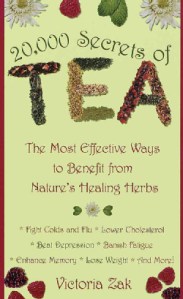
I read a lot about tea (what a surprise, eh?), and try to carry a decent selection of tea books in my bookstore. When somebody recommended the book 20,000 Secrets of Tea: The Most Effective Ways to Benefit from Nature’s Healing Herbs by Victoria Zak, I decided to give it a look. I confess I was put off by the subtitle, because it sounds more like a book of herbal medicine than a book about tea. Then I flipped the book over and took a look at the back cover. There I saw this:
“An Ancient Chinese Legend: Once there was a man who knew 100,000 healing properties of herbs. He taught his son 80,000 secrets. On his deathbed, he told his son to visit his grave in five years, and there he would find the other 20,000 secrets. When the son went to his father’s grave, he found, growing on the site, the tea shrub…”
Okay, that’s more promising. Especially this line in the next paragraph: “A simple cup of tea not only has the power to soothe and relax but to deliver healing herbal agents to the bloodstream more quickly than capsules, tinctures, or infusions.” That line indicates that they know the difference between tea and infusions/tisanes, and that this book is going to be about tea.
Oh, my, was I wrong.
Page one starts out with a description of the legend of the origin of tea. Chapter one continues on, repeating the story from the back cover and then providing some of the history of tea as a drink. Within five pages, it has transitioned to herbal infusions, and that’s pretty much the end of discussion of the tea plant (Camellia sinensis).
I flipped through the next 220 pages looking for more information about tea (after all, the next 20,000 secrets are all about the tea shrub, right?) and I all found was descriptions of various herbs along with multitudinous health claims about each (more on that in a moment).
I went to the index looking for tea. The index is 15 pages long, normally a good sign in a reference book. Under “tea” I found reference to pages 1-4, mentioned above. Under Camellia sinensis, nothing. Flipping through the alphabetical collection of herbs, tea isn’t even listed. I checked under “black tea” and found a two-page spread in the middle titled “Green, Oolong, Black: the legendary teas.”
Zak begins by repeating the origin legend from page 1, and then proceeds to talk about fermentation (none of those teas are fermented, although black and oolong are oxidized) and rates the three styles in order of “medicinal strength: (green, then oolong, then black). Nowhere does she mention white or pu-erh tea, and nowhere does she define what “medicinal strength” actually means. Obviously, when there’s so little information, it leads to gross overgeneralization. When you use up that little bit of space with statements like “Green tea’s polyphenols are powerful antioxidants are reputed to be two hundred times stronger than vitamin E. It has anticancer catekins (sic), which protect the cells from carcinogens, toxins, free radical damage, and help to keep radioactive strontium 90 out of the bones,” there’s no room left to describe the differences between tea styles, how to properly steep a cup, or any of the other subjects that I expected this whole book to be about.
Incidentally, none of those rather incredible health claims are footnoted, no studies are cited, and no backup data is provided.
All in all, this book is tailor-made for herbalists — especially those that don’t worry much about the scientific basis of their health claims — but pretty well useless for tea enthusiasts.
Tasting purple tea

Today, I received my first shipment of the purple tea that I blogged about back in August. I opened the bag with no preconceptions, as I haven’t read anyone else’s tasting notes.
The leaves look like pretty much any black tea. Not surprising, as the purple tea plant (TRFK306/1) can be prepared using any tea process, and this was oxidized like a traditional (orthodox) black tea. This is a very dense tea. The kilogram bag I purchased was the same size as the half-kilo (500g) bag of Golden Safari (a Kenya black I’ll be writing about soon).
I took a deep whiff, and picked up a slight earthiness to it that isn’t present in the other Kenya black teas I’ve tried. Not as extreme as a shu pu-erh, of course, as there was no fermentation in the process, but enough to distinguish the aroma from a traditional black tea.
Actually, despite my previous comment, I did come in to this with one preconception. Since this is a high-tannin tea, I expected a fair amount of astringency (“briskness,” as Lipton calls it), so I decided to take it easy on the first cup and make it like I make my 2nd-flush Darjeelings: 5 grams of leaves, 16 ounces of water at full boil, and a scant two-minute steep time.
“I did not expect purple, as the anthocyanin that gives purple tea its name doesn’t affect the color of black tea.”
The leaves settled immediately to the bottom of the pot, and I was taken by surprise by the color. I did not expect purple, as the anthocyanin that gives purple tea its name doesn’t affect the color of black tea. But I also didn’t expect the pale greenish tan color that immediately appeared (it later mellowed to a deep black with — you guessed it, a purplish tinge). We don’t have any analyses yet of total antioxidant content, but we know that the anthocyanin does contribute quite a bit.
My first taste of the purple tea was impressive. Rich, complex, and a bit more astringent than you’d expect with only a two-minute brewing time. The earthiness in the aroma comes through subtly in the taste, and there’s a silky mouthfeel that lingers on the back of the tongue.
I figured that there was enough going on in that tea that it could hold up to a second infusion, so I brewed a second cup off of the same leaves. This time I gave it a three-minute steep, and it came out tasting very similar to the first brew, although a bit more pale in color.
“Purple tea is certainly not cheap.”
All in all, I’m pleased and excited to have this new varietal available at the tea bar. Purple tea is certainly not cheap. At $16.00 per ounce, it’s one of the priciest teas on our menu, but I expect it to build a fan base quickly. Our new tea website isn’t quite ready to launch yet (I’ll make a big announcement here when it is), but if you’d like to order some Royal Purple tea, just call the store (406-446-2742) or send an email to gary (at) redlodgebooks (dot) com. We’re ready to ship right away.
UPDATE MAY 2012: Our tea website is up and running, and Royal Purple tea is now available for purchase.
More more information about purple tea, please see my earlier blog post announcing and describing the varietal.
 Tea With Gary