Blog Archives
Kombucha: A Tea Guy’s Perspective

Several times in the last couple of years, people have come in to the tea bar and asked if we have kombucha. The first time, I did a quick Google search, looked at the process required to brew it, and said no. After the third time, I figured I should look a bit deeper into this phenomenon. Conveniently enough, the Healthy Beverage Expo was held in Las Vegas alongside the World Tea Expo (the largest trade conference in the tea business), so I was able to sign up for a kombucha seminar to go along with all of the tea seminars I was taking.
I learned quite a bit in the seminar, although virtually none of what the instructor covered was applicable to a tea shop serving freshly-brewed drinks. Almost everything she talked about applied to RTD (ready-to-drink) bottled beverages, which really doesn’t interest me. We don’t serve bottled tea or soda — or even bottled water — so RTDs didn’t really interest me much. I was there to learn about fresh beverages.
Following the seminar, I did some further research and made an informed decision about selling kombucha in my tea shop. Here is my thought process:
What is kombucha?
Kombucha is a fermented drink made from a fairly heavily sweetened black tea (about 1 cup of sugar per gallon of tea), although other types of tea can be used as well. A symbiotic culture of bacteria and yeast known by the acronym “SCOBY” (it stands for “Symbiotic culture of bacteria and yeast”) is placed on top of the tea blend. It grows into a gelatinous mass on top of the tea as it ferments the sugars in the tea mixture. After a week or so, the freshly grown bacteria/yeast mat can be separated out into a new SCOBY for the next batch, and the liquid can be drawn off to drink.
It’s really good for you, right?
First of all, I don’t select teas based on health claims. I select teas that taste good. At times, those goals align, but I’m frankly underwhelmed at the amount of hard data backing most herbal health claims, and I’m not going to pass on health claims to my customers unless they are backed up by honest-to-goodness, peer-reviewed, reproducible studies — preferably with double-blind clinical studies.
Sitting in the kombucha seminar, I was struck by the PowerPoint slide titled “Health Benefits.” It listed every imaginable ailment from cancer to Alzheimer’s, heart disease to diabetes. The list was absolutely stunning. Before I had a chance to react, someone else in the audience asked what the basis was for this list. The instructor informed us that she had recorded everything her friends, family, and customers had told her. If someone told her they drank kombucha and their gout got better, she’d put gout on the list.
In other words, all of these health benefits were unconfirmed hearsay with no scientific basis whatsoever. A short amount of digging brought me to an article on kombucha by the American Cancer Society. I think one quote from that article sums it up really well:
Available scientific evidence does not support claims that Kombucha tea promotes good health, prevents any ailments, or is works to treat cancer or any other disease. Serious side effects and occasional deaths have been linked with drinking Kombucha tea.
Not exactly a ringing endorsement.
Logistics of kombucha
In a tea bar environment, I have dried leaves with a shelf life measured in months. The few fresh items I need, such as milk, boba pearls, and lemon slices, can either be purchased on a moment’s notice at the grocery store, or made in a matter of minutes. Kombucha requires at least a week to brew, which means if you want to serve it fresh, you need to be very good at predicting demand a week in advance.
If you wish to store and keep it, you have to bottle or keg it, and that takes me back to the RTD issue I opened this article with. If I’m going to serve a bottled beverage, I’d might as well buy it from someone else instead of trying to ferment it myself.
Fermentation leads to another issue as well. The yeast in the SCOBY does exactly what yeast does in beer or wine: it consumes sugars and excretes alcohol and carbon dioxide (CO2). The CO2 provides carbonation, most of which is allowed to escape. The alcohol is another issue. The Federal government puts strict controls over alcohol content in beverages. If you wish to sell fresh-brewed kombucha, you must carefully control and measure the amount of alcohol.
Not only can we not sell beverages to children if they contain more than a fraction of a percent alcohol, but without the proper licenses, we can’t produce alcoholic beverages in the tea bar anyway.
My conclusion
I used to do a lot of homebrewing. I really enjoyed making and drinking my own beer. If I still had all of my equipment set up for the beer, I’d probably brew up a batch of kombucha just for fun, although I’ve yet to try a kombucha that didn’t taste like old gym socks. I’m not, however, going to make it in the tea bar because the logistics are complex, it doesn’t fit the business model of freshly-brewed tea, and the health benefits are unsubstantiated.
Teas, Tisanes, and Terminology
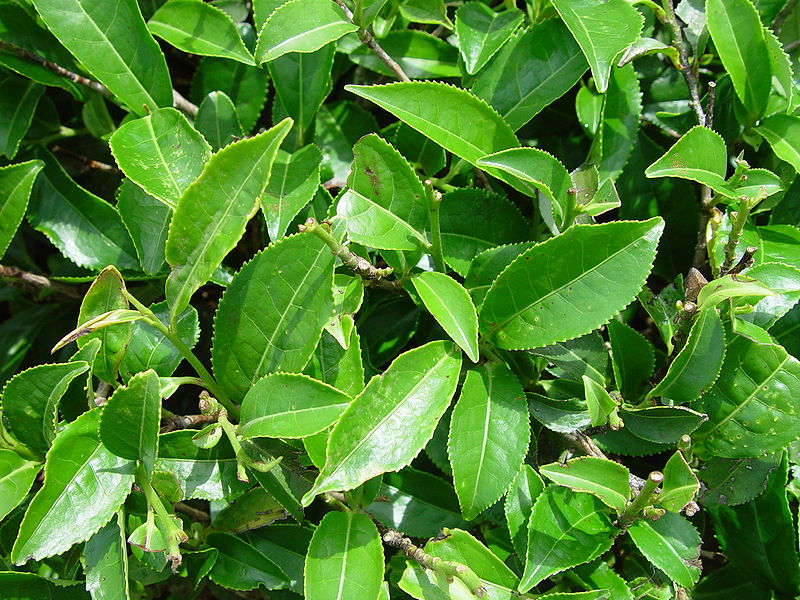
Language evolves. I get that. Sometimes changes make communication easier, clearer, or shorter. Sometimes, however, the evolution of the meaning of a word does exactly the opposite. The subject of this blog is a good example.
The word “tea” refers to the tea plant (Camellia sinensis), the dried leaves of that plant, or the drink that is made by infusing those leaves in water.
The word “tisane” refers to any drink made by infusing leaves in water. Synonyms include “herbal tea” and “herbal infusion.”
Technically speaking, all teas are tisanes, but most tisanes are not teas.
In today’s culture, however, practically anything (except coffee and cocoa) that’s made by putting plant matter in water is called a tea. What’s my problem with that? It makes communication more difficult, less clear, and less terse.
- There is no other single word that means “a drink made with Camellia sinensis.” If we call everything tea, then we have to say “real tea” or “tea from the tea plant” or “Camellia sinensis tea” or something similarly ludicrous every time we want to refer specifically to tea rather than to all tisanes.
- There is a perfectly good word for “leaves infused in water.” There is no need to throw away “tisane” (or “herbal tea” or “infusion”) and replace it with a word that already has another meaning.
“But Gary,” I hear you cry, “people have been calling herbal infusions ‘tea’ for a long time!”
That’s true. I sometimes slip and call rooibos a tea myself. “Herbal infusion” is even an alternate definition of tea in the OED. I still maintain, however, that it makes clear, precise communication more difficult when trying to differentiate between tea (made from the Camellia sinensis plant) and drinks made from chamomile, honeybush, and willow bark.
Rooibos
Other words that go through this process are forced through it. Rooibos, for example, is the name for a specific tisane and the plant it’s made from (Aspalathus linearis). The word is Afrikaans for Red Bush. Despite the longtime use of the term in South Africa (the only place the rooibos plant grows), it was almost unknown in the United States in 1994 when Burke International of Texas registered “rooibos” as a trademark. This meant that in the United States, only Burke and its subsidiaries could use the common name of the plant. Had Burke not surrendered the trademark after starting to lose lawsuits, people would have been forced to come up with a new word.
Unfortunately, that wasn’t a decisive victory, as the South African Rooibos Council is being forced to repeat the process now with a French company.
As more people in the U.S. discover green rooibos, the name “red bush” becomes more confusing anyway. Rooibos, in my humble opinion, should remain the generic term here.
Oxidation vs. fermentation
There are other words in the tea industry that suffer from ambiguity and questionable correctness. You will find quite a bit of tea literature that refers to the oxidation of tea as fermentation. I had a bit of a row with Chris Kilham — The “Medicine Hunter” on Fox News — about this subject (it starts with “Coffee vs. Tea: Do your homework, Fox News” and continues with “Chris Kilham Responds“).
Fermentation and oxidation are closely related processes. That’s certainly true. But oxidation is the aerobic process that is used in the production of black and oolong tea, and fermentation is the anaerobic process that’s used in the production of pu-erh tea. Using the word “fermentation” to describe the processing of black tea may fit with a lot of (non-chemist) tea industry writers, but it makes it difficult to explain what real fermented tea is.
Precision matters
In chatting with friends, imprecise use of words doesn’t matter. If someone asks what kind of tea you want and you respond, “chamomile,” it’s perfectly clear what you want. But you’re an industry reporter, medical writer, or marketing copywriter, your job is to communicate unambiguously to your readers. Using the most correct terminology in the right way is a great way to do that.
Book Review: 20,000 Secrets of Tea
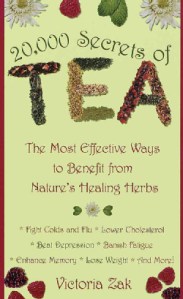
I read a lot about tea (what a surprise, eh?), and try to carry a decent selection of tea books in my bookstore. When somebody recommended the book 20,000 Secrets of Tea: The Most Effective Ways to Benefit from Nature’s Healing Herbs by Victoria Zak, I decided to give it a look. I confess I was put off by the subtitle, because it sounds more like a book of herbal medicine than a book about tea. Then I flipped the book over and took a look at the back cover. There I saw this:
“An Ancient Chinese Legend: Once there was a man who knew 100,000 healing properties of herbs. He taught his son 80,000 secrets. On his deathbed, he told his son to visit his grave in five years, and there he would find the other 20,000 secrets. When the son went to his father’s grave, he found, growing on the site, the tea shrub…”
Okay, that’s more promising. Especially this line in the next paragraph: “A simple cup of tea not only has the power to soothe and relax but to deliver healing herbal agents to the bloodstream more quickly than capsules, tinctures, or infusions.” That line indicates that they know the difference between tea and infusions/tisanes, and that this book is going to be about tea.
Oh, my, was I wrong.
Page one starts out with a description of the legend of the origin of tea. Chapter one continues on, repeating the story from the back cover and then providing some of the history of tea as a drink. Within five pages, it has transitioned to herbal infusions, and that’s pretty much the end of discussion of the tea plant (Camellia sinensis).
I flipped through the next 220 pages looking for more information about tea (after all, the next 20,000 secrets are all about the tea shrub, right?) and I all found was descriptions of various herbs along with multitudinous health claims about each (more on that in a moment).
I went to the index looking for tea. The index is 15 pages long, normally a good sign in a reference book. Under “tea” I found reference to pages 1-4, mentioned above. Under Camellia sinensis, nothing. Flipping through the alphabetical collection of herbs, tea isn’t even listed. I checked under “black tea” and found a two-page spread in the middle titled “Green, Oolong, Black: the legendary teas.”
Zak begins by repeating the origin legend from page 1, and then proceeds to talk about fermentation (none of those teas are fermented, although black and oolong are oxidized) and rates the three styles in order of “medicinal strength: (green, then oolong, then black). Nowhere does she mention white or pu-erh tea, and nowhere does she define what “medicinal strength” actually means. Obviously, when there’s so little information, it leads to gross overgeneralization. When you use up that little bit of space with statements like “Green tea’s polyphenols are powerful antioxidants are reputed to be two hundred times stronger than vitamin E. It has anticancer catekins (sic), which protect the cells from carcinogens, toxins, free radical damage, and help to keep radioactive strontium 90 out of the bones,” there’s no room left to describe the differences between tea styles, how to properly steep a cup, or any of the other subjects that I expected this whole book to be about.
Incidentally, none of those rather incredible health claims are footnoted, no studies are cited, and no backup data is provided.
All in all, this book is tailor-made for herbalists — especially those that don’t worry much about the scientific basis of their health claims — but pretty well useless for tea enthusiasts.
 Tea With Gary