Blog Archives
Teas, Tisanes, and Terminology
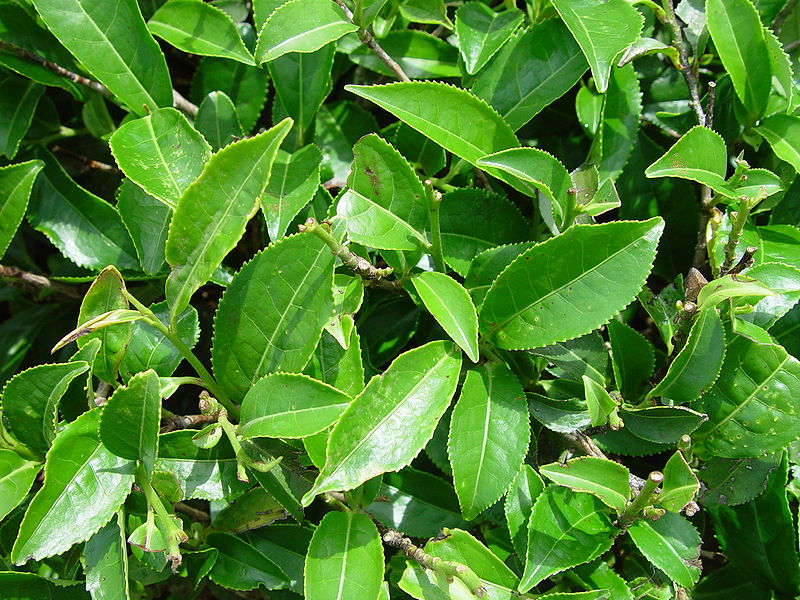
Language evolves. I get that. Sometimes changes make communication easier, clearer, or shorter. Sometimes, however, the evolution of the meaning of a word does exactly the opposite. The subject of this blog is a good example.
The word “tea” refers to the tea plant (Camellia sinensis), the dried leaves of that plant, or the drink that is made by infusing those leaves in water.
The word “tisane” refers to any drink made by infusing leaves in water. Synonyms include “herbal tea” and “herbal infusion.”
Technically speaking, all teas are tisanes, but most tisanes are not teas.
In today’s culture, however, practically anything (except coffee and cocoa) that’s made by putting plant matter in water is called a tea. What’s my problem with that? It makes communication more difficult, less clear, and less terse.
- There is no other single word that means “a drink made with Camellia sinensis.” If we call everything tea, then we have to say “real tea” or “tea from the tea plant” or “Camellia sinensis tea” or something similarly ludicrous every time we want to refer specifically to tea rather than to all tisanes.
- There is a perfectly good word for “leaves infused in water.” There is no need to throw away “tisane” (or “herbal tea” or “infusion”) and replace it with a word that already has another meaning.
“But Gary,” I hear you cry, “people have been calling herbal infusions ‘tea’ for a long time!”
That’s true. I sometimes slip and call rooibos a tea myself. “Herbal infusion” is even an alternate definition of tea in the OED. I still maintain, however, that it makes clear, precise communication more difficult when trying to differentiate between tea (made from the Camellia sinensis plant) and drinks made from chamomile, honeybush, and willow bark.
Rooibos
Other words that go through this process are forced through it. Rooibos, for example, is the name for a specific tisane and the plant it’s made from (Aspalathus linearis). The word is Afrikaans for Red Bush. Despite the longtime use of the term in South Africa (the only place the rooibos plant grows), it was almost unknown in the United States in 1994 when Burke International of Texas registered “rooibos” as a trademark. This meant that in the United States, only Burke and its subsidiaries could use the common name of the plant. Had Burke not surrendered the trademark after starting to lose lawsuits, people would have been forced to come up with a new word.
Unfortunately, that wasn’t a decisive victory, as the South African Rooibos Council is being forced to repeat the process now with a French company.
As more people in the U.S. discover green rooibos, the name “red bush” becomes more confusing anyway. Rooibos, in my humble opinion, should remain the generic term here.
Oxidation vs. fermentation
There are other words in the tea industry that suffer from ambiguity and questionable correctness. You will find quite a bit of tea literature that refers to the oxidation of tea as fermentation. I had a bit of a row with Chris Kilham — The “Medicine Hunter” on Fox News — about this subject (it starts with “Coffee vs. Tea: Do your homework, Fox News” and continues with “Chris Kilham Responds“).
Fermentation and oxidation are closely related processes. That’s certainly true. But oxidation is the aerobic process that is used in the production of black and oolong tea, and fermentation is the anaerobic process that’s used in the production of pu-erh tea. Using the word “fermentation” to describe the processing of black tea may fit with a lot of (non-chemist) tea industry writers, but it makes it difficult to explain what real fermented tea is.
Precision matters
In chatting with friends, imprecise use of words doesn’t matter. If someone asks what kind of tea you want and you respond, “chamomile,” it’s perfectly clear what you want. But you’re an industry reporter, medical writer, or marketing copywriter, your job is to communicate unambiguously to your readers. Using the most correct terminology in the right way is a great way to do that.

Chris Kilham responds

A few days ago, I posted an admittedly rather snarky article on this blog entitled “Coffee vs. Tea: Do your homework, Fox News.” The main subject of the article was Chris Kilham, the “Medicine Hunter” from Fox News. Chris has responded to the article in email, expressing an interest in carrying on a dialog. Here is what he sent me (verbatim, and in its entirety):
Hi Gary- I saw your mistaken response to my segment on FOX, and thought I’d take time out to reply. Having studied coffee and tea deeply for decades, and having read thousands of pages of science on both, I stand by the claim that coffee is more potently antioxidant ounce per ounce. More Americans do drink black tea rather than green, the fermenting of tea does degrade the antioxidants, and no, the benefits of coffee are not limited to caffeine. I referred to the work of Astrid Nellig, who compiled over 300 human studies on coffee, not the others you noted. And yes, oxidation is in fact “rusting.” The exact same process occurs to cells that occurs to metal, though metal is not living tissue. I see you leave no place on your blog for intelligent feedback. Good idea. Before you rant off on a tangent, you really should get your science together. I have. Point by point I will be happy to go toe to toe. Enjoy.
First, Chris, I hope it was okay to use the thumbnail picture from your Medicine Hunter website. If you would prefer that I didn’t have it on my blog, let me know and I’ll remove it post haste.
Thank you for responding to my post. I appreciate getting feedback direct from the source, and I know you’re busy. Before going through your email point by point, I’d like to start by addressing the very last issue you raise: that there’s “no place on [my] blog for intelligent feedback.” As I said, I actively encourage intelligent feedback. There’s a place on every single blog post for people to leave their comments. If you’re looking at the front page of the site, it’s a link at the end of the post. If you’re looking at an individual article, it’s a section at the end with two tabs: one to see existing comments and one to leave your own. Please feel free to leave your comments on this or any other post on my blog, whether you agree with me or not.
Now, let’s—as you said—go point-by-point, toe-to-toe. I will quote your email, and then respond.
“Having studied coffee and tea deeply for decades, and having read thousands of pages of science on both, I stand by the claim that coffee is more potently antioxidant ounce per ounce.”
I did not dispute this. I said that I was unable to find meaningful studies regarding flavonoid content that covered multiple types of tea and coffee and various ways of preparing them, so I have no way of disproving your claim. What I did say is, “Flavonols aren’t the only basis for measuring the healthiness of a drink.” I will expand that to say that antioxidants in general aren’t the only things that make a drink healthy.
But if you can show me a study comparing antioxidants in coffee with antioxidants in black, green, white, oolong, purple, and pu-erh tea, I would love to see it. Really. I get that question a lot and I don’t have an answer for it.
“More Americans do drink black tea rather than green…”
I agree with you. In fact, I said “One accuracy point for Kilham” after I verified the claim with FAO’s statistics.
“…the fermenting of tea does degrade the antioxidants…”
Black tea is not fermented. This little piece of misinformation is a pet peeve of mine, and it’s one of the things that prompted me to write the original article. Black tea is oxidized. Fermentation is an anaerobic process. There are fermented teas (a favorite style of mine called shu pu-erh is both oxidized and fermented), but they represent such a miniscule percentage of the tea consumed in the United States that they don’t factor into this discussion. I will continue the discussion assuming you meant to say “oxidized” rather than “fermented.”
I am neither a chemist nor a nutritionist, so you’re going to have to tell me what “degrade” means in this context. You had originally said that they were “lost,” and I responded that “Flavonols aren’t ‘lost’ during oxidation; most (but not all) are converted into different antioxidants called theaflavins, and some convert to thearubigins (which produce the reddish hue of black tea).” Am I wrong?
“…and no, the benefits of coffee are not limited to caffeine.”
Did I say they are? No. I said, “But yes, coffee does contain antioxidants. So, in fact, does tea.” My reference to caffeine was specifically related to your claim that coffee can improve a bad mood. Every study that I found showed that you are absolutely correct. Coffee can improve a bad mood because of the caffeine, which means that tea and Mountain Dew can improve bad moods as well.
“I referred to the work of Astrid Nellig, who compiled over 300 human studies on coffee, not the others you noted.”
I am unfamiliar with Nellig’s work, but if the studies are specifically on coffee, they wouldn’t have pinged my radar (I am uninterested in coffee). If any of Nellig’s studies compare coffee with various types of tea, I’d like to read them, though.
“And yes, oxidation is in fact ‘rusting.'”
This could be an interesting discussion. When I was taking chemistry in school, I would have been smacked for saying that, for example, copper had rusted. Oxidizing was presented as the more general term. All rusting is oxidation, but not all oxidation is rusting. Perusing Merriam-Webster’s dictionary, however, I see that one of the definitions of rust as a verb is “to form rust: to oxidize.” And since the primary definition of oxidize is “to combine with oxygen,” I suppose the first part of your statement is true, based on current dictionary definitions. But do you really want to use “rust” as a synonym for “oxidize” in discussing living organisms? Try this:
Substituting “rust” for “oxidize,” a simplified description of the cardiovascular system would say that you inhale air into your lungs, where oxygen in the air is used to rust your red blood cells. Your arteries and capillaries carry those rusted blood cells to the rest of your body, where the red blood cells “un-rust” as they cause other cells in your body to rust. The de-rusted blood cells then return, via veins, to be rusted once again in the lungs.
Accurate, using those current Merriam-Webster definitions, but it sure sounds strange.
“The exact same process occurs to cells that occurs to metal, though metal is not living tissue.”
Really? To the best of my knowledge, metal is unable to use up oxygen and become un-rusted. Living cells can. It’s not the same process.
The “oxidation vs. rusting” discussion is largely semantic, though, and I don’t want this to turn into a massive debate about free radicals and properties of antioxidants. That wasn’t the point. The point was that your “Q&A With Dr. Manny” article went on a great length about health benefits of coffee without acknowledging that many (all?) of those benefits are shared with various types of tea. The only health benefits of tea that you brought up were antioxidants, and that’s only a single piece of the puzzle.
“Before you rant off on a tangent, you really should get your science together. I have.”
Okay, if you want to call my post a “rant,” I’ll have to agree. It was. But it was by no means “off on a tangent.” It directly addressed your Fox News story, directly on-point. It wasn’t off-topic. And I haven’t seen you call out one single scientific error in what I said (unless you want to call my bullheaded prescriptivism on the definition of “rust” a scientific error).
 Tea With Gary